
How Many Periods Are in Basketball?

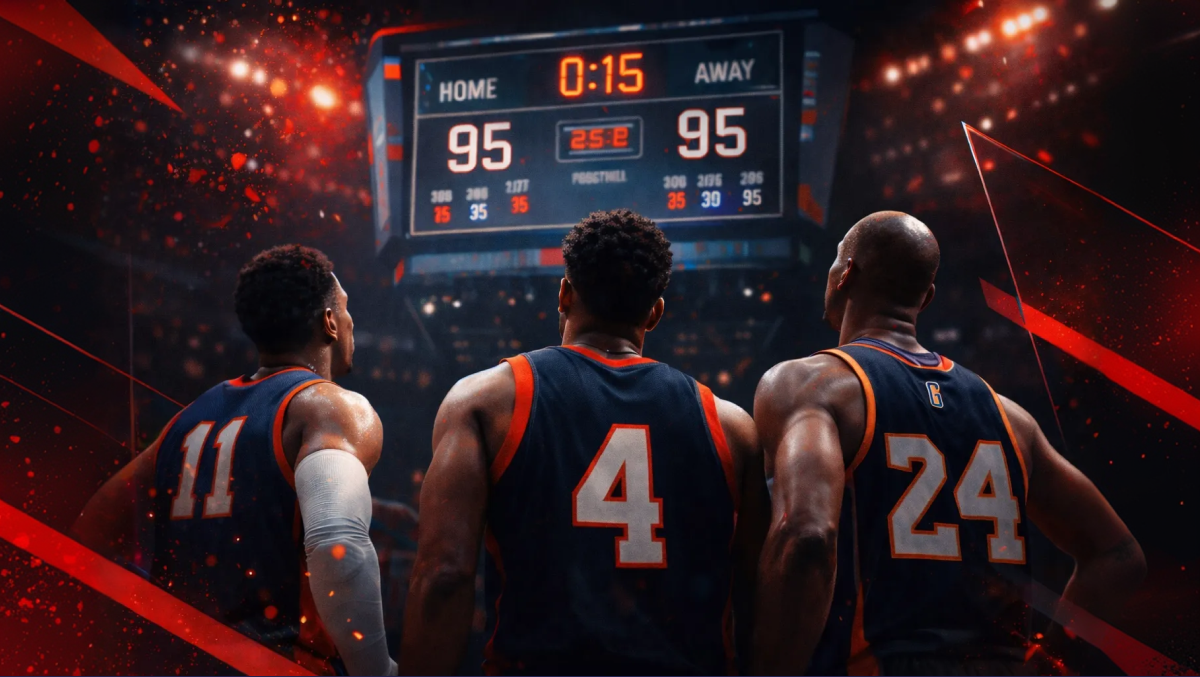
If you’ve ever sat down to watch a basketball game and caught yourself wondering how many periods in basketball are actually played, you’re not alone. It’s one of those beginner questions that sounds simple but quickly becomes confusing once you realize that not every league follows the same rules.
Basketball is structured around timed segments that break the game into parts. These segments are commonly called periods, quarters, or halves, depending on where the game is being played. While the core objective remains the same—score more points than the opponent—the number and length of these periods directly influence pacing, strategy, and player management.

To fully understand how many periods are in basketball, you need to look at the league level, because professional, college, and international basketball all operate slightly differently.
How Many Periods Are in an NBA Game?
For most fans, the NBA is the reference point when talking about basketball rules. This is where the structure feels the most familiar and widely recognized.
Number of Periods in Professional Basketball
In the NBA, games are divided into four periods, more commonly known as quarters. This four-period format has become the standard for professional basketball and is followed by many leagues around the world.
Length of Each Period in the NBA
Each period in an NBA game, also known as a quarter, lasts 12 minutes. When you add them together, regulation time comes out to 48 minutes. While that may sound short, the actual viewing time is much longer due to stoppages like fouls, timeouts, free throws, and video reviews.
Still, from a rulebook perspective, the NBA keeps things consistent. Four periods, each 12 minutes long, form the backbone of every standard NBA game and heavily influence how rotations, substitutions, and late-game strategies are planned.
This becomes even more interesting when analyzing roster construction trends, such as the tallest NBA teams, where player size impacts how teams manage minutes across all four quarters. Taller lineups often require strategic rotation planning to maintain pace and stamina throughout the game, impacting the team’s period-based strategy.
Period Lengths Across Different Basketball Leagues
This is where many fans start questioning how many periods are in basketball. Once you step outside the NBA, the structure begins to change.
College & High School Basketball Period Structure
College basketball takes a completely different approach compared to professional leagues. Instead of periods, college games are played in two halves. Each half lasts 20 minutes, resulting in a total game time of 40 minutes.
These structural differences affect both coaching strategy and how games are analyzed from a statistical and betting perspective. Fans who compare professional and college formats often consider period length, scoring pace, and late-game scenarios when evaluating odds at the best US basketball betting sites, where college basketball markets are structured differently due to timing variations.
High school basketball, however, usually returns to a four-period structure. Most high school games are played in four quarters that last eight minutes each. While the exact timing can vary slightly by region, this shorter format helps keep games fast-paced and physically manageable for younger players.
International and WNBA Period Rules
International basketball follows a structure that sits somewhere between college and the NBA. Under FIBA (International Basketball Federation) rules, games are divided into four periods, but each period lasts only 10 minutes. This results in a 40-minute game that emphasizes speed, efficiency, and ball movement.
The WNBA (Women’s National Basketball Association) uses the same four-period, 10-minute format. Compared to the NBA, these shorter periods often lead to quicker rotations and a slightly more intense pace, as there is less time to recover from mistakes.
What Happens if a Basketball Game Goes into Overtime?
How many periods are in basketball is a common question, but what happens if the game still doesn’t end after all periods are completed?
If both teams are tied at the final buzzer, overtime comes into play—a scenario that’s especially important for fans tracking live games, player stats, or placing wagers through NBA betting sites in the US, where overtime can completely shift outcomes.
How Overtime Periods Work in Basketball
Overtime is essentially extra time added to determine a winner. In most professional leagues, each overtime period lasts five minutes. Teams continue playing under the same rules, with every possession becoming more important due to the limited time available.
Overtime periods are not counted as standard periods, but they do count toward the final score and player statistics. The pressure level rises significantly, often leading to slower, more tactical play.
How Multiple Overtimes Are Handled
If the score remains tied after the first overtime, another overtime period is added. There is no fixed limit to how many overtimes can be played. The game continues until one team finishes an overtime period with a higher score.
Some of the most memorable basketball games in history have featured multiple overtimes, highlighting just how dramatic and unpredictable the sport can be when neither team is willing to give in.
How Period-Based Scoring Impacts the Game?
So, when asking how many periods are in basketball, the answer truly depends on the level and league being played. Professional and international basketball rely on four periods, college basketball uses two halves, and overtime adds extra layers when games are tied.
This period-based structure shapes everything from game tempo to coaching decisions. Shorter periods encourage faster play, while longer halves allow teams to build rhythm over time. Either way, understanding how periods work helps fans follow the flow of the game more naturally and appreciate the strategy behind every whistle and timeout.
Related Posts


