
The Youngest NBA Team

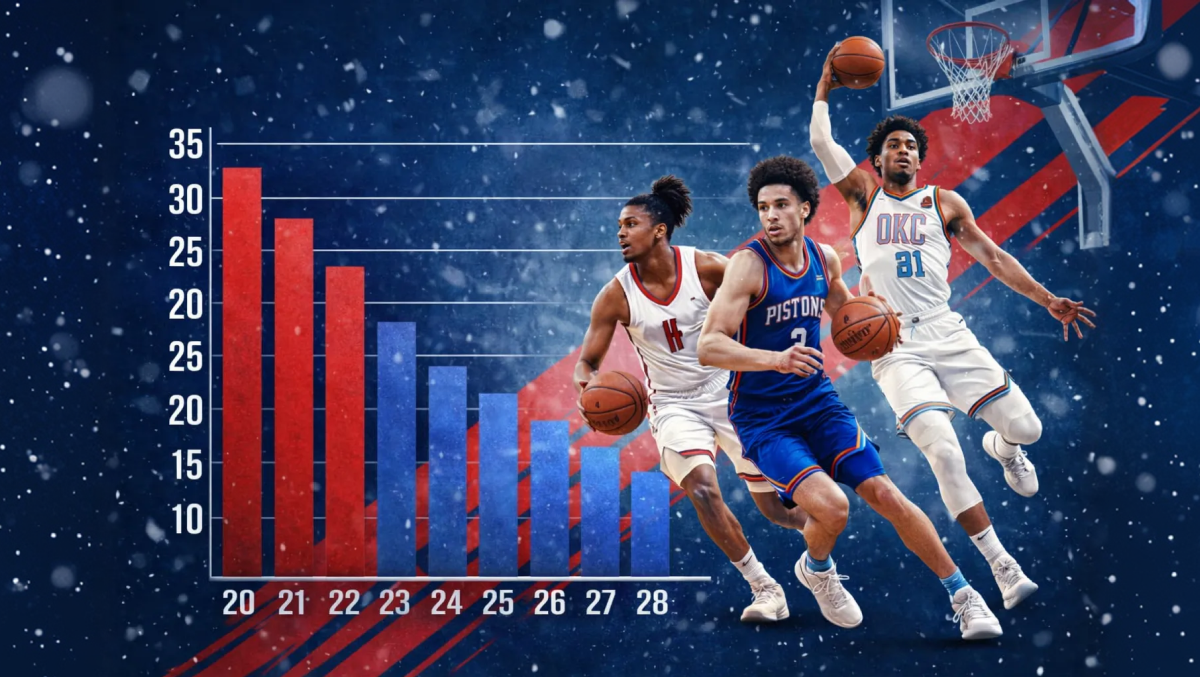
The NBA has always been a league driven by star power and experience — but over the past few seasons, a clear shift has emerged. Teams are getting younger, rebuilding faster, and betting heavily on draft capital and long-term development.
So, when fans ask “who is the youngest team in the NBA?”, the answer isn’t just trivia. Roster age directly impacts pace of play, consistency, playoff readiness, and even betting trends.
In this guide, we break down the youngest NBA teams heading into the 2025–26 season, explain why roster age matters, and look back at the youngest team to win an NBA championship — proving that youth and success aren’t mutually exclusive.
Who Is the Youngest Team in the NBA Right Now?
As of the 2025–26 season, the Brooklyn Nets hold the distinction of being the youngest team in the NBA, with an average roster age hovering just above 23 years.
Brooklyn’s front office is committed fully to a youth-driven rebuild, moving away from veteran-heavy lineups in favor of draft picks, rookie contracts, and developmental upside. While this approach often comes with short-term inconsistency, it also gives the Nets one of the highest growth ceilings in the league.
This strategy reflects a wider league trend — several franchises are intentionally skewing young to stay flexible under the salary cap and build sustainable cores.
The 7 Youngest Teams in the NBA (2025–26 Season)
The 2025–26 NBA season features several teams embracing youth as a cornerstone of their rebuilds or development strategies. Leading the league in roster youthfulness, these squads—dominated by rookie-scale and early-career players—offer explosive athleticism, high upside, and unpredictable performances. From full resets to structured growth around draft talent, here are the seven youngest teams in the league, ranked by average age, showcasing the future of the NBA:
1. Brooklyn Nets – Youngest NBA Team
Average age: ~23.3 years
The Nets lead the league in youth after a full roster reset. With a rotation dominated by players on rookie-scale or early-career contracts, Brooklyn prioritizes speed, athleticism, and long-term upside over immediate contention.
Expect fast-paced basketball, occasional defensive lapses, and breakout potential — the classic profile of the youngest team in the NBA.
2. Portland Trail Blazers
Average age: ~25.3 years
The Portland Trail Blazers have quietly assembled one of the league’s youngest rosters as they shift focus toward development and draft-led growth. With several rotation players still on rookie contracts, Portland is clearly prioritizing the future over immediate results.
This youth-heavy approach makes the Trail Blazers one of the youngest NBA teams and, like most rebuilding sides, one of the most unpredictable on a game-by-game basis.
3. San Antonio Spurs
Average age: ~25.2 years
The San Antonio Spurs represent a different kind of youth movement — one grounded in structure and long-term planning. Built around recent high draft selections, the Spurs combine raw talent with a system known for player development.
Their presence among the youngest teams in the NBA highlights how youth, when paired with coaching stability, can accelerate a rebuild rather than delay it.
4. New Orleans Pelicans
Average age: ~24.3 years
The Pelicans’ youth is largely driven by high draft investments over the last few seasons. While injuries and chemistry have shaped results, the core remains one of the youngest in the league with significant upside.
Their athletic profile makes them particularly interesting when comparing roster age with physical traits — a contrast worth exploring alongside the tallest team in the NBA.
5. Orlando Magic
Average age: ~24.4 years
Orlando has quietly assembled one of the league’s youngest and most disciplined rosters. Rather than chasing quick fixes, the Magic focus on internal development, defensive identity, and continuity.
This slow-build approach has made them a case study in how young teams can still remain structured.
6. Oklahoma City Thunder
Average age: ~24.6 years
While no longer the absolute youngest, the Thunder deserve special mention — not just for their age, but for what they achieved with it.
Oklahoma City assembled one of the youngest teams to win an NBA championship, proving that elite coaching, smart rotations, and star-level talent can overcome the traditional “experience gap.”
They are a benchmark for what young NBA teams can become.
7. Charlotte Hornets
Average age: ~24.6 years
Charlotte rounds out the list with a roster stacked with early-career players and high-upside prospects. The Hornets’ challenge lies in translating athleticism into consistency — a common hurdle for younger teams.
Still, their age profile keeps them firmly among the NBA’s youngest squads.
Why Being the Youngest Team in the NBA Matters
Before diving into the on-court and analytical impact, it’s important to understand why roster age is such a meaningful metric in the NBA. The youngest team in the league is often shaped by a very different set of priorities compared to veteran-heavy contenders.
At a glance, roster age influences:
- Style of play – pace, transition reliance, defensive pressure
- Game-to-game consistency and late-game execution
- Player development timelines and long-term upside
- Seasonal progression, including second-half improvement
- Predictability in matchups, especially for betting analysis
With that framework in mind, here’s how youth tangibly affect performance and outcomes in the modern NBA.
Faster Pace and Higher Athletic Output
Younger NBA teams generally play at a faster tempo. With fresher legs and less wear-and-tear, younger rosters push the ball in transition, attack early shot clocks and rely heavily on speed and energy.
This often results in:
- More fast-break opportunities
- Higher possession counts per game
- Aggressive perimeter defense and ball pressure
While this style can overwhelm slower, veteran-heavy teams, it also increases exposure to mistakes — especially late in close games.
Heavy Reliance on Transition Scoring
Because half-court execution typically develops with experience, the youngest teams in the NBA tend to lean on transition scoring to generate offense. Quick outlet passes, rim runs, and early three-point attempts become central to their identity.
This approach works best when games remain open and fast-paced. However, when opponents slow the tempo or apply playoff-style defensive schemes, young teams often struggle to generate efficient looks.
Higher Performance Variance (Upside and Risk)
One of the defining traits of the youngest teams in the NBA is performance volatility. Younger players are still building consistency, decision-making instincts, and situational awareness.
This leads to:
- Surprise wins against elite teams
- Sharp drop-offs against disciplined, experienced opponents
- Noticeable swings in home vs away performance
From an analytical standpoint, this variance makes young teams exciting but difficult to project — especially when compared with more physically balanced rosters such as the shortest team in the NBA, where style of play is often more controlled and system-driven.
This unpredictability is also a key factor during international showcases like NBA Macau, where young rosters often face high-pressure environments and unique travel schedules for the first time. These global events serve as a litmus test for a young team’s ability to maintain composure under the bright lights of a neutral, international stage.
Rapid In-Season Improvement
Unlike veteran-heavy teams that plateau early, younger NBA teams tend to improve as the season progresses. Increased minutes, chemistry development, and confidence gained through repetition often lead to second-half surges.
This is why front offices are willing to tolerate early-season losses — the long-term payoff lies in accelerated development and internal growth rather than immediate results.
To fully understand how youth impacts success, let’s take a step back and look at NBA history.
A Historical Look at Age and NBA Championships
While modern NBA discussions often focus on youth versus experience, the relationship between roster age and championship success has existed since the league’s earliest days. Looking back at NBA history offers valuable context on how age, structure, and timing have shaped title-winning teams over the decades.
The First Team to Win an NBA Championship
The Philadelphia Warriors became the first team to win a professional basketball championship in 1947, when the league was still known as the Basketball Association of America (BAA), a precursor to today’s NBA.
At the time, roster construction looked very different from the modern NBA. Players were often in their mid-to-late 20s, balancing professional basketball with other careers, and teams relied more on fundamentals and physicality than pace or athletic explosiveness.
While the Warriors were not notably young by modern standards, their championship established an early trend that the titles were initially dominated by mature, physically developed rosters rather than youth-driven teams.
How Championship Roster Age Evolved Over Time
As the NBA expanded and professionalized, championship teams gradually became:
- More specialized in roles
- More dependent on star players
- More influenced by physical conditioning and longevity
From the 1950s through the 1990s, most title-winning teams were built around experienced cores, often peaking between 26 and 30 years of age. Dynasties such as the Celtics, Lakers, and Bulls followed this model, reinforcing the belief that championships were best won with veteran leadership.
However, this pattern began to shift in the modern era.
NBA Championship Teams by Era
Below is a historical framework showing how championship roster age has evolved since the league’s inception:
| Era | Typical Championship Roster Age | Historical Trend |
| 1940s–1950s | Late 20s | Physical maturity and fundamentals dominated |
| 1960s–1970s | Mid-to-late 20s | Dynasty teams with experienced cores |
| 1980s–1990s | Prime-age veterans (27–30) | Star-driven dynasties |
| 2000s | Balanced veteran cores | Experience-heavy champions |
| 2010s | Mixed-age rosters | Transition toward athleticism |
| 2020s | Younger championship contenders | Development-focused success |
Why Age Matters for Betting and Matchup Analysis
From a wagering perspective, youth introduces unpredictability. Younger teams are more susceptible to emotional swings, fatigue management issues, and matchup-specific weaknesses.
That’s why roster age is increasingly factored into projections on NBA betting sites, particularly for:
- Back-to-back games
- Road matchups
- Late-season contests with playoff implications
Understanding whether a team is one of the youngest in the NBA helps contextualize odds beyond basic win–loss records.
The Bigger Picture
Youth has never been a shortcut to success in the NBA, but history shows it has never been a barrier either. From early championship teams built around physical maturity to modern rosters shaped by elite development systems, age has always mattered most when paired with structure, chemistry, and smart planning.
That evolution is clearly visible in today’s league. Young teams are no longer content to wait years to compete. With advanced training, analytics-driven coaching, and long-term roster flexibility, the gap between rebuilding and contending has narrowed significantly.
Among teams heading into the 2025–26 season, the Brooklyn Nets stand out as the clearest example of this modern youth movement. As the youngest team in the NBA, Brooklyn offers the best blend of athletic upside, roster flexibility, and developmental potential in this tier. While inconsistency is part of the journey, their age profile gives them one of the highest growth ceilings in the league.
As the NBA continues to evolve, teams like the Nets highlight how youth — when aligned with the right system — can shape the league’s future contenders.


