


देखें: SiGMA फ़ाउंडेशन के माध्यम से बदलाव लाने पर Keith Marshall

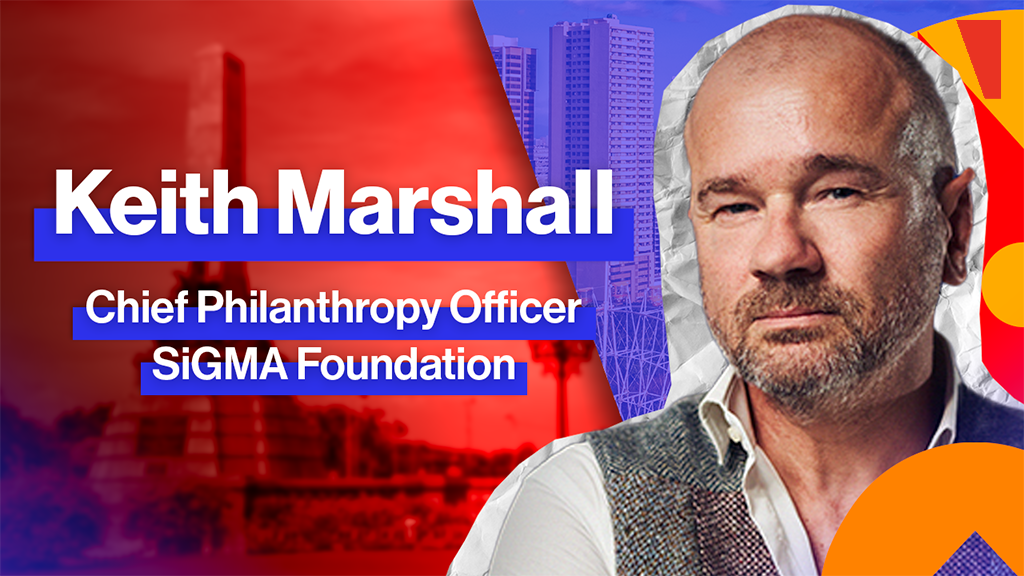
From eye surgery clinics in Guatemala to music centres in the Philippines, Keith Marshall, Chief Philanthropy Officer of the SiGMA Foundation, is proof that small steps can lead to extraordinary change. In a recent interview, he discusses the organisation’s latest successes, the impact of its activities, and how he transitioned from a remote charity follower to a frontline leader. The interview leaves a spark of hope and possibility with the viewers.
Transformative projects across continents
It’s been a busy past few months for Marshall, with a variety of exciting moments representing both the growing footprint of the Foundation and the diversity of areas the Foundation is focused on. Marshall’s desire to give back has led to a range of recent activities in healthcare, sport, and community assets, based on a belief that all projects should have a clear need. To give some examples, the Foundation provided free eye surgery to people in Guatemala last year, built a sports centre in Brazil that now attracts a number of young athletes, and increased the capacity of a hospital in Peru by doubling its facilities. These transformative projects provide immediate solutions to needs as well as future hope and possibilities to the communities they are working in.
In Guatemala, an eye surgery clinic was launched to combat preventable blindness in an underserved community. Marshall remembers “The whole populace came up in appreciation,” calling the project life-saving and life-altering for the region.
From there, Marshall flew to Brazil, where he delivered a keynote at the SiGMA Awards and inaugurated a sports centre on the outskirts of São Paulo’s favelas. This expansion brought much-needed capacity to a remote healthcare facility, and the team was “pleasantly surprised” by the large turnout of locals. The journey concluded with a physically demanding yet awe-inspiring trek along the Inca Trail to Machu Picchu, 35 hours of uphill hiking in rarefied air. “It was a slog, but it was beautiful,” Marshall says, summing up the experience with a mix of exhaustion and gratitude.
Within weeks, he was back on the road for the Camino de Santiago in Spain, covering 125 kilometres through farmland and forestry, followed almost immediately by climbing Mount Toubkal, North Africa’s highest peak. The center provides young people with a safe space to participate in sports and develop discipline and pride within the local community during a challenging period.
In Peru, the Foundation’s work included opening a hospital annexe in the Amazon, which a Gozitan priest runs.
“One man’s meat is another man’s poison, and this is my meat.”
A philosophy of engagement
Marshall’s philosophy is based on the belief that meaningful change is not necessitated by grand gestures from every person, but rather participation. The Foundation’s motto, “We aspire to inspire,” reflects its plans: it demonstrates actions from which it hopes others will act in whatever manner they are able.
“It’s not about the SiGMA Foundation. It’s about people coming forward, seeing what we do, and saying, ‘I can be part of this.’ Many hands make easy work.”
For Marshall, engagement is a multiplier. A school or clinic built by the Foundation is not an endpoint, but a catalyst for further involvement from the wider community. He believes that hardship is often born out of circumstance, not personal failure, and that offering opportunity is a moral imperative.
From Ethiopia to global outreach
This conviction traces back to his first encounter with life in Ethiopia. Before that, Marshall supported charity from a distance, organising occasional fundraising events. It was a Gozitan priest who persuaded him to travel to Ethiopia for six weeks, a decision made “on a whim” that proved life-changing.
There, Marshall witnessed the resilience of communities facing extreme poverty, alongside the stark realities of limited access to basic needs. It was, in his words, his “holy grail,” the moment he knew this work would define the rest of his life. Over the years, his Kilimanjaro Challenge initiative raised €1.5 million for projects ranging from schools and clinics to water systems and grinding mills.
Since co-founding the SiGMA Foundation six years ago, its mission has expanded to eight countries: Ethiopia, the Philippines, Colombia, Morocco, Brazil, Peru, Guatemala, and Gozo. The goal is to reach at least 20 territories within the next two years, a target that will require sustained financial support and new volunteers willing to take up the cause. Marshall emphasises that the Foundation’s work is made possible by the dedication of its volunteers and the generosity of its donors, inviting others to join the team. This growth and ambitious future goals should excite and inspire all those who are part of or considering joining the Foundation’s mission.
Community impact in the Philippines
The Foundation’s collaboration with Father Joseph Cremona in the Philippines is one of its most notable and ongoing partnerships. They began working together after a typhoon destroyed the roof of a church in Bataan, and the Foundation stepped in to fund the rebuild and install solar panels to help offset the intense heat of the area.
Ultimately, this initial project led to the development of a youth music centre that combines musical education with personal growth. The centre has produced an orchestra that performs for the community, promoting togetherness and pride in the richness of their culture. Marshall stated that seeing the young musicians perform was “very moving” and reminded him that education is not always what one thinks it is.
The Foundation inaugurated a community centre in Bataan, located 45 minutes north of the province. Marshall views it as a stepping stone for further social investment in the area, praising Father Cremona’s “energy, guile, and zeal” despite his advanced age of 70.
The human side of charity
For Marshall, the SiGMA Foundation is one part of a broader ecosystem of charitable organisations working to create change. He emphasises that well-managed charity, regardless of its source, can give individuals the “gentle push” they need to seize opportunities that might otherwise never appear. This human and moral aspect of charity should resonate with the audience, fostering a sense of connection and empathy.
“It could have been you. It’s just the twist of an unfriendly card. I get an ace, you get a four.”
His message to sceptics is grounded in humility and perspective: misfortune is often arbitrary, and those who can help have a responsibility to do so. In every project, whether it’s reconstructing a church, building a sports facility, or opening a clinic, the aim is not just to meet immediate needs but to ignite long-term momentum within the community.
From the mountains of Morocco to the villages of the Philippines, Marshall’s work is driven by a belief in shared humanity, a refusal to accept indifference, and a conviction that even the most minor contribution can set off a chain reaction of change.


