


Watch: Cyber threats as business risks

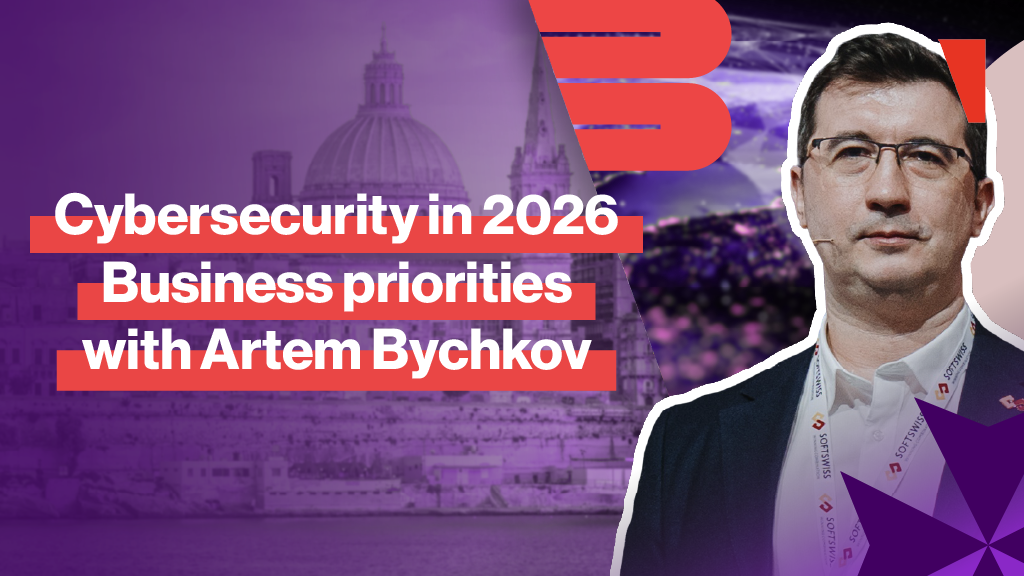
In a strategic overview of cybersecurity in 2026, Artem Bychkov, Deputy Chief Security Officer at SOFTSWISS, emphasised that cybersecurity has evolved beyond a purely technical domain to become a core business imperative. Sponsored by SOFTSWISS, this insight reflects how security now influences trust, brand integrity, and operational resilience across industries, particularly in highly regulated sectors such as iGaming, where data breaches make headlines and disrupt commercial operations.
According to Bychkov, Cybersecurity has gone from being an IT function in the background to being a visceral, live threat to business, which can impact trust, reputation, brand awareness, and provide firms with an opportunity to gain a competitive edge if incidents occur. He highlighted that traditional perceptions of cyber defence have shifted dramatically over the past decade and a half, and organisations must now treat cyber incidents as strategic events with commercial consequences.
Rising threats and industry statistics
In referencing the findings of industry surveys, Bychkov has identified that a significant portion of SMEs are not adequately prepared for targeted attacks based on their responses to recent surveys. Bychkov also used the industry’s publicly available data to illustrate that there has been a marked increase in the number of data breaches that companies are experiencing year after year. He stated that this clearly shows that there is a growing number of threats to businesses today and that all companies must understand these threats and take steps to guard against them.
Bychkov classified current attacks as having a combination of both historical and emerging forms of attacks. There have been many examples of traditional types of attacks, including denial-of-service, hacking, and social engineering, and the growth of an underground infrastructure (or ecosystem) to support these types of attacks. There has also been an increase in the kind of cyber attacks called “supply chain attacks” that involve compromising third-party suppliers of products or services to a company or organisation. The number of incidents of third-party supply chain compromise has increased substantially within the last few years and demonstrates how some types of vulnerabilities may exist outside the direct control of a company’s security team.
AI and end-user vulnerabilities
The proliferation of attacks on end-user devices also emerged as a concern, especially given the widespread use of bring-your-own devices without adequate security controls. Artificial intelligence was underscored as a force multiplier for threat actors, enabling the generation of deepfakes, forged documentation, and highly effective phishing campaigns with minimal technical expertise.
Strategic cybersecurity priorities for 2026
Cybersecurity awareness for employees and stakeholders is essential to fortify defenses. Human elements are commonly the first layer of protection from social engineering attacks. Rather than utilising an ad hoc means to remediate security defects in enterprise systems and applications, businesses should focus on systematic and continuous improvement initiatives.
Bychkov strongly supports secure development practices that include code analysis, dependency scanning, and ethical hacking methodologies through bug bounty programmes to identify security weaknesses before malicious actors can exploit them. A supply chain risk management methodology and the need to implement both technology controls and thorough due diligence processes when evaluating the security posture of partners and third-party providers were also discussed.
On the subject of how organisations can enhance their threat awareness and response capabilities, Bychkov mentioned that real-time threat monitoring and fraud detection technologies, such as device fingerprinting and Artificial Intelligence (AI) supported detection, will elevate these capabilities.
Cybersecurity as a business differentiator
Bychkov concluded that cybersecurity features now serve as differentiators in the market, transitioning from internal protective measures to external business selling points. Security and trust are becoming integral components of product value propositions, reinforcing the necessity of strategic cybersecurity investment in 2026. For more insights on cybersecurity and industry trends, visit the SiGMA website here.


