


Why AI and blockchain matter for fairness in iGaming

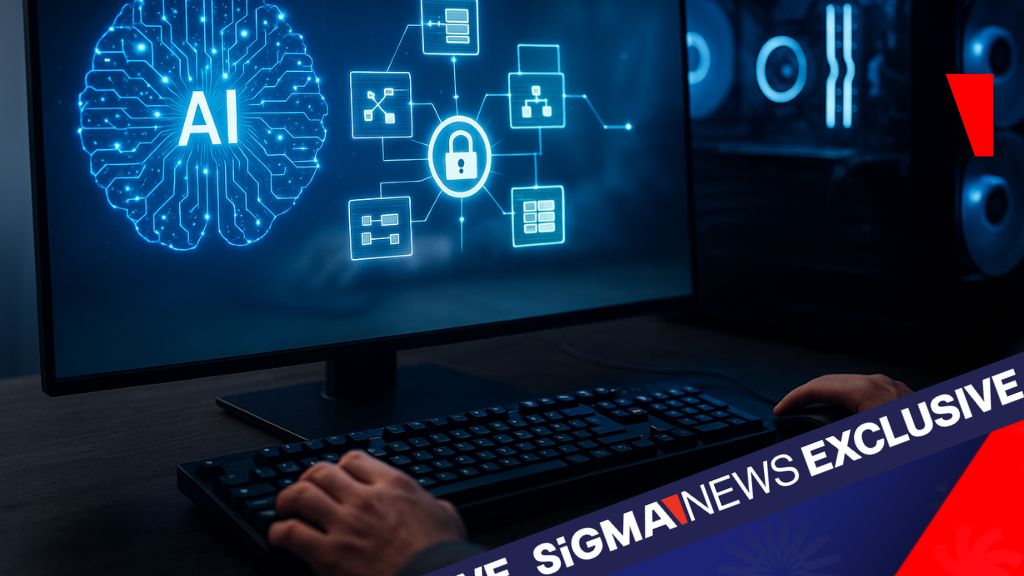
As artificial intelligence (AI) and blockchain move from early experiments to everyday industry tools, their importance in improving fairness and transparency in iGaming is becoming clearer. These technologies are no longer limited to powering games or handling payments. They are now starting to shape how trust, oversight and accountability work across the sector. They are steadily becoming the systems that build trust in a digital regulatory environment where decisions must be supported by clear evidence. Recent industry forecasts show video gaming and digital entertainment remain strong growth areas, reinforcing the need for technology-led oversight as the market scales.
Regulators in several markets are already testing these tools. The UK Gambling Commission (UKGC) has flagged emerging risks and is investigating how data and new technology change product behaviour and consumer harm. The Malta Gaming Authority (MGA) has been operating sandbox programmes to test distributed ledger applications for compliance and auditability. At the same time, international bodies continue to update guidance on virtual assets and service providers, underlining the need for consistent, risk-based approaches as gaming integrates more digital payments and tokenised assets.
To examine the growing use of AI and blockchain in gaming oversight, SiGMA News reached out to Raj Kapoor, founder of the India Blockchain Alliance, who explained how these technologies can reshape the definition of fairness in gaming and give regulators clear evidence to distinguish skill-based games from chance-based ones. He said they can help move oversight from subjective judgement to measurable proof.
Moving from judgement to evidence
Kapoor believes the future of fair play lies in objective, data-driven assessment rather than interpretation. “AI and blockchain are not only transforming how games are played, but how fairness itself is defined,” he said. “In the tug-of-war between skill and chance, these technologies are fast becoming the referees, neutral, data-driven, and incorruptible.”
He explained that AI can study gameplay in great detail by analysing patterns, timing, decision points and reaction differences across millions of rounds. “AI, with its deep learning and behavioural analytics, can dissect gameplay at a microscopic level, tracking patterns, timing, decision complexity, and reaction variance. Over millions of data points, it can statistically prove whether outcomes are driven by skill (strategy, learning curves, reflexes) or by randomness,” he said. Kapoor added that this level of analysis helps regulators understand how much control players have over outcomes, and whether a game should be treated as skill-based or chance-based.
“Imagine a regulator no longer relying on subjective definitions, but on quantifiable evidence of player agency,” he said. “That is the kind of clarity AI brings in a truth machine that rewrites gaming jurisprudence.”
Why blockchain matters for fairness
Along with AI, Kapoor believes blockchain promotes justice by ensuring that documents are secure and unchangeable. “Blockchain brings radical transparency to the table,” he said. “Smart contracts can encode rules immutably, ensuring outcomes are provably fair and verifiable in real time. For regulators, this means every spin, card, or bet can be traced to a tamper-proof ledger.”
Kapoor noted that this makes it possible to check how a game works without guessing. “The black box of iGaming becomes a glass box, open, auditable, and mathematically fair,” he said. He also mentioned that decentralised oracles can improve game randomisation and reliability. These technologies can cryptographically verify events like dice rolls or card shuffles, removing the possibility of manipulation.
Combining intelligence with integrity
Kapoor said the most powerful results appear when AI and blockchain are used together. “When AI’s intelligence meets blockchain’s integrity, regulators get the best of both worlds, continuous oversight without continuous interference,” he said. “It is compliance that scales, fairness that is provable, and innovation that remains unshackled.”
He believes that in the coming years, regulators will be able to classify games through data rather than legal description. “In the near future, frameworks may classify games not by abstract legalese but by data signatures, skill-based, chance-based, or hybrid, each validated by transparent AI and blockchain metrics,” he said. Kapoor added that this will provide the industry with a more dependable and uniform system of assessing games, eliminating conflicts and making regulations easier to enforce.
A future guided by measurable fairness
Across global markets, regulators are seeking tools that can support clearer oversight as digital gaming grows. Kapoor’s view is that AI and blockchain offer a path where fairness is measurable and transparent. He said, “The message is clear: the house does not always have to win, but the truth always will.”
Beneath limestone and spring skies, a new pulse takes hold at the Malta Fairs and Convention Centre (MFCC). From 01 to 03 March 2026, SiGMA Euro-Med hosts 12,000 minds shaping gaming’s next chapter. This isn’t just another conference; it’s an ecosystem in motion. Be part of the blueprint.


