


HSBC MALTA: CrediaBank moves towards acquisition amid optimism and scrutiny

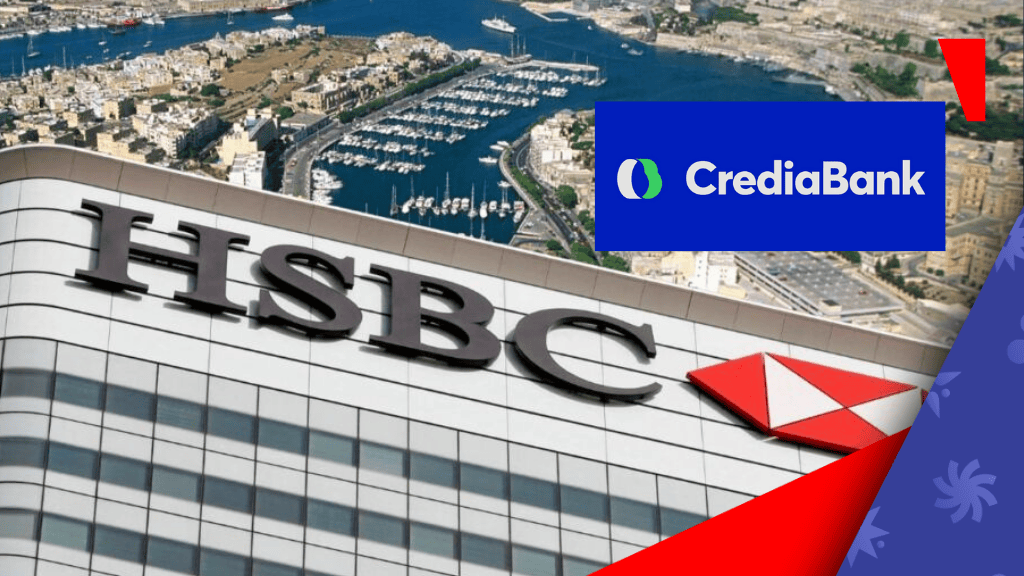
On 15 August came the pivotal news: HSBC Holdings, through its subsidiary HSBC Continental Europe, identified Greece’s CrediaBank (formerly Attica Bank) as the preferred bidder for the purchase of its 70.03% stake in HSBC Bank Malta. The Maltese bank formalised the development with a company announcement on the Malta Stock Exchange: exclusive negotiations with the buyer, with the process remaining subject to MFSA and ECB approval, and a timeline of “several months” from the signing of a binding agreement. For minority shareholders, nothing changes in the short term: the bank remains listed in Malta and the free float continues to be traded, pending any future corporate decisions.
The political reaction was unusually unanimous. From Athens, Finance Minister Kyriakos Pierrakakis hailed the transaction as a “milestone” for the Greek banking sector and a virtuous example of the Banking Union and cross-border consolidation. From Valletta, Finance Minister Clyde Caruana described the choice as “a significant development” that could strengthen competition in the domestic market, recalling the complexity of finding a buyer with a strong EU/Eurosystem profile and adequate reputation.
To appreciate the strategic importance of the move, one must look at both sides of the table. HSBC is continuing its global repositioning: reducing its presence in smaller European markets and concentrating capital and management on Asia.
On the Greek front, CrediaBank is the outcome of the deep restructuring of Attica Bank, accelerated by its merger with Pancreta and the recapitalisation that reshaped its shareholder base. In July, the group completed its rebranding: today it stands as Greece’s fifth-largest banking group, controlled by Thrivest Holding (around 57%) and with a significant stake still held by the state-owned HFSF fund (≈36%). This is more than cosmetic: in March, Moody’s raised its BCA to b1 and long-term deposits to Ba2 with a positive outlook, signalling an improvement in credit quality and governance.
This recovery path is all the more significant given its starting point: in 2016, joint inspections by the Bank of Greece and the SSM revealed serious deficiencies (risk management, governance, IT, lending against regulatory instructions), prompting a leadership overhaul and a lengthy balance sheet clean-up. The Malta transaction is, symbolically, the culmination of that turnaround.
The Maltese dimension: opportunities and regulatory hurdles
For Malta, the arrival of a new EU player brings two promises and one condition. The promises: greater competition (pricing, services, digital innovation) and deeper integration with the Eurozone’s banking market. The condition: the deal must pass fit & proper assessments of shareholders and the board, alongside prudential checks on capital, liquidity and post-acquisition business plans. It is here that the resilience of CrediaBank’s “new chapter” narrative will be tested.
On funding, indications circulating among operators and the local press suggest a predominant reliance on internal resources, in light of the group’s market activity in 2024–2025 (capital increases and debt issuance). This is no trivial matter: minimising fresh equity or excessive leverage would make supervisory approval easier.
The reputational backlash of 23 August
Just a week after the announcement, on 23 August, CrediaBank dismissed as “unfounded” certain insinuations published in the Greek media concerning a key shareholder and potential conflicts of interest, describing them as “malicious attempts” to sabotage the deal. The allegations focused in particular on Alexandros Exarchou, one of the three shipowners behind Thrivest Holding and husband of CEO Eleni Vrettou. According to Greek press reports, Exarchou had been linked to a controversial 2014 railway contract, now part of a broader European investigation into infrastructure safety. CrediaBank responded by stressing that the shareholder’s involvement in the project was “limited and marginal,” that no charges concern him directly, and that all relevant elements had already been shared with regulators.
The bank also reaffirmed the solidity of its governance mechanisms: a board of 13 members, 11 of whom are non-executive with an independent majority, committees chaired by independent directors, and oversight provided by chairman Konstantinos Herodotou, former governor of the Central Bank of Cyprus and a former ECB Governing Council member by virtue of that office. In essence, the institution sought to neutralise any suspicion of conflicts of interest or reputational vulnerability, framing the episode as a demonstration of communication resilience and regulatory transparency.
What changes for clients, employees, and the market
For HSBC Malta’s clients, the keyword in the short term is continuity: branches and digital channels remain active, with products and conditions unchanged until the transaction is closed and migration is completed. The primary concern for employees is integration: overlapping networks and functions, service levels, and digital investment. For the market, the key question is whether CrediaBank will be able to leverage HSBC’s corporate and retail client base, maintaining the high compliance and technological standards (a hallmark of the outgoing bank) while bringing greater commercial agility. These factors will determine the impact on spreads, pricing, and innovation.
Risks not to underestimate
Three principal risks stand out:
- Regulatory: the MFSA-ECB approval process could drag on if concerns emerge over governance or the sustainability of the post-deal plan.
- Execution: operational and IT migration is always the Achilles’ heel of banking M&A; timelines, costs, and post-migration quality will weigh heavily on customer satisfaction.
- Reputation: the controversy of 23 August shows that the public dimension of the deal remains sensitive; transparent handling of conflicts and shareholder relations will be under scrutiny.
What is at stake
If the deal closes in the coming months, Malta will gain a new EU player with ambitions for growth, while CrediaBank will be able to claim its first international expansion as evidence that its turnaround is complete. For HSBC, it will mark another step in its pivot to Asia. Yet everything depends on the credibility of execution: numbers, compliance, integration, and communication. That is what separates a “milestone” from the mere chronicle of an announcement.
What to monitor from here on: the regulatory approval timetable, any conditions imposed by MFSA/ECB; details of pricing and financing structure; IT and HR integration roadmap; updates on governance and internal controls. In other words, the second half of the story – the one that transforms a deal into value for the system and for clients – begins now.
This article was first published in Italian on 25 August 2025.


