


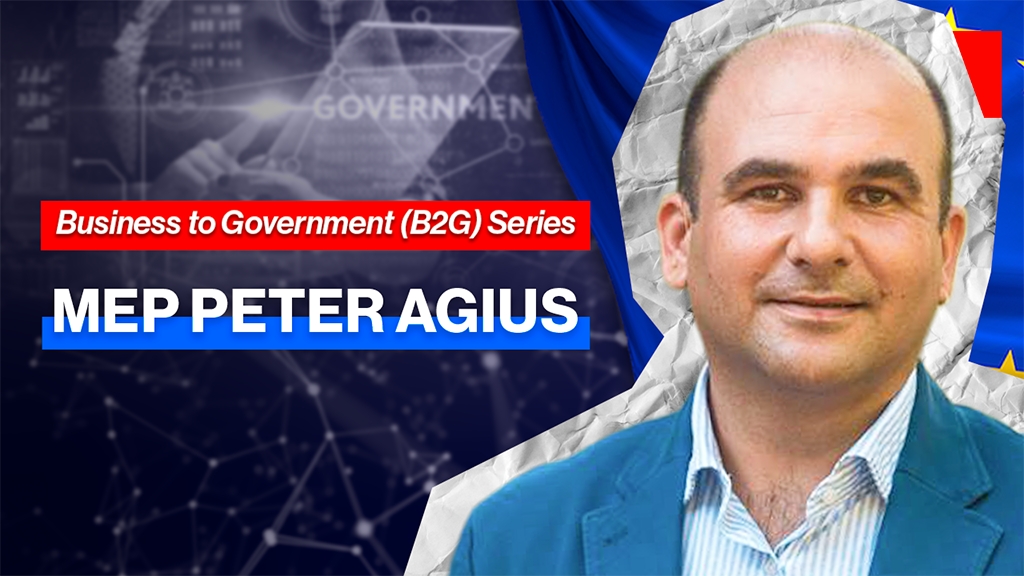
European Parliament Member Peter Agius sits down with SiGMA TV‘s Business to Government series to map Europe’s tangled online gaming landscape. Speaking in Brussels, Belgium, the MEP for Malta and Gozo, and former Head of the European Parliament Office, explains that the European Commission stopped policing gambling infringements in 2017, leaving member states to design conflicting regimes.
Operators licensed in one country are now sued in another, and Malta’s Bill 55, crafted to shield local licensees from foreign judgments, faces a formal infringement notice. Agius warns that legal certainty, free movement, and consumer protection all hang in the balance, and he outlines how Brussels can restore order.
Fragmented EU online gaming market
Agius recalls how the Commission’s retreat sparked regulatory chaos: “We have a bit of a jungle building with different member states having their own laws and their own licensing systems“. Without a central referee, national authorities carve out monopolies, impose advertising bans, and ignore notification duties. Operators based in Malta then face actions in Austria and Germany, where losing players, bankrolled by third-party litigation funds, demand refunds.
The MEP argues that free movement of services still applies, yet Brussels refuses to enforce proportionality. Courts sympathetic to national interests accept claims that the original licence is irrelevant, even when the provider meets strict standards at home. Agius calls the funding model “morally doubtful”, adding that it exploits the Commission’s silence and encourages copycat lawsuits across the bloc.
Bill 55 faces judicial scrutiny
Malta’s response came in 2023 with Bill 55, a clause instructing local courts to refuse enforcement of any foreign ruling that undermines national gaming policy. “The Commission has a powerful case against Malta, if you take it in general terms on whether one member state can block the enforcement of a judgment in another member state,” Agius concedes. Yet he insists context matters. By refusing to regulate gaming, Brussels forced Malta’s hand, and any solution must address both sides: foreign barriers and Maltese shields.
A letter of formal notice now gives Valletta two months to justify its stance. If talks collapse, the case may reach the Court of Justice. Agius has written to the Commissioners for the Internal Market and Justice, urging them to revive infringement action against states that bar foreign operators and to regulate third-party litigation funding that drives cross-border claims.
Towards proportionate union action
Agius sees little appetite for an all-encompassing gambling directive, yet he notes that horizontal files, the Digital Services Act, the AI Act, and GDPR already touch the sector. Targeted measures under these frameworks could harmonise advertising standards, minor protection, and data duties while respecting subsidiarity. The Court of Justice can then reassert the principles of proportionality and free movement in future rulings.
The MEP urges Maltese operators to stay at the forefront of player integrity, responsible gaming, and anti-addiction safeguards. “Leaving gaming as the law of the jungle is very unsustainable”, he states, arguing that only a coordinated European approach will protect jobs, revenue, and consumers.
What’s next?
Agius’s intervention lays out a stark choice. Either the Commission resumes active enforcement and steers a familiar path, or Europe’s gaming industry remains locked in a patchwork that fuels aggressive litigation and legal uncertainty.
Stay up to date with the latest hot topics with industry leaders happening on our SiGMA Channel and get ready for our upcoming SiGMA Euro-Med summit, happening in Malta, September 1–3.


