
Safe bet: IBIA’s winning hand in sports integrity

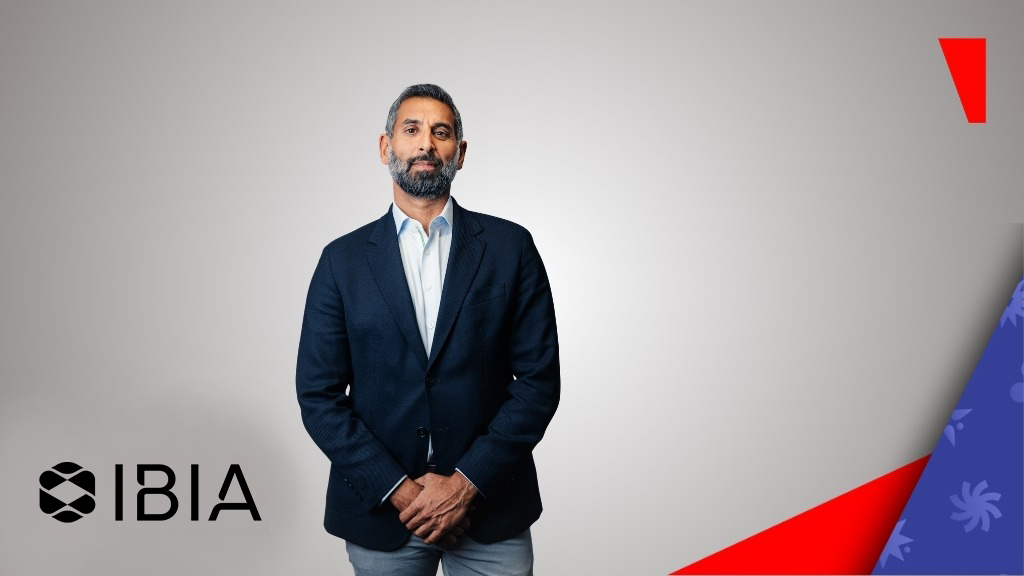
From match-fixing detection to global data sharing, International Betting Integrity Association (IBIA) CEO Khalid Ali outlines what’s being done to help protect the integrity of sport and regulated betting markets across six continents.
Words by Duncan Barry
“IBIA’s core role is to safeguard sporting events, our members and regulated betting markets by detecting, disrupting and preventing match-fixing that threatens sporting integrity.”
These were IBIA CEO Khalid Ali’s first words when asked for a brief about IBIA’s role – a global voice of the regulated sports betting industry whose primary role is to protect the integrity of betting markets and sporting competitions.
In a nutshell, IBIA is a not-for-profit association funded by operators committed to protecting sport, consumers and markets from betting-related corruption. Established over 20 years ago by a small group of responsible operators, today IBIA represents over 90 regulated operators with more than 200 brands active across six continents.
IBIA uses a Global Monitoring & Alert Platform (Global MAP), a bespoke tool for identifying and sharing alerts on suspicious betting across regulated markets worldwide. It enables its members to detect and report suspicious betting activity and share that intelligence with sports bodies, regulators and law enforcement.
In addition, IBIA delivers athlete education programmes, conducts research and advocates for balanced, evidence-based regulation that strengthens integrity.

‘Game’ partners
IBIA’s scale is possible because its model is built on collaboration.
“Our monitoring network harnesses the collective intelligence of many of the world’s largest regulated betting operators, allowing us to monitor over 1.5 million sporting events across over 80 sport disciplines and generating over $300 billion in bets with our members each year,” Ali said.
“We work in close partnership with leading sports bodies such as FIFA, UEFA, the IOC and the International Tennis Integrity Agency, as well as gambling regulators and law enforcement agencies worldwide. These cooperation agreements allow for two-way data sharing and coordinated investigations. This collaborative ecosystem is the foundation of effective sports integrity,” he continued.
IBIA and its members monitor activity through both retail and online betting channels, acting as an early warning system by detecting suspicious betting patterns that may indicate corruption. Powered by operator intelligence, its Global Monitoring & Alert Platform (Global MAP) identifies and shares alerts on suspicious betting to protect sports, betting markets and operators from corruption.
“Over time, sports federations have seen the practical value of our data and the professionalism of our approach. The successful investigation and sanctioning of match-fixers using IBIA intelligence has demonstrated that responsible, regulated betting operators are a critical part of the solution to identifying and sanctioning match-fixing,” Ali said.
Data-sharing and monitoring system effectiveness
Ali said that the systems used to detect corruption practices are extremely effective, when asked about IBIA’s effectiveness of their detection systems.
“IBIA’s Global Map analyses customer account-level betting data across international markets, allowing us to detect patterns that would not be visible at a single-operator or national level.

“Between 2021 and 2025, IBIA and its members reported nearly 1,250 alerts to sports and regulatory authorities, many of which led to investigations and, where corruption was substantiated, sanctions imposed on teams, players and officials around the world,” he said.
When asked to explain the link between match-fixing and online sports betting, Ali highlighted that match-fixing is a long-standing issue in sport and is not caused by betting itself; indeed, some studies have identified higher numbers of sport related match-fixing, such as promotion, relegation or financial pressures, rather than betting.
“What online betting in particular, has done is create traceable data. In regulated markets, every bet leaves a digital footprint. This makes it much harder for criminals to operate undetected.”
IBIA has evolved from a Europe-focused initiative into a truly global integrity organisation. Our strategic focus now reflects the internationalisation of sports betting, new market openings and emerging challenges such as crypto, AI, esports and women’s sports.
This evolution is captured in IBIA’s Mission 2030: a five-year strategic roadmap to strengthen IBIA’s global role and impact. It focuses on enhanced monitoring, deeper collaboration and smarter prevention activities, and which form the three pillars of sustainable sports integrity. It is well known that the integrity risks are highest where sports governance is weak and betting activity is concentrated in poorly regulated or unregulated betting markets. Law enforcement agencies, Interpol and Europol, insist that most organised match-fixing activity targets these betting markets, particularly in parts of Asia.
From a sports perspective, football and tennis have consistently generated the highest number of alerts. However, more than 99.9% of matches show no integrity concerns in IBIA members’ regulated markets. In 2025, IBIA members offered betting on over 1.5 million sporting events, with 300 betting integrity alerts raised.
Africa’s regulated betting market expanding rapidly
Africa’s regulated betting market is expanding rapidly.
“The challenge for African betting operators, sports and regulatory authorities is how to meet the ever-evolving approach of fixers and the implementation of best practice integrity provisions that have been adopted in other parts of the world to protect the African sporting and betting ecosystems.
“According to leading global gambling market data and intelligence company H2 Gambling Capital, Africa’s online betting market is projected to grow significantly, with gross gambling revenue expected to rise from US$3 billion in 2021 to US$16.4 billion by 2030.
“As betting activity moves from informal or offshore channels into regulated markets, it becomes visible, traceable and monitorable. This creates the conditions for effective integrity safeguards. IBIA supports this transition by providing access to its Global Map, sharing intelligence with regulators and sports bodies, and promoting education and best-practice regulation,” Ali explained.
An MOU with the Africa iGaming Alliance (AIA) reflects the AIA’s and IBIA’s commitment to supporting emerging regulated markets in Africa. It aims to strengthen integrity frameworks across African jurisdictions by sharing best practices on monitoring, regulation and athlete education.
Concluding, Ali said that IBIA’s long-term vision is to make effective sports betting integrity monitoring and reporting a requirement of every regulated betting company, noting that “The future of sports integrity will be shaped by those who anticipate change, innovate and work together.”
Sanctions announced in 2025
Number of matches and athletes
- 54 matches proven to be corrupted using IBIA data
- 24 athletes, teams or officials sanctioned as a result of IBIA intelligence
Africa suspicious alerts
Between 2021 and 2025, IBIA reported a total of 117 suspicious betting alerts linked to African sporting events only
Football games: 67
Tennis games: 42
Awareness
Education is key. IBIA has helped raise awareness among 36,000 athletes across 13 countries in Europe and North America.


