
No risk, no empire. How Alfaleads Group transformed risks into strategic growth

Trendsetters don’t copy – they create. Here’s how:
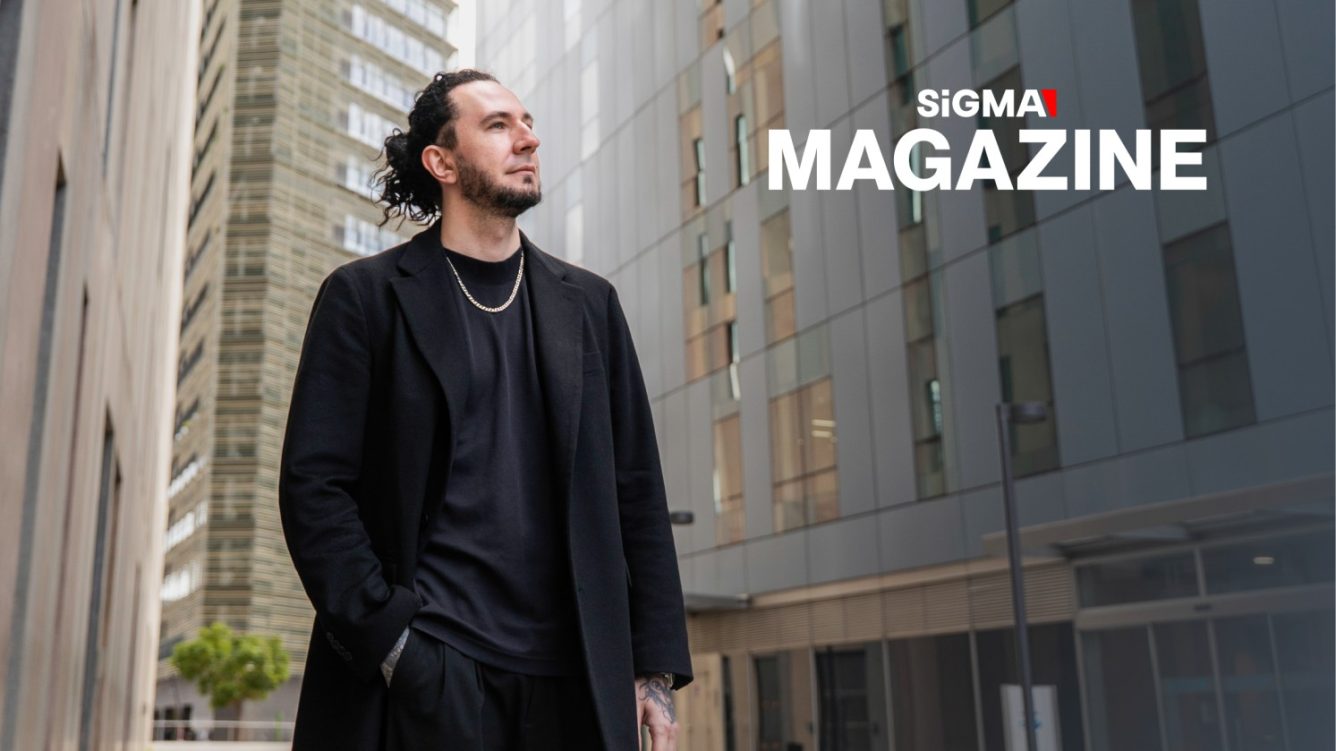
Alfaleads Group celebrates ten years in the industry. In the cover story for SiGMA Magazine’s 37th issue, CEO Roman Manuylov discusses the company’s evolution from arbitrage to international holding, sharing insights on leadership, risk management, and team building.
Is there a day from the past ten years that you find yourself coming back to most often — and what makes it so memorable?
I clearly remember our New Year’s corporate party six years ago. The entire team was together in one place — drinking, celebrating, having a good time. But a small group of executives already knew that this party might be our last. While we were celebrating the end of the year, news hit the market like a thunderclap: all payment systems had been blocked in one of our key regions. At the time, our business consisted of an affiliate network and several media buying teams working with Google and Facebook — and almost all of them were focused on the CIS. A payment system shutdown means one thing: new users can’t deposit. And if deposits stop, traffic stops. Completely.
As often happens, what felt in that moment like a potentially fatal blow didn’t just make the company survive — it fundamentally reshaped us. We emerged as a very different organisation: a company with multiple business lines and a clear refusal to rely entirely on a single direction.
Diversification became our most important strategic vector in all the years that followed. And none of this would have been possible without the persistence, fearlessness, and deep expertise of our team — a team that, at that moment, stepped straight into the fire.
When did you first feel like more than just a manager — when did you first feel like a leader?
Leadership is arguably the single most important quality a manager can have. Sometimes faith and faithlessness matter far more than expertise or big resources. Especially in our market, where open data is scarce and everything gets decided through personal conversations and face-to-face meetings.
You can grow leadership qualities and pull a team forward through a few core directions — developing expertise, building charisma, and fostering a sense of fairness and openness. Those are the traits I cultivate in myself, and the values we promote across the team.
When I took the helm of the affiliate network many years ago, and later the whole holding, I made a point of giving every employee a chance to step up and speak directly with the CEO. I generally encourage and nurture differing opinions within the company, while taking on the responsibility and authority to make the final decisions. Looking back, I think I’ve grown a lot in my ability to let go and delegate, giving colleagues the space to shine. I believe that shift affected not only me as a leader, but also me as a person.

Can you tell us about the boldest and most difficult decision you’ve made recently — and why it was so hard, even though it seemed obviously the right move?
I think the boldest decision we made last year was canceling the BiG conference. It’s not easy to make a call like that when there’s already $2 million of budget spent. The project was nearing execution, but a set of risks — many of which were out of our control — wiped everything out. For example, political unrest in Serbia and, because of that, a whole chain of potential issues: contractors failing to meet their commitments and venues for networking being shut down. Not only can the launch of a project become a problem, but so can its closure, especially when you’ve already poured a lot of money and investment into it. It feels like you have to try to recover those costs, but sometimes the smarter move is to stop investing and not wait for the investment to pay off.
Can you give an example of when the team achieved something that seemed impossible — and you realised that trust really works?
Every year, the team keeps surprising me with its strengths — both in victories and in crisis recoveries. We’ve rebuilt teams, switching traffic sources from Facebook to Google, and we’ve launched new projects from scratch within the holding, like alfa:search or Alfaleads In-App. It’s the persistence and the constant drive to win that make Alpha what it is — and that’s what draws people to work with us.
How have the company’s values and culture helped you overcome crises and achieve success?
The company culture is built on the vision and personal qualities of the CEO and shareholders, and it is such a core part of our organisation that it often determines which projects take off and which don’t. It’s like doing something that goes against your own beliefs — those things rarely end up successful.
And culture also helps us filter people out — it drives bad apples away. Our DNA simply doesn’t accept talkers, slackers, or schemers.
Every time I step up with a microphone in front of the team on one of our anniversary days, I talk about our “realness.” There are no people among us without a moral compass, without drive, without that fire in their eyes. We are “real,” and that’s what lets us win year after year while still looking our partners in the eye. We’re proud of what we do.
Your company strives to be a trendsetter. What does that mean in practice for the business and for you as CEO?
There are two strategies for winners. The first strategy is to not fall far behind the leaders, and you’ll always be successful while trailing just a bit behind the top in the business. Copying features and cool solutions your main competitor rolls out helps a company feel pretty good. This is the strategy social networks have always used, like VKontakte, which has always followed Facebook and Instagram. Just “doing the same thing” is enough to feel comfortable. This strategy will never make you a leader, but you’ll still do fine.
The second strategy is the pursuit of leadership, primacy, and major achievements. It’s hard to become a leader by repeating what others do. As a company, we’ve always had big ambitions and we’re always aiming to be the strongest at everything — strongest in traffic, strongest in management, strongest in marketing, most efficient in operations. That’s our core goal — that’s who we are. With this approach, we attract a team of like-minded people. If we do something without aiming for leadership, it’s not interesting to us. In that sense, we realised that we enjoy creating something new and changing the market. And it just so happened that many of the decisions we made ended up shaping the market and making us trendsetters — however immodest that may sound.
At one point, we started hosting private events for top partners. At the time, it seemed insane — the whole market was chasing big attendance numbers and broad audience reach. We went the opposite way, doing strict selection and focusing on top performers. Eventually, this became a full-fledged strategy for us — concentrating on large teams and top partners. Over time, it became normal for the market too, and now almost everyone does it.
We’ve had many examples of marketing communications that became the norm and were copied. Examples of our motivation systems, media buying solutions, SEO approaches — these are all things we develop, and they become part of the market. And we’re not against it. At first, it felt like we should fight it and defend our authorship. Now we’ve matured and realised it’s simply a sign that we’re doing everything right — and that’s okay.
It sounds like any format where you’re doing something first carries extra risk. Do you agree with that?
Absolutely. Like I said, if you want to feel comfortable and be successful, you don’t need to invent anything — you just need to replicate well. Creating something new always comes with risk, and major success is impossible without risk. It seems like every business that becomes truly successful is a business that takes risks, changes the industry, and changes the way business is done. We see many examples both inside our market and outside of it. And the gambling industry is always about risk. You have to risk a million times to hit the jackpot.
What principles do you use to assess risk and make the toughest decisions? How do you know whether to pursue a project or stop?
We usually approach these questions as separate projects. We calculate the potential, look at the opportunities — how much we can earn and what we can gain from it. Then we assess how difficult it is to implement, and after that we review the market’s best practices and evaluate our own resources. This gives us a kind of map where we can see both the potential and the level of risk.
At the same time, we always have differing opinions within the company. That allows us to look at things from different angles, because even a CEO can sometimes fly off into space. In his head, everything seems easily achievable. The team’s job is to keep the CEO grounded. That’s why we have a system of counterbalances in the form of top management and the differing opinions of shareholders, to whom we can pitch projects and get feedback. Sometimes we refine the idea, sometimes we move straight into implementation, and sometimes, on the contrary, we decide the project has no potential for execution.
How does the structure of Alfaleads Group help you take risky steps and win?
Even though systems are an important part of the company, we are still a company with a human face — with all the pros and cons that come with that approach. And yes, our team includes a lot of stars, people who directly influence results.
We do have roles, and we do have people. You can’t say we’re a company that runs purely on systems, where everything can be easily reshaped. That’s not really the case. At the same time, it so happens that because of this, our company has very high employee retention. We have people who have been with us since the very beginning. Alfaleads Group is turning 10 soon. We have people who have been here for five, seven, eight years. For that reason, we rely on people — and for that same reason, people rely on us, stay for a long time, and become successful.
That’s also one of our balancing tools, because people who have been with the company for a long time develop deep expertise, share it, and train new employees. And when one of the executives or shareholders wants to push a project forward, there is a real opportunity to argue for or against it in the boardroom or at a C-level meeting.
You mentioned stars within the team — how do you find them, or how do you grow them internally?
As always, the Pareto Principle works in a company — 20% of the effort produces 80% of the results. It’s the same with a team. The emergence of stars can be random, or it can be the result of focused work in that direction. By giving employees the chance to show what they can do, building a solid motivation and reward system, and giving them authority and access to senior leadership, you increase the odds of stars appearing in the team. Like in elite sports — the industry has its big names as well. And the biggest risk is growing a star and then letting them go to a more successful club. So development is only part of the job. Retention is often the more difficult process. It requires a highly qualified HR team and strong leadership. Just as easily as you can lose a star, you can also “crown” them yourself. And an employee with a crown is almost impossible to manage.
Looking back on 10 years of Alfaleads Group’s development, what is the main lesson you would highlight — what makes the company strong and resilient, and what helps you stay a leader in the industry?
Over these 10 years, we’ve learned that a company’s resilience is built on three pillars: people, culture, and the willingness to make tough decisions.
People who stay with the company for years develop expertise, train new colleagues, and uphold a high standard of work. A culture based on honesty, drive, and mutual trust creates an environment where the team is ready to take responsibility and act boldly. And finally, the ability to make difficult decisions — even when the stakes are high — allows us to stay agile and respond effectively to any challenge.
These principles make us stronger than any crisis, and they allow us not only to survive, but to set trends in the online entertainment market. As a result, our company has become exactly what we wanted it to be: resilient, bold, and backed by a team capable of achieving the impossible.
Read the magazine in full by visiting our digital archive.


