


Thailand anti-gambling network rejects lottery campaign policies

A coalition of anti-gambling groups in Thailand has urged political parties to abandon proposals centred on “all kinds of lottery” policies, warning that such measures risk worsening addiction, debt and social harm. The five-region network, led by the Stop Gambling Foundation, issued a public statement on 3 February 2026 as lottery-based incentives gained attention in political campaigns.
The network said several parties had recently promoted lottery schemes to motivate public participation in government programmes. These included ideas aimed at encouraging household savings and persuading small and medium-sized enterprises to register in official databases. However, the coalition argued that such policies rely on gambling rather than sustainable solutions.
Thanakorn Komkrit, secretary-general of the Stop Gambling Foundation and a representative of the network, said in the statement: “The network hereby announces that we do not agree with the ‘all kinds of lottery’ policies of every political party, for the following reasons.”
Lotteries defined as gambling under Thai law
The network’s first concern focused on the legal status of lotteries in Thailand. It stressed that all lottery formats are considered gambling under the Gambling Act, B.E. 2478 (1935). This includes the Government Lottery, underground lotteries and other lottery models.
The coalition argued that framing lotteries as policy tools risks normalising gambling as a state-supported activity. It said political leaders should recognise the long-standing concerns surrounding gambling in the country and the need for stronger problem management.
Huge annual spending on lottery products
The statement highlighted the scale of lottery spending in Thailand. According to the network, spending on both people-run and state-run lotteries exceeds 250 billion baht (about US$7 billion) each year. This figure is around three times the value of purchases of LTF and RMF mutual funds. It is also comparable to the investment value of the high-speed rail project linking three airports.
The coalition said the scale of spending reflects the significant role lotteries already play in Thai society. It warned that further expansion would likely increase financial pressure on households.
Millions of players and growing participation
The network described lotteries as the form of gambling that most “intoxicates” the Thai public. In 2023, 27.5 million people bought Government Lottery tickets and 22 million purchased underground lottery tickets. This level of participation is five times higher than the number of people who gamble on cards, online gambling or football betting.
Each year, more than 400,000 new lottery customers enter the market. The coalition said this steady growth highlights the strong appeal of lottery products and the potential risks linked to wider expansion.
Impact on vulnerable groups
The statement raised concerns about the impact of lotteries on vulnerable groups, including children, young people and older adults. In 2023, more than 500,000 children under 18 bought lottery products. This included 400,000 who purchased Government Lottery tickets and 170,000 who bought underground lottery tickets.
Among young people aged 19 to 25, almost four million played lotteries. Of these, 2.1 million bought Government Lottery tickets and 1.7 million bought underground lottery tickets. Meanwhile, 6.7 million older people remained regular participants, with 3.7 million purchasing Government Lottery tickets and three million buying underground tickets.
The network said these figures show how widely lottery participation spreads across society.
Expansion of state lotteries and illegal markets
Another major concern was the growth of both official and underground lottery markets. Over the past 12 years, the number of Government Lottery tickets printed has increased by around 300 percent, rising from 36 million tickets in 2013 to more than 100 million today. The network said underground lotteries have expanded at a similar rate.
It also noted that as the main lottery expands, smaller formats such as online lotteries and neighbouring-country lotteries have grown by more than 150 percent. The coalition warned that adding new lottery products could encourage underground operators to issue parallel lotteries and stimulate more gambling.
Addiction concerns highlighted
The statement said: “Millions of Thais are addicted to lotteries.” More than one in five lottery players said they were addicted and could not stop buying tickets. More than five million people admitted addiction to Government Lottery tickets, while 4.5 million reported addiction to underground lotteries and 600,000 to other lottery formats.
According to the network, people who try to stop buying tickets often experience irritability, restlessness and an inability to restrain themselves, leading them to buy again.
Political debate during election cycle
The debate comes amid renewed political focus on lottery-related policies during the 2025 to 2026 election cycle. The Pheu Thai Party has put forward a proposal called “nine millionaires a day”, which would see nine people win 1 million baht ($28,000) each day through a lottery system. The party says the plan is intended to improve official data collection and support tax compliance, but it has also faced social and ethical criticism.
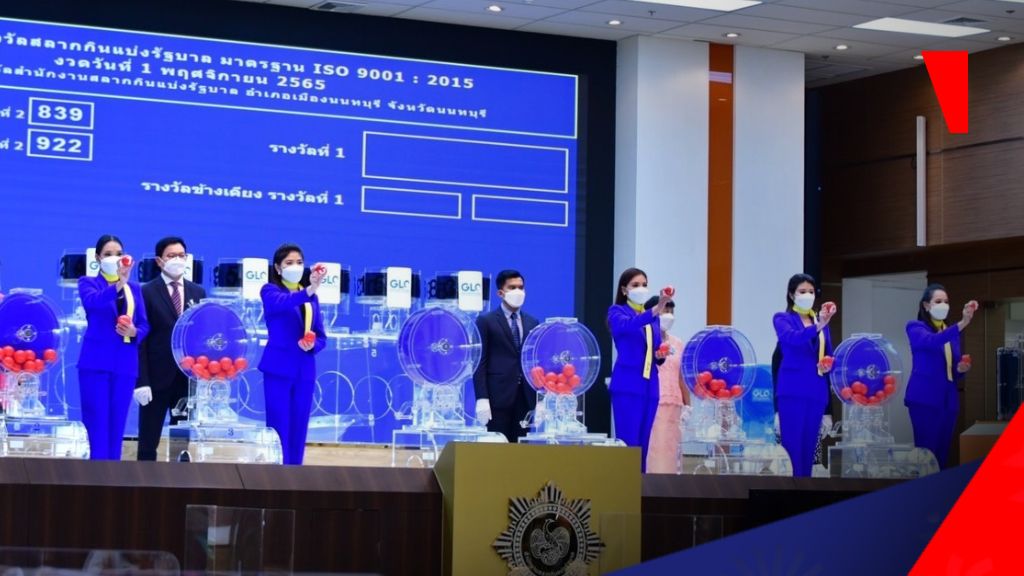
Thailand’s official lottery is one of the country’s few legal forms of gambling, alongside horse racing in Bangkok. The Government Lottery Office administers the lottery, which has operated since 1939. Around 60 percent of ticket revenue is allocated to prize money, while about 28 percent goes to government revenue.
Call for alternative policies
The network said political parties should recognise that Thais have long been exposed to lottery marketing. It argued that inequality is a key reason many people place their hopes on lottery winnings.
The coalition warned that introducing more lottery formats would reinforce the belief that waiting for luck is accepted and supported by the state. It said this would reproduce the idea that lotteries are the only hope to change one’s life.
Instead, the network urged the state to support people in building a stable life independently. It said a good state should “reduce the role” of gambling in society rather than use gambling as a “tool”.
The statement concluded that political parties should compete to propose creative policies that demonstrate the wisdom and capability of those seeking to govern the country, rather than competing to sell “hope that is entirely hopeless”. The coalition called on all parties to present more constructive incentives and to stop luring the public with lottery-based policies.
Asia’s undisputed regional heavyweight lands in Manila, 01–03 June 2026. Backed by PAGCOR and powered by 16,000 delegates, SiGMA Asia delivers two levels of game-shaping influence. If you’re serious about the region, this is the room for you.


