

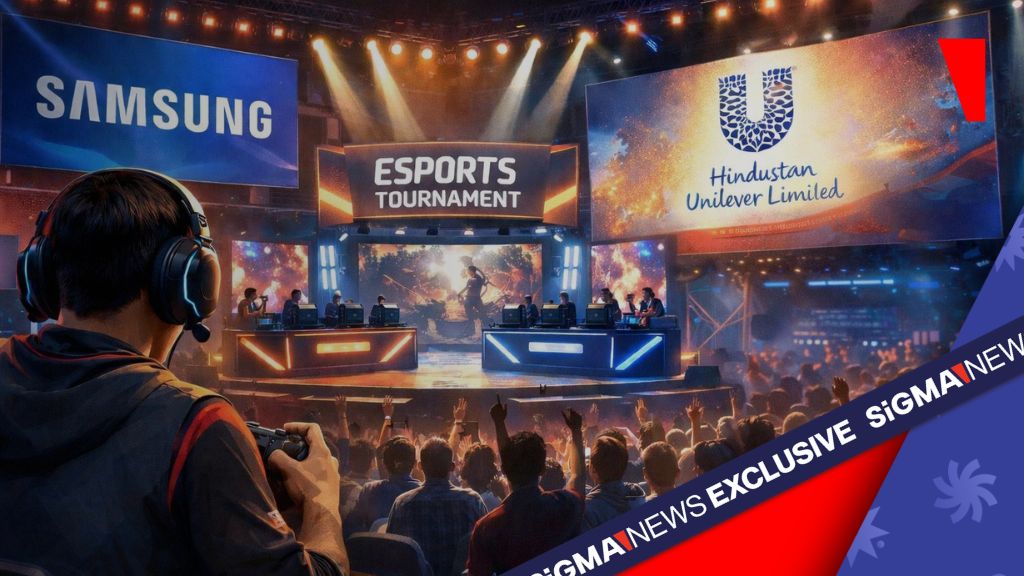
India’s fast-growing esports industry is attracting increasing interest from mainstream consumer brands, with companies such as Samsung and Hindustan Unilever entering the ecosystem through tournament sponsorships and gaming partnerships. Their entry marks a broader shift as Fast Moving Consumer Goods (FMCG) companies and large corporates explore esports as a strategic marketing channel to engage India’s rapidly expanding gaming audience.
This shift comes amid explosive growth in India’s gaming base, which now exceeds 500 million gamers nationwide, alongside rapidly expanding esports participation and viewership. The scale of the ecosystem is attracting non-endemic brands seeking direct access to younger consumers and digitally engaged audiences.
Gen Z and non-metro audiences drive investments
Brands are increasingly drawn to esports because it provides access to a highly engaged, youth-centric audience that is otherwise difficult to reach through traditional advertising channels.
“India today has over 500 million gamers, and anywhere between 80-90 million active esports viewers. That’s not niche anymore, that’s mainstream,” said Satadru Bhowmik, Esports Operations & Publisher Relations Leader, in an exclusive conversation with SiGMA News. “Most of this audience sits in the 16-30 age bracket, which is exactly where FMCG brands want long-term loyalty.”
The appeal of esports lies not just in scale, but in engagement. Unlike traditional media, esports audiences actively participate in livestreams, interact with creators, and engage in community-driven ecosystems, creating deeper brand recall.
“I see esports in India transitioning from a rapid-growth, excitement-driven phase into a more sustainable, business-first model, diversified revenue streams, stronger IP ownership, and smarter brand integrations.”
– Satadru Bhowmik, Esports Operations & Publisher Relations Leader
Tapasya Shukla, Founding Member and Managing Director of Zutsu, explained to SiGMA News in an exclusive conversation that the migration of youth attention toward gaming platforms is fundamentally reshaping brand strategies.
“India has added over 23 million new gamers in just the last year. This isn’t a subculture anymore. It’s mainstream digital behaviour,” she said. “More importantly, 66 percent of this audience comes from non-metro India, exactly where consumer brands are looking to deepen penetration.”
The growth of esports in Tier-2 and Tier-3 cities is particularly significant for FMCG brands that rely on scale and distribution depth.
Akshitt Mishraa, Chief Operating Officer at Effortless Esports, an esports event organisation company, said brands are investing because esports offers access to authentic engagement environments.
“Students are not just watching, they are actively playing, streaming, and engaging for hours. Esports gives brands direct access to Gen Z in a space they genuinely care about,” Mishraa told SiGMA. “Also, it works strongly in Tier-2 and Tier-3 cities, which makes it even more valuable for brands looking for scale.”
From campaigns to strategic investments
According to a report by Ernst & Young, India has over 450 million online gamers, making it one of the world’s largest gaming markets, driven by widespread smartphone penetration and expanding digital connectivity.
Brands are increasingly treating esports as a core marketing channel rather than an experimental initiative.
“Esports combines what most brands usually have to buy separately, long-format attention, influencer authority, community interaction, and measurable digital data,” said Shukla. “This is no longer side-channel marketing; it’s becoming a core youth engagement strategy.”
The transition toward deeper integration is visible in brand-owned tournament intellectual properties (IPs), campus activations, influencer collaborations, and hybrid online-offline esports events.
“Brands are not chasing esports because it’s trendy. They’re entering because that’s where time, loyalty, and community now live.”
– Tapasya Shukla, Founder and Managing Director of Zutsu
Mishraa said esports marketing offers advantages over traditional media in engagement quality and longevity. “Compared to traditional ads, esports gives longer engagement time and stronger community connection,” he said. “Brands are now looking at tournaments, campus leagues, and creator collaborations as long-term partnerships rather than one-time promotions.”
Regulatory clarity
The government’s Promotion and Regulation of Online Gaming Act, 2025, introduced a nationwide ban on real-money gaming (RMG), prohibiting platforms from offering or promoting online money games and restricting financial institutions from processing related transactions. Violations can result in imprisonment and financial penalties.
The legislation also established a formal regulatory framework that distinguishes esports and skill-based gaming from gambling-related activities, creating clearer legal recognition for the esports ecosystem.
Industry stakeholders say the separation of esports from betting-based gaming has helped improve brand confidence and reduce reputational risks for corporate sponsors.
The removal of real-money gaming from the broader ecosystem is expected to encourage greater corporate investment, with esports emerging as a safer and more brand-friendly engagement platform.
Electronics, FMCG, and telecom lead participation
While gaming hardware and technology brands were early adopters of esports marketing, the entry of FMCG companies such as HUL signals a broader diversification of the sponsorship landscape.
Electronics brands such as Samsung have leveraged esports partnerships to promote gaming-optimised smartphones, displays, and consumer devices, aligning product marketing with esports consumption behaviour.
FMCG companies, meanwhile, view esports as a platform to drive brand awareness, sampling, and loyalty among young consumers who represent future purchasing power.
The lower entry costs compared to traditional sports sponsorships also make esports attractive. Sponsorship packages can be tailored to digital formats, enabling brands to track engagement metrics, impressions, and audience interactions more precisely.
“Brands are now looking at tournaments, campus leagues, and creator collaborations as long-term partnerships rather than one-time promotions.”
– Akshitt Mishraa, Chief Operating Officer, Effortless Esports
Additionally, telecom operators, financial services firms, and consumer technology companies are increasingly investing in esports to build brand affinity with digitally native audiences.
Reliance-owned RISE Worldwide’s joint venture with global esports company BLAST further highlights growing corporate investment aimed at building structured esports properties in India.
This joint venture aims to bring together BLAST’s esports media production expertise, publisher relationships, wide suite of highly popular IPs, and Jio’s technology expertise, unparalleled distribution reach, and local relationships to host these events on the JioGames platform for sustainable growth and innovation in the industry.
Structured ecosystem attracts larger deals
The Indian esports ecosystem is gradually becoming more structured, enabling greater predictability for corporate sponsors and long-term investment.
Key developments include the emergence of professional esports teams, organised tournament circuits, and expanding collegiate esports programmes.
“I think we’ll see maturity and structure. Brands want predictability, and the ecosystem is gradually becoming more organised,” said Bhowmik. “Performance-driven sponsorships will become the norm, with brands expecting clearer KPIs and measurable impact.”
Shukla echoed similar expectations, emphasising that esports will evolve into a formalised marketing and business channel. “The next phase is professionalisation. Recurring tournament properties will become long-term commercial assets, and hybrid models combining teams, creators, and owned IP will dominate,” she said.
“In the next 3-5 years, esports in India will become more structured and professional,” Mishraa said. “We will see more college leagues, state-level tournaments, and brand-owned IPs. Sponsorship models will become more data-driven, with brands expecting measurable results.”
Step inside the world’s biggest iGaming community. Join HERE for weekly updates from the world’s iGaming authority and unlock subscriber-only offers.


