

Qatar to host Finalissima 2026 between Argentina and Spain

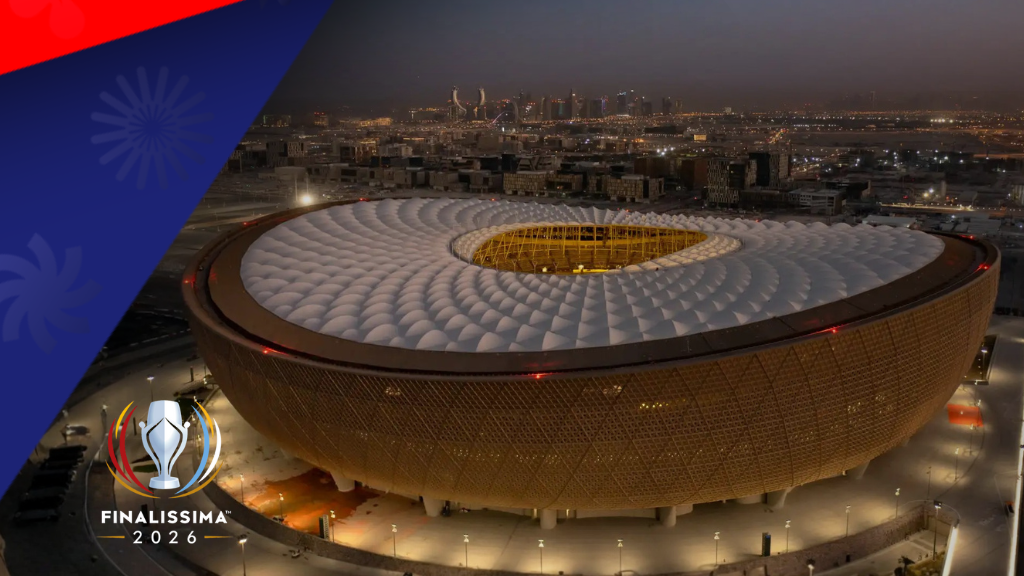
Finalissima 2026, a match between Argentina and Spain, will be the centrepiece of the Qatar Football Festival 2026. This will be the final of a series of high-profile international football matches to be held in Qatar at the end of March. It brings together the reigning European and South American champions, with Argentina having previously won the match against Italy in London 2022.
The local organising committee for football events (LOC) has announced that the series of matches will take place from 26 to 31 March 2026. The Finalissima takes place on 27 March at Lusail Stadium, which was built for the 2022 World Cup and hosted the tournament’s final. The match will kick off at 9 p.m. local time.
Why the Finalissima matters for Qatar
The organisers emphasise that hosting a festival and a match of this calibre strengthens Qatar’s reputation as a hub for major football events. The festival also serves as preparation for welcoming global football stars ahead of upcoming international tournaments.
The Chairman of the LOC for Football Events, Sheikh Hamad bin Khalifa Al Thani, said that Qatar is looking forward to welcoming players and fans from around the world and is proud to host the global football community once again. He added that Qatar is committed to hosting world-class events and being a reliable partner in international football, as shown by the Qatar Football Festival.
Following standard Finalissima regulations, if the teams are still tied after 90 minutes, there will be no extra time, and the winner will be decided by a penalty shootout. Match officials are jointly chosen by UEFA and CONMEBOL. Video assistant referee (VAR), goal-line technology and the semi-automatic offside system (SAOT) will be used in the match.
The 2022 FIFA World Cup in Qatar has left a new legacy in sports infrastructure. This has helped shape future approaches to sports development and urban planning in Qatar. Following the tournament, Qatar used the event as an opportunity to build world-class facilities for athletes, the local community and sports fans. This plan ensures the money spent on stadiums, training centres and sports areas continues to be beneficial to society, the economy and sport even after the events have finished.
History of the Finalissima
The Finalissima is a single match between the reigning European and South American champions, organised jointly by UEFA and CONMEBOL as part of the CONMEBOL-UEFA Cup of Champions. The format is based on the Artemio Franchi Cup, where the winners of the Euro and Copa América played each other for the trophy.
In 2026, the winner of UEFA EURO 2024, Spain, will play against the winner of Copa América 2024, Argentina. When Spain and Argentina play against each other in the men’s Finalissima in Qatar on Friday, 27 March, it will be the fourth time that the European champions have played against their South American rivals in a match organised by UEFA and CONMEBOL.
Until 2026, the tournament had been held three times with the following results:
- 1985: France 2-0 Uruguay (Paris);
- 1993: Argentina 1-1 Denmark, 5-4 on penalties (Mar del Plata);
- 2022: Italy 0-3 Argentina (London).
Only three captains have lifted the trophy in its history: Michel Platini, Diego Maradona and Lionel Messi. Argentina is also the reigning world champion and winner of the previous Finalissima 2022, where it defeated Italy.
UEFA and CONMEBOL cooperation
The CONMEBOL-UEFA Cup of Champions trophy is made of brass with a silver coating. It is 45 cm high and weighs 8.5 kg. The design is the same as the original GDE Bertoni trophy, which was made in Milan for the first match in 1985.
Hosting the Finalissima strengthens the cooperation between the two confederations. It organises top international matches and helps with refereeing, women’s and youth football, and technical cooperation.
This article was first published in Russian on 28 January 2026.
Rome wasn’t built in a day, but your next deal could be. From 02 to 05 November 2026, the city becomes the heartbeat of global iGaming when SiGMA World opens its gates. With 30,000 delegates, 1,200+ sponsors and exhibitors, and 550+ expert speakers, history is calling at the mother of all conferences.


