


How can emerging economies govern Blockchain and AI without stifling innovation?

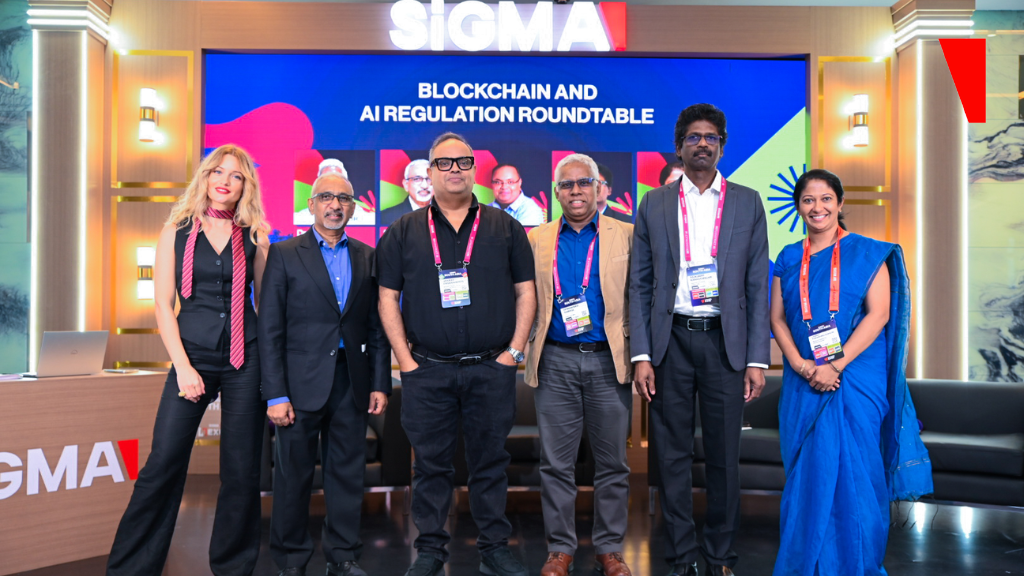
At SiGMA South Asia 2025 in Colombo, the conversation shifted from economic growth to digital governance with the panel titled Blockchain and AI Regulation Roundtable. Against the backdrop of rapidly advancing technologies, this session brought together policymakers, risk specialists, gaming experts and fintech leaders to examine how nations can craft smart, adaptive regulations for two of the world’s fastest-moving innovations.
Moderator Dr. Manodha Gamage, Advisor to Sri Lanka’s Ministry of Digital Economy, was joined by Sujit Christy, President of Circulo de CISO, Jaydeep Chakravartty, Gaming Consultant and former member of the Meghalaya Gaming Commission in India, Rajkumar Kanagasingam, Industry Fellow at the Global FinTech Institute in Singapore and Chanaki Mallikarachchi, Director of ICT at Sri Lanka’s Ministry of Digital Economy. Together, they explored the complex balance between innovation, compliance, ethical use and consumer protection in emerging digital ecosystems, unpacking what true digital resilience and responsible governance should look like for the years ahead.
Risk-based regulation
The panel opened by examining why risk-based regulation has become the global standard. Ensuring trust, transparency, cybersecurity, identity protection and the overall safety of digital systems must form the backbone of any regulatory framework.
Jaydeep pointed to the EU AI Act as a strong reference point. “They focus on the risks, not the sector. And because companies serving EU customers must follow those rules, it has essentially become a global act,” he explained. While not a copy-and-paste solution, he emphasised it offers a solid foundation for emerging economies.
Rajkumar argued that despite frequent overlap, AI and Blockchain demand distinct regulatory approaches. “Blockchain and AI have different architectures. AI has a black-box problem, sometimes we don’t know why it produces a result. But blockchain is traceable. They can’t be placed under one umbrella,” he said. However as Dr. Gamage noted, AI depends heavily on data and blockchain can play a crucial role in validating and securing that data, suggesting a future where the technologies increasingly converge.
Local context and gradual scaling
Sri Lanka currently lacks dedicated frameworks for blockchain and AI. Chanaki highlighted that global models are useful but not directly transferable. “We can’t use a copy-paste method. Frameworks must reflect local communities. Start small, test cases in sandboxes, and scale gradually,” she said. She also stressed the need for technology-neutral regulation that evaluates outcomes rather than the tools used.
When asked about the most urgent threats, Sujit identified data as the core risk factor. “Bad actors are poisoning AI model supply chains. How do we know the data is clean? Smart contracts also raise questions, how do we audit decentralised systems? And deepfakes make identity regulation critical,” he shared.
Chanaki echoed this, emphasising inclusive and minimal data collection alongside mechanisms that allow citizens to question or challenge automated decisions.
Can regulation avoid killing innovation?
Sujit offered two clear principles when asked about whether overregulation stifles innovation. He said we need to use principles-based regulation, not rigid rulebooks. Additionally, we need to adopt tiered regulation, ensuring startups are not suffocated. “Create sandboxes and let developers innovate safely,” he said.
Jaydeep added that systems combining AI and blockchain need end-to-end accountability, supported by transparent audit trails to ensure outcomes remain explainable and sustainable.
Rajkumar advocated for certification and audit bodies, noting, “AIs are biased. Without auditing, we risk a dangerous environment. This is the right time to act.”
Digital public infrastructure
Reflecting on Sri Lanka’s digital economy initiatives, Sujit discussed integrating zero-knowledge verification for identity, age checks and credit validation, reducing data exposure while improving trust.
On the broader governance model, Chanaki proposed a hybrid system.“Government alone is too slow, and expertise is limited. A hybrid approach with independent regulators, industry, academia, and civil society is essential,” she said. The panel closed by agreeing that responsible regulation must prioritise human safeguards, industry-led standards and careful consideration of real-world impacts.
For more executive insights, policy perspectives and forward-thinking strategies from SiGMA South Asia 2025, stay tuned as we continue to highlight the leaders shaping the future of blockchain, AI and digital governance across the region.


