


How real-time intelligence is reshaping iGaming competition

Competition across regulated iGaming markets is changing as the sector matures. With stricter advertising rules in place, operators are becoming less reliant on acquisition-driven growth and placing greater emphasis on retention, customer experience and share of wallet. Pricing and promotional strategies are increasingly central to how brands set themselves apart. At the same time, rising customer acquisition costs and regulatory scrutiny are forcing commercial teams to rethink how quickly they can respond to competitors and how effectively they can measure the impact of incentives.
The growing scale and complexity of promotions are adding further pressure. Major events and day-to-day campaigns generate large volumes of offers across sportsbook and casino products, making manual competitor monitoring increasingly difficult to sustain. This has brought renewed focus on automation, real-time intelligence and the need for better measurement and context when making pricing and promotional decisions.
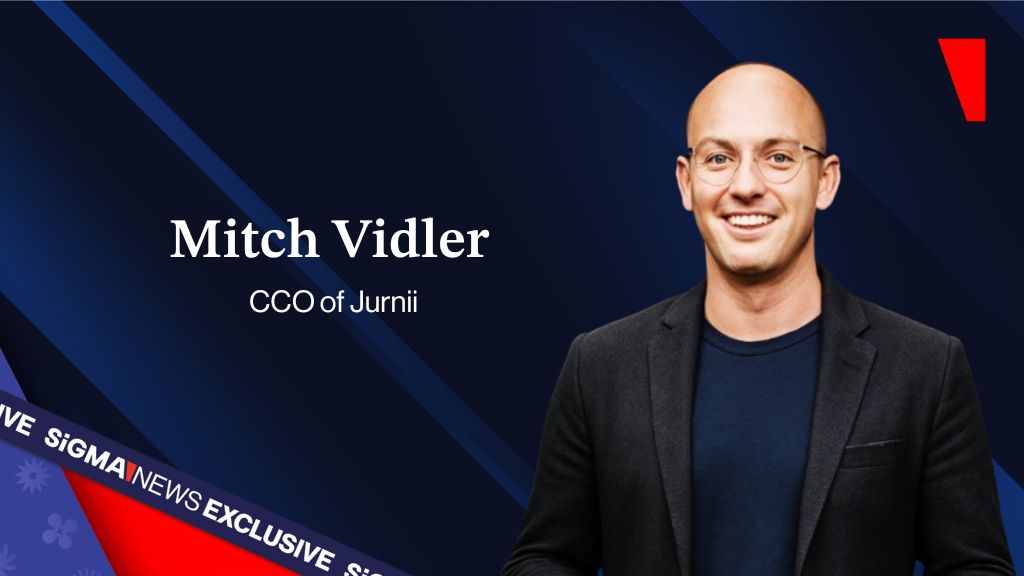
To understand how these changes are reshaping operator strategy, SiGMA News spoke to Mitch Vidler, Chief Commercial Officer at Jurnii, a competitive intelligence and insights platform, about competition, pricing, promotions and the growing role of real-time intelligence in commercial decision-making.
SiGMA News: iGaming is often described as a mature and crowded market. From your perspective, what has changed most in how operators compete today compared with five years ago?
Jurnii CCO Mitch Vidler: In most mature iGaming markets, growth is no longer really about acquisition. It is about the share of wallet.
What has changed is how that wallet share is won. It is no longer just the size of a bonus, but how often players see value, how easy it is to use, and whether it actually feels enjoyable. Operators who understand that most people are there for entertainment, a bit of fun and a bit of escapism are steadily taking share from those still optimising purely for conversion mechanics.
Put simply, brands that put the customer experience first are outperforming those that do not.
SiGMA News: With many operators offering similar games, platforms and payment methods, why have pricing and promotions become such a critical area of differentiation?
CCO Vidler: When most operators offer the same games, similar platforms and identical payment methods, there are not many levers left to pull.
Pricing and promotions are the most visible and most flexible ones. You cannot rebuild a platform quickly, but you can change how value is presented, how often it appears on site, and how it feels to the customer. That is why these areas have become so critical. They are among the few places where operators can still move fast and stand out.
SiGMA News: Speed is increasingly discussed as a competitive advantage. At what point does speed of response move from being useful to being commercially essential for operators?
CCO Vidler: In entertainment, new ideas matter. Novelty gets attention, but the problem usually is not a lack of ideas; it is the time it takes to build them properly. That is where speed gets misunderstood. Too often, speed means pushing something live before it is ready. Poor user experience (UX), unclear mechanics or rough edges then put customers off, the promotion underperforms, and the idea gets written off.
Real speed is about giving something the best chance to work from day one. Launching at 85 percent, not rushing out something that is half-baked and fails because of execution rather than intent.
SiGMA News: Despite advances in technology, competitor monitoring is still largely manual across the industry. Why do you think this process has been so slow to modernise?
CCO Vidler: There are two big reasons this has not modernised faster. First, the industry is still more inward-looking than it should be. In the United Kingdom, data suggests around 70–80 percent of sportsbook players are active across multiple operators in any given week, concurrently looking elsewhere at the same time as playing with you.
Second, the sheer volume and variation of promotions make this difficult. Outside of headline events, capturing the breadth, depth and timing of offers in a structured, usable way is genuinely challenging. Doing it manually does not scale, and most teams know that.
SiGMA News: How are rising customer acquisition costs and tighter controls on marketing incentives reshaping commercial decision-making inside operator teams?
CCO Vidler: Two things are happening inside operator teams. The first is a growing acceptance that spending more on media is not the answer. A one percent improvement in the conversion funnel is often worth more than incremental advertising spend and costs far less to achieve.
The second is retention. Losing active players because pricing or promotions are out of line with the market is increasingly expensive. Measuring the true incremental impact of promotions is hard, both mathematically and operationally, but more operators are now trying to tackle it because they do not have much choice.
SiGMA News: Near-real-time intelligence sounds compelling, but it also introduces risks. What should operators be cautious about when relying on automated or rapid-response insights?
CCO Vidler: Near-real-time data is powerful, but it is not something you should blindly trust. There needs to be human validation around it. Just like people make mistakes, data can be wrong too, although in practice it tends to be wrong far less often than manual processes. Fear of a rare error during a short commercial window should not stop teams acting on insight that is correct the vast majority of the time.
If errors are not being picked up over days or weeks, that is not a data problem. That is a process problem.
SiGMA News: Which types of markets or regions are adopting real-time commercial intelligence fastest, and what factors are driving that adoption?
CCO Vidler: Latin America has moved quickly on this. Rapid growth and higher player values meant operators could afford to rely on instinct early on, but that is shifting. As competition increases, we are seeing much more thoughtful, customer-first approaches coming out of the region.
In the United Kingdom, particularly in sportsbook, operators are also starting to move faster, although recent tax changes have slowed things down while teams work out what the new normal looks like.
SiGMA News: Where do you think most operators are still underprepared when it comes to using data and intelligence to inform pricing and promotional strategies?
CCO Vidler: Most operators still struggle with two things: measurement and context. Understanding the counterfactual, what would have happened without a promotion, is essential, yet it is still rarely done well. External pressure matters too. A promotion can be genuinely incremental and still lose ground if a competitor launches something far more aggressive at the same time. Without that context, teams risk cutting things that were actually working.
SiGMA News: Looking ahead to 2026, which operational capabilities do you believe will separate resilient operators from those that struggle to compete?
CCO Vidler: The operators that will remain competitive in 2026 are the ones that genuinely put customers first.
That means removing friction, making promotions feel rewarding rather than confusing, and taking player protection seriously. Ensuring people play within their means and continue to see gambling as entertainment is not just the right thing to do, it is commercially important for long-term sustainability.
SiGMA News: One question on your own work: what gaps in competitor intelligence or commercial decision-making did you see in the market, and how does Jurnii 360 address those gaps in terms of speed, scope and day-to-day impact?
CCO Vidler: We built Jurnii 360 and UX because the industry was trying to make important commercial decisions with incomplete and outdated information.
Operators differentiate mainly on user experience and proposition, yet benchmarking either has historically meant manual collection, screenshots and PowerPoint summaries. That does not work at scale or at speed.
To give a sense of the problem, across just five United Kingdom sportsbooks last month there were over 400 different promotions and more than 5,000 boosts. For any multi-brand, multi-product operator, collecting that manually is unrealistic. Human error then makes the data even harder to use downstream.
By automating collection and structuring it properly, we enable teams to make decisions in the moment, track how strategies change over time, and feed that intelligence into longer-term modelling. Not just for day-to-day operations, but to properly understand what has worked, what has not, and why, at a scale the industry has not really had before.
Stay ahead of iGaming’s biggest stories with SiGMA’s Top 10 News countdown. The world’s biggest iGaming community brings you weekly insights and subscriber-only offers. Join HERE today.


