


Pressure builds on Day 2 of SiGMA Poker Tour Brazil 2026

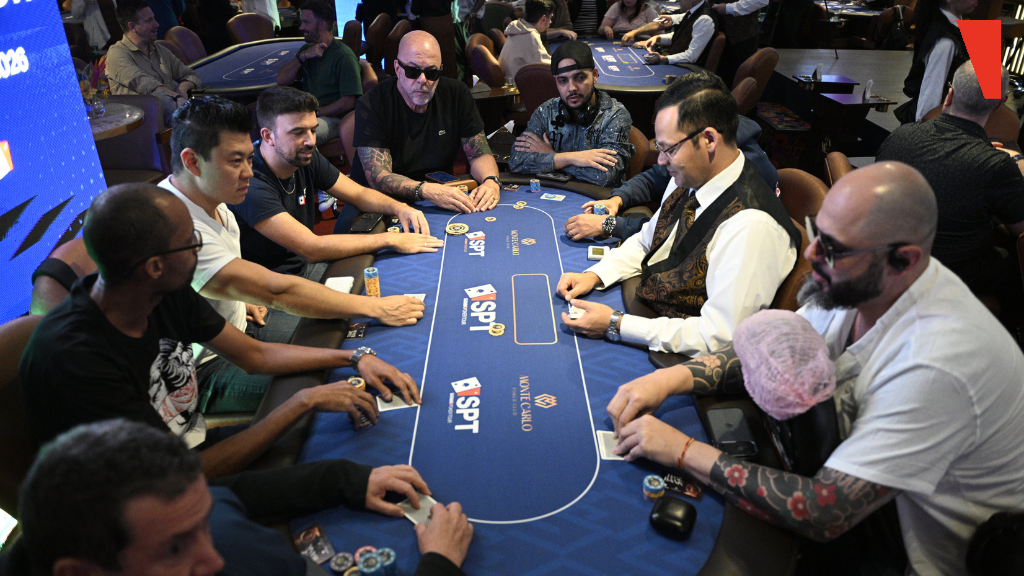
A very real, tangible atmosphere of immense tension was present on the evening of April 4th at the Hilton São Paulo Morumbi, as Day 2 of the SiGMA Poker Tour São Paulo Main Event once again returned to the table with heightened stakes and an increased sense of competitive spirit. There is a guaranteed prize pool of BRL 1 Million at stake for this tournament, and we were approaching the conclusion of this event with a high degree of anticipation. Everyone who remained in the tournament had made it to the river, and all that they had to do at this point was calculate carefully, remain cool and calm, and attempt to maximise their contribution to themselves.
Where strategy takes centre stage
On the second day of competition, there was an obvious change in how players perceived the game, as it shifted from an opportunity-driven perspective to a more precise execution-oriented one. As soon as each player reached the money, the psychological environment felt completely new. There were now financial implications to the decisions each player made, and mistakes were no longer merely reversed but also expensive.
The tone in the room conveyed this mindset; conversations around the table had become muted; all players were keeping their eyes on the chips being moved with intent; and all players were now taking a more calculated approach to determining the risks versus rewards of each decision, versus using their instinct as they had in prior rounds. At this point, players were not just focused on staying alive; they were focused on positioning themselves at the final table to be crowned the champion.
Everyone is paid, but nothing is secured
In addition to providing a lower-risk way to lose money, the lower-risk payout introduced another layer of stress for players. Players now faced competing goals: on the one hand, they wanted to move up the payout ladder; on the other, they feared losing their entire bankroll before winning their first cash prize.
This creates a rich emotional experience; for some players, it is the first time they have ever earned a substantial amount of money, while for others, it is just a small step toward a much larger cash prize.


Know your opponent
Day Two is considered to be one of the most strategic rounds in any tournament. Also, São Paulo was no exception. Preparation before the start of Day Two included more than just players’ cards. Players took into account their table positions, their chip counts, and their opponents’ tendencies.
As such, once the official seat draw and chip count list was released, the players used this information to gain a competitive edge over their opponents rather than merely as the only items they received.
Players analysed stack distributions, identified aggressive or passive opponents, and even turned to social media for behavioural insights. Understanding personalities became just as critical as understanding probabilities.
The message was clear. This was no longer a card game alone. It was a people game.
The alpha stacks emerge
At the top of the leaderboard, three players established themselves as the dominant forces heading into the day. Marcos Henrique da Silva led the field with an imposing 1,553,000 chips, closely followed by Helton Richard with 1,460,000. Jonatas Roger Freitas rounded out the top three with 932,500.
These stacks dictated the pace of play. Their ability to apply pressure on medium and short stacks positioned them as the primary threats. There was great weight on every player’s table; if an opponent made one wrong move, they would have lost a potentially big hand.
Others who followed closely behind still showed strong talent but added even more variety to the competition, such as Andres Coppini, who came into day two with 743,500 chips and, as a result, generated a lot of talk among those in the industry, whilst gaining momentum. Another top player, Drea Karlsen, will be one to watch because of her solid-looking chip stack of 560,000 chips.
Survival mode intensifies
The short-stack players were facing a completely different struggle. Players with fewer than 100,000 chips were in survival mode, where their patience was extremely low, and timing was the most important factor.
Marco Franco was in extreme danger with just 15,000 chips. Vinicius Dutra, with 30,000 chips, and César Gastão, with 54,000 chips, were under tremendous pressure as well.
A field defined by depth
Beyond the extremes, the field showcased a strong mid-range stack distribution, with players such as André Leão (753,000), Lucas Portella (665,500), and Rodrigo Bueno (617,500) well-positioned to challenge the leaders. This depth ensured that no table was without competition.
For continued coverage, insights, and exclusive updates from the global poker circuit, visit the SiGMA website.


