


SiGMA Magazine: What is the European Parliament’s approach to ethical AI regulation?

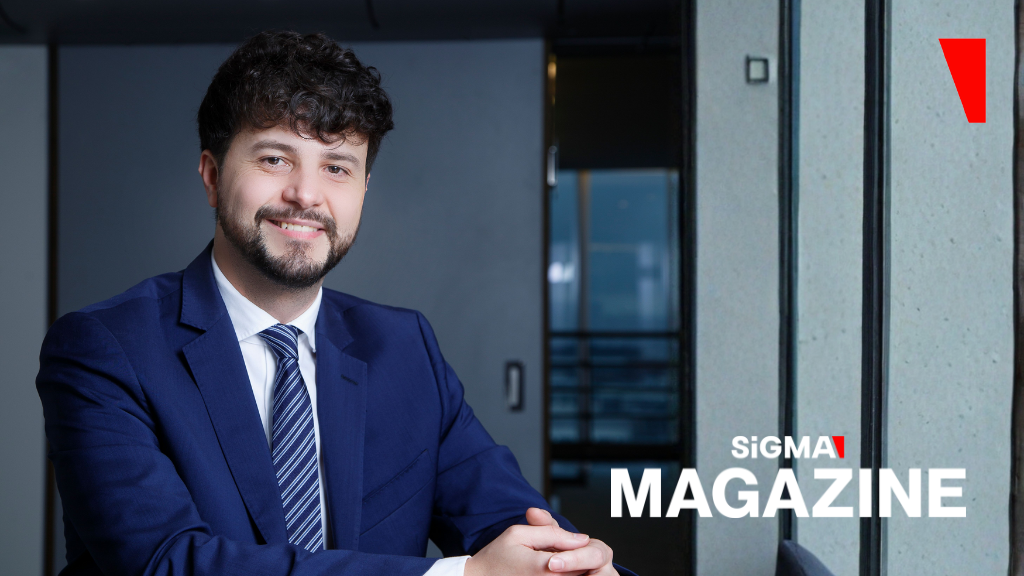
MEP Brando Benifei is the subject of a feature article in SiGMA Magazine Issue 35, released in conjunction with SiGMA Central Europe this November. The article explores AI regulation, ethical frameworks, as well as Europe’s approach to shaping the future of artificial intelligence.
The full feature that follows explores the European Parliament’s approach to ethical AI regulation in an increasingly fast moving landscape.
Global AI governance
Benifei has spent three terms in the European Parliament, spearheading one of its most ambitious legislative projects: the EU AI Act. As chief negotiator, he now leads the working group on its implementation while chairing the delegation for relations with the United States.“I work to maintain a dialogue with the rest of the world about the global regulation and direction of AI innovation,” he explains.
Europe’s approach could provide a universal framework. “We classify AI by risk level. Low-risk AI can be lightly regulated, while higher-risk AI requires stricter rules to mitigate potential harm. This idea of risk-based regulation could serve as a universal language in global discussions.”
Transparency is key, especially in fast-evolving areas such as generative AI. “We must prevent abuses, whether it’s deepfakes or AI used to mislead people. There’s a lot of space for convergence internationally on these issues.” Benifei sees Europe’s model as a way to lead by example, demonstrating that AI can be both powerful and responsibly governed.
Ethics at the core
Benifei argues that legislation alone cannot govern AI responsibly, ethics must guide its development. He insists AI should respect human dignity and keep people at its centre. “Ethics are crucial when dealing with AI. Law can only go so far. We must ensure AI development respects human dignity and places humans at its centre.”
While Benifei recognises AI’s potential to boost productivity and free up time, he warns that public trust will only come if people feel protected. “It can enhance productivity and help us use our time better, but we need safeguards so people can embrace AI without fear.” That balance between opportunity and caution runs through his broader vision, extending even into sectors like gaming.
Benifei sees huge potential for AI in gaming, from richer storytelling to more immersive experiences. However, he is quick to stress that innovation cannot come at the cost of player safety. “AI can enrich the gaming experience, but it must be regulated to avoid exploitation or manipulation, especially techniques that are forbidden in Europe.”
The same principles apply to iGaming, where AI intersects with data use and the protection of minors. “We focus on real-world use cases, ensuring technology is safe and ethical in practice.” Here, the focus remains on practical, real-world safeguards.
A global race
Europe has been watching closely as the US and China lead the charge on AI innovation. “The EU has lagged behind for various reasons. We need to accelerate innovation to remain competitive and uphold a model based on democratic values,” he says, highlighting the stakes.
Strengthening strategic independence is another critical piece of the puzzle. Benifei underscores the importance of diversifying sources to secure Europe’s technological future. “We’re planning a second Chips Act to reduce reliance on rare materials and semiconductors. Diversifying sources and building strong partnerships is vital.”
Collaboration extends beyond legislation. Benifei points to gatherings of policymakers, industry leaders, civil society and consumers as essential for driving coherent AI strategies. These events allow ideas to cross borders and build consensus. As Rome prepares to host key discussions this year, he reflects on the significance of bringing people together. Events like SiGMA Central Europe, he believes, can spark dialogue and strengthen Europe’s collective effort to shape AI responsibly. “This year is important for Italy, and events like this help connect people, share ideas and strengthen our work together.”
Shared responsibility
Benifei stresses that regulating AI is not about controlling technology but about shaping its future around fairness, transparency and human dignity. “We must mitigate AI’s risks to ensure it serves everyone’s best interests. The goal is to build a future where innovation and ethics go hand in hand.”, he says, guiding AI toward a future defined by responsibility and trust.
For more expert insights like this, stay tuned for Issue 36 of SiGMA Magazine, which will be released in conjunction with SiGMA South Asia in Sri Lanka from 30- 02 December 2025.


