


When play meets pay: AI and the future of gaming ecosystems

Gaming is no longer just about entertainment and is increasingly becoming part of the global digital economy. In recent years, the overlap between gaming, social platforms and financial technology has grown, supported by wider access to mobile internet, the expansion of cloud gaming, and the everyday use of digital payment tools. At the same time, regulators in multiple jurisdictions are focusing on player protection, financial integrity and the ethical use of data. Artificial intelligence (AI) and decentralised technologies are emerging as key tools to manage complex challenges such as real-time risk monitoring, fraud detection and transparent transaction tracking. These technologies are also shaping new economic models in gaming, from tokenised assets to interoperable digital identities.
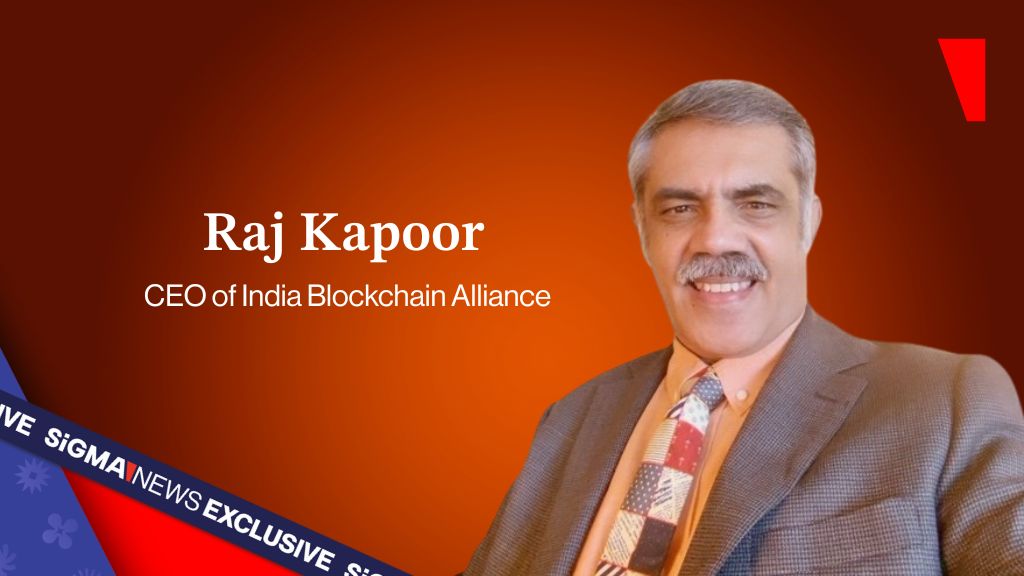
In an exclusive conversation with SiGMA News, Raj Kapoor, Founder of the India Blockchain Alliance and a leading expert in AI and Web3 governance, discussed how these trends are driving change across gaming, fintech and economic infrastructure. Kapoor also shared his perspective on future innovations and India’s positioning in the global technology landscape.
How AI & decentralisation are reshaping trust
SiGMA News: Globally, gaming, social entertainment and financial technology are increasingly converging. How do you see artificial intelligence and decentralised systems shaping this intersection, particularly in strengthening financial integrity and player protection?
India Blockchain Alliance’s Founder & CEO Raj Kapoor: We are entering a new chapter where gaming, social entertainment and financial technology are colliding to create a unified digital economy, part arcade, part marketplace and part metaverse. As this convergence accelerates, the stakes rise equally high, with financial integrity, player protection and trust needing to evolve at the same pace as innovation. This is where artificial intelligence and decentralised systems become the dual engines of transformation, one driving intelligence and the other enforcing integrity.
AI sits at the intersection as an invisible sentinel, analysing behavioural, transactional and emotional data in real time to safeguard users and systems. It can detect anomalies in micro-transactions, flag money laundering risks, and identify social manipulation or addictive tendencies that may be masked as engagement. In hybrid ecosystems where tokens, non-fungible tokens and in-game currencies blur the lines between play and payment, AI acts as a real-time compliance mechanism, ensuring fair play without disrupting the player experience.
On the other hand, decentralised systems bring transparency to areas where opacity has traditionally existed. Blockchain-based payment rails, digital wallets and smart contracts make every transaction verifiable, immutable and resistant to arbitrary interference. With decentralised identity frameworks (DIDs), players can prove who they are without overexposing personal data, creating a balance between privacy and accountability.
Together, AI and decentralisation form a new trust architecture, one in which systems are intelligent enough to detect fraud while remaining aligned with ethical safeguards. This supports gaming environments where cross-border token transfers can occur efficiently, identity verification can be decentralised, rewards are transparently distributed, and fairness can be mathematically verified. Ultimately, the convergence of gaming, social entertainment and financial technology is reshaping digital ecosystems, bringing play and payment closer together while reinforcing trust and protection for users.
The technologies set to redefine gaming
SiGMA News: From your perspective, based on more than 80 advisory roles in blockchain, AI, and Web3, what innovations are you most excited about that could transform the gaming ecosystem in the next five years?
Kapoor: From my vantage point, the gaming ecosystem is on the verge of a renaissance, not only in entertainment, but also in economics, identity and imagination. Over the next five years, we are likely to witness the most significant transformation in gaming since the introduction of the joystick, a shift in which players become stakeholders, games evolve into economies, and intelligence becomes immersive.
What excites me most is the rise of AI-driven adaptive universes that evolve based on player behaviour, emotional tone and real-time context. These are games that do not simply respond to player actions, but anticipate intent, shaping quests, narratives and challenges that feel increasingly personalised. This represents a new phase of interactive storytelling, powered by neural networks and emotional intelligence rather than static scripts.
Another major development is blockchain-enabled digital ownership, which is becoming a cornerstone of the player economy. The industry is moving from ‘play-to-earn’ models towards ‘play-to-own’ structures, where in-game assets, achievements and identities are tokenised, tradable and interoperable across ecosystems. This allows players to carry avatars, items or reputation across different virtual environments, creating interconnected digital value.
A third frontier is the emergence of Decentralised Autonomous Gaming Guilds (DAGGs), which are communities governed through smart contracts that manage in-game economies collectively. These groups can oversee shared assets, vote on game updates and support independent developers, giving players a direct role in economic and creative decision-making. Alongside this, AI-powered anti-toxicity systems, neuroadaptive interfaces that respond to emotional cues, and environmentally sustainable blockchain infrastructure are shaping gaming ecosystems that prioritise both innovation and responsibility.
Taken together, these developments suggest that the next five years will redefine gaming from a form of escapism into a platform for participation and empowerment. Technology is not only making games more immersive but also giving players greater agency and ownership within digital worlds. The joystick of the future won’t just control the game; it’ll control destiny.
India’s strategy for AI-led gaming innovation
SiGMA News: Finally, how do you see India positioning itself on the global map of gaming and AI innovation, especially at a time when governments worldwide are grappling with how to regulate digital economies responsibly?
Kapoor: India is standing on the brink of a digital inflection point, and this time it is not just catching up with global innovation, but actively shaping it. With its combination of youthful creativity, deep technology talent and proactive digital policy frameworks, India is well placed to emerge as a centre for ethical and scalable innovation in both gaming and AI.
The country’s sheer scale is its superpower. With more than 500 million gamers, one of the world’s largest developer ecosystems, and a financial technology backbone built on India Stack, Unified Payments Interface (UPI) and Aadhaar, India represents a model of how an inclusive digital nation can function. When combined with the Open Network for Digital Commerce (ONDC), digital public infrastructure (DPI)-based innovation and government-backed AI initiatives, this creates a foundation that is open, interoperable and globally transferable.
What distinguishes India is its developing philosophy of ‘responsible innovation’. While many countries continue to debate regulatory approaches to AI and gaming, India is experimenting with governance models that aim to enable innovation without suppressing it. Regulatory sandboxes, DPI governance frameworks and sector-specific guidelines for gaming and Web3 demonstrate a willingness to listen, learn and adapt.
AI will be the catalyst that supercharges India’s gaming evolution, from personalised user experiences and real-time fraud detection to esports analytics and creative content development. Blockchain technologies will support this growth by providing transparency, traceability and trust. Together, these technologies can support an ecosystem in which India not only exports technology solutions but also sets examples for building sustainable and ethical digital economies.
In the coming decade, India is likely to move beyond being viewed solely as an outsourcing or consumption hub. Instead, it has the potential to be recognised as a key contributor to global digital innovation, where governance and creativity operate together, and where technological progress is aligned with long-term responsibility. And in that balance lies India’s true global power, not just as the world’s fastest-growing gaming market, but as its most principled innovator.
Don’t just read the news — stay ahead of it. Subscribe HERE to SiGMA’s Top 10 News countdown for stories shaping iGaming’s future, weekly insights from the world’s biggest iGaming community, and exclusive subscriber-only offers.


