


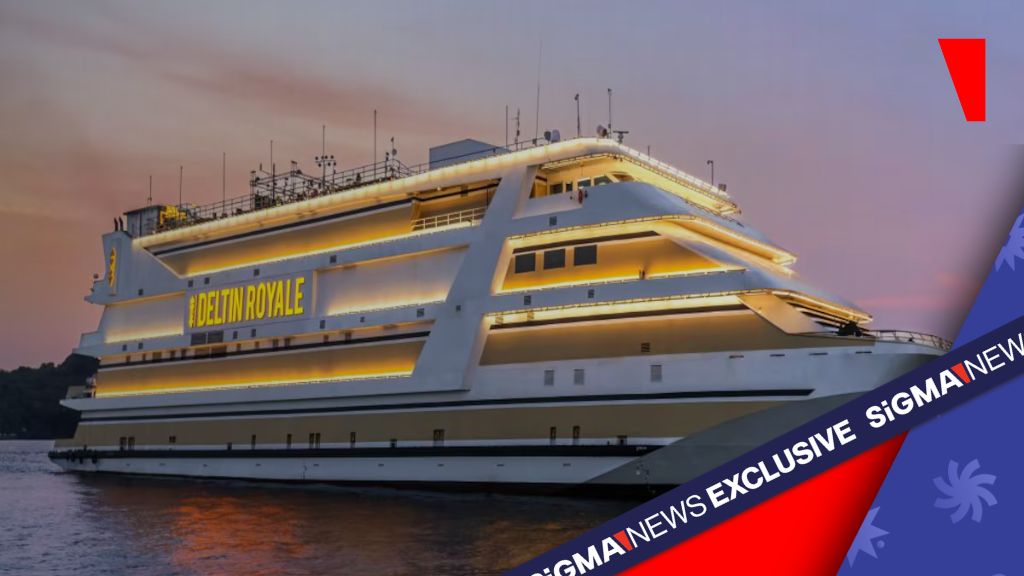
On the banks of the Mandovi River in Panaji, in the Indian state of Goa, the floating neon of offshore casinos has long symbolised the state’s high-stakes tourism economy. But now, those same vessels have become the focal point of growing resistance. Residents, activists, and policy observers are raising fresh concerns over plans linked to Delta Corp to introduce a significantly larger casino vessel, an expansion that they say represents not just a business upgrade, but a tipping point.
The controversy reflects a broader clash between corporate strategy, environmental sustainability, and Goa’s identity.
Larger vessel, larger debate
The immediate catalyst for protests is Delta Corp’s plan to replace one of its existing offshore casinos with a larger vessel capable of accommodating more guests. The planned vessel is expected to be significantly larger than its predecessor, with a capacity of over 1,000 passengers, compared to around 390 on the existing vessel, according to port authorities.
Delta Corp is India’s only listed casino operator and holds three of the six offshore casino licences issued in Goa, making it one of the dominant players in the state’s gaming sector.
While casino operators frame such upgrades as standard business practice, residents see it as evidence of long-term expansion within a river system they consider both ecologically fragile and culturally significant.
On behalf of the “Enough is Enough” movement in Goa, as removal of casinos from the river
— Prakash W. Kamat (@PrakashWKamatPK) February 18, 2026
Mandovi is one of the points in the charter, the movement extends its support to the “PONNJEKARS AGAINST CASINOS”, justice(retd) Ferdinho Rebello has replied to the movement against casinos… pic.twitter.com/1tX740Un7J
Industry observers say the move reflects strategic recalibration rather than simple growth.
“It looks more like a consolidation than expansion, especially when they already have additional vessels in the river,” Japneet Singh Sethi, iGaming strategist, told SiGMA News exclusively. He noted that Delta Corp’s casino segment revenue declined by around 15 percent in FY2024-25, making higher-capacity infrastructure a pragmatic response.
Sethi added that the decision may also be driven by shifting market conditions. “It could signal an attempt to capitalise on the recent iGaming ban and the surge in tourism in 2025, which likely boosted confidence in physical casino demand,” he said.
At the same time, he pointed to a structural transition underway in gaming globally. “Online gaming businesses represent the long-term future, particularly in markets like India with a young population and deep mobile penetration,” he said.
Delta Corp did not respond to SiGMA’s request for comment at the time of publication.
Environmental concerns
For many residents, the issue goes beyond corporate strategy. The Mandovi river supports biodiversity, fishing livelihoods, and Panaji’s environmental stability. Activists warn that expanding vessel size and capacity increases risks ranging from waste discharge to disruption of aquatic ecosystems.
“The real risk isn’t a single large vessel, but unchecked clustering within a limited river ecosystem.”
– Japneet Singh Sethi, iGaming strategist
The Mandovi river currently hosts six offshore casinos anchored off Panaji, making it one of India’s most concentrated river-based gaming corridors.
Sethi acknowledged that sustainability depends less on individual vessels and more on overall regulation and density. “Floating casinos can be operationally sustainable if capacity is controlled and environmental compliance is strictly enforced,” he told SiGMA News. “The real risk isn’t a single large vessel, but unchecked clustering within a limited river ecosystem. Mandovi is already a mature gaming corridor, and sustainability ultimately depends on regulatory discipline.”
Residents and protest groups argue that cumulative expansion, rather than isolated upgrades, poses the greatest long-term threat.
Broken trust and public resistance
Opposition to offshore casinos in Goa has developed over years, shaped by repeated political assurances that such vessels would eventually be relocated away from the Mandovi. Instead, licences have continued to be renewed, and casino infrastructure has remained a permanent fixture of the riverfront.
For many locals, the arrival of a larger vessel reinforces a perception that economic priorities are consistently placed above environmental and community concerns.
Citizen groups have organised demonstrations, raising questions about whether adequate environmental and regulatory scrutiny has been applied to the expansion.
Legal scrutiny and regulatory complexity
Legal experts say introducing a larger offshore casino vessel involves navigating a complex regulatory framework spanning state and central authorities.
“For introducing a larger offshore casino vessel in Goa, multiple legal clearances are required under state and central laws, primarily the Goa, Daman and Diu Public Gambling Act, 1976,” Chandrima Mitra, Partner, DSK Legal told SiGMA News exclusively.
She explained that the process includes obtaining casino licences from the Goa government, Coastal Regulation Zone clearances, environmental impact assessments, pollution control approvals, port authority permissions, and vessel registration with the Directorate General of Shipping.
Despite these safeguards, legal recourse remains available to concerned citizens.
“Residents can challenge casino expansion through Public Interest Litigations, especially where environmental or regulatory violations are suspected,” Mitra said. “There have been multiple legal cases involving floating casinos on the Mandovi river, showing that the courts remain an avenue for oversight.”
This legal dimension adds another layer of complexity to the debate, highlighting tensions between regulatory compliance and public acceptance.
Economic growth vs cultural identity
Casino operators, including Delta Corp, play a significant role in Goa’s tourism economy, generating tax revenues and employment. According to state government data, licenced offshore and onshore casinos contributed more than ₹1,700 crore ($187 million) to Goa’s revenue over the past five years. But critics question whether this economic model is sustainable, or desirable, in the long term.
“Residents can challenge casino expansion through Public Interest Litigations, especially where environmental or regulatory violations are suspected.”
– Chandrima Mitra, Partner, DSK Legal
Residents argue that Panaji’s heritage, community character, and environmental balance are being reshaped by an industry whose priorities may not fully align with local interests. They see casino expansion not just as a business decision, but as a defining moment in the evolution of Goa’s tourism identity.
Turning point for Goa’s gaming industry
The controversy surrounding Delta Corp’s vessel reflects a deeper transition underway in India’s gaming sector. While physical casinos continue to generate revenue, digital platforms and changing regulatory dynamics are reshaping the industry’s future.
For Panaji’s residents, however, the debate is immediate and tangible. It is about the river outside their homes, the promises made by policymakers, and the future of their city.
As larger vessels prepare to anchor in the Mandovi, the question facing Panaji is no longer simply about casinos. It is about who gets to decide the balance between economic ambition and environmental and civic responsibility, and what that balance will ultimately cost.
Stay in the loop and join the biggest iGaming Community in the world with SiGMA’s Top 10 news countdown. Subscribe HERE for weekly updates from the world’s iGaming authority and exclusive subscriber-only offers.


