


Starting from July 1, 2025, the new Anti-Money Laundering Authority (AMLA) has officially begun operations in Frankfurt, right next to the European Central Bank. This marks the first major step by the European Union toward unified supervision in the fight against money laundering, with the clear mission of chasing financial crimes in Europe.
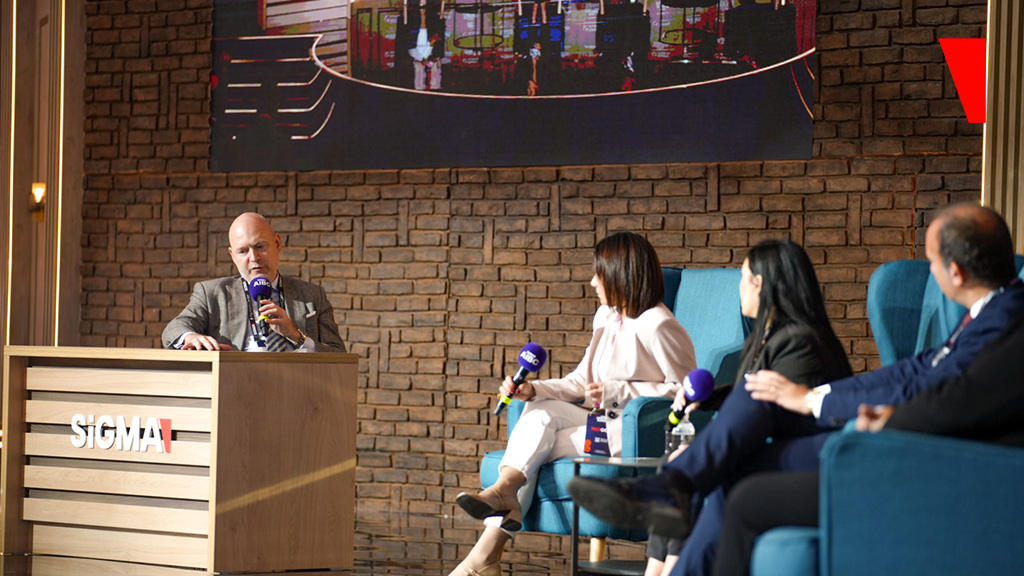
It’s a milestone that comes after years of banking scandals – most notably the embarrassing case of Latvia’s ABLV Bank, which was forced into liquidation not by the EU, but by the United States. That episode made one thing clear: Europe’s response to financial crime was fragmented and inconsistent. We take a look at the panel Crypto, Gaming & AML: Beyond MiCA, which took place today at the SiGMA Central Europe conference, held at the Fiera Roma.
A Paradigm Shift
The new authority represents a radical shift. Until now, every EU member state has interpreted anti-money laundering rules in its own way, creating a patchwork of regulations and control mechanisms. With AMLA, the EU is finally aiming to harmonize these rules, centralizing part of the supervisory power and offering unified guidance to banks, fintechs, and crypto-related businesses.
The Role of Crypto and the MiCA Challenge
Much of the debate has focused on the role of cryptocurrencies and the implementation of the Markets in Crypto-Assets Regulation (MiCA).
Several industry voices agree that MiCA isn’t just a technical framework – it’s a crucial step toward a more transparent and secure market.
It introduces a necessary harmonization to foster trust and ensure a level playing field among operators. However, this also means a major adjustment effort, especially for smaller companies or for industries that have operated with lighter rules – like gaming, for example.
Strategic Approach and Long-Term Vision
Many experts have stressed the importance of viewing these new regulations not as a burden but as a strategic opportunity.
Giuseppe Marino, President of the Italian-Cypriot Chamber of Commerce, emphasised the need for a mindset shift: AMLA shouldn’t be seen as a threat, but rather as a driver for a stronger, more coherent system. Businesses must start seeing compliance not as a cost, but as a key part of sustainable growth.
This new environment marks the transition from a fragmented landscape to a unified framework, where direct supervision will initially apply only to certain financial entities. However, its indirect impact will be felt across all sectors, even in non-financial industries linked to payments and digital transactions – such as gaming.
The Balance Between Regulation and Competitiveness
Joseph Borg, Partner at WH Partners pointed out that for many international operators, entering the European market can be less attractive, given that compliance standards here are often double or triple those in other regions – like the United States, for example.
This can discourage new market entries and reduce overall competitiveness, ultimately affecting consumers by limiting both variety and competition among service providers.
Borg also noted that in Europe, the focus tends to fall more on tax evasion than on genuine anti-money laundering efforts. This may be a reflection, he suggests, of economic pressures from national governments rather than a true prioritization of financial integrity.
That doesn’t mean he’s against regulation. As Borg stressed, what’s needed is targeted, purpose-driven regulation. In other words, rules with a clear, concrete objective.
MiCA Today, MiCA 2 Tomorrow
If MiCA represents a starting point, it’s not hard to imagine a MiCA 2 emerging in the next few years – perhaps within four or five, as Borg predicts.
In the meantime, companies must learn to operate in a constantly evolving environment, where EU compliance is now a non-negotiable prerequisite for doing business.
As Sofia Maria Cucciniello Head of Legal & Compliance at Blockchain.com reminded the audience, Europe is now leading the way in regulation, but other countries are likely to follow. Those who adapt early will be better positioned for the future.
The International Context
Outside the EU, several countries – from the United Arab Emirates to Malta – are implementing similar frameworks, confirming a global shift toward greater integration and transparency.
The goal is not to multiply regulations but to make the system more efficient, reducing the grey areas that allow money laundering to thrive.
In this sense, uniformity becomes not just a safeguard, but a competitive advantage.
Balancing Innovation and Oversight
Finding the right balance remains a challenge: how to protect investors without stifling innovation?
The underlying idea is that only a model built on transparency, trust, and adaptability can allow the market to truly grow.
As Lara Barbuto, Director of Compliance, Compliance Officer & MLRO (Malta) OpenPayd observed, the companies that successfully combine innovation, clarity, and trust will be the ones shaping the future of the European market.
A Long-Term Vision
Ultimately, AMLA and MiCA are two sides of the same coin. building a stronger structure for a more mature financial market.
Europe is finally moving from a reactive to a proactive approach. It’s a complex transition, but one that could lead to a more cohesive, credible, and globally competitive financial ecosystem.
Highlights
- AMLA will be based in Frankfurt, centralizing the EU’s fight against money laundering.
- The goal is to harmonize rules and supervision across member states.
- The ABLV Bank case revealed the weaknesses of the previous system.
- MiCA introduces unified standards for crypto assets and investor protection.
- Companies should view compliance as strategy, not as a burden.
- Even non-financial sectors, such as gaming, will feel indirect effects.
- European regulations are tougher than those in other regions.
- Excessive rigidity could limit competitiveness and deter new entrants.
- The aim is not more rules, but more efficiency and transparency.
- The future belongs to those who can combine innovation, trust, and compliance.
“We are witnessing the growth of an entire industry. MiCA provides the structure, AMLA provides the consistency, and the market provides the creativity.
The companies that can unite innovation, transparency, and trust will be the ones moving forward.”
— Lara Barbuto
Disclaimer: The content presented on this page is strictly informational and intended for B2B purposes only. SiGMA Group is not responsible or liable for any business decisions, commercial agreements, or activities conducted by attendees, exhibitors, or third parties during or after the event. All participants are responsible for ensuring compliance with applicable laws and licensing requirements, including those of the Agenzia delle Dogane e dei Monopoli (ADM) in Italy. Our events are restricted to adults aged 18 and over.
