
FBI lists Guam bingo convict as wanted after release breach

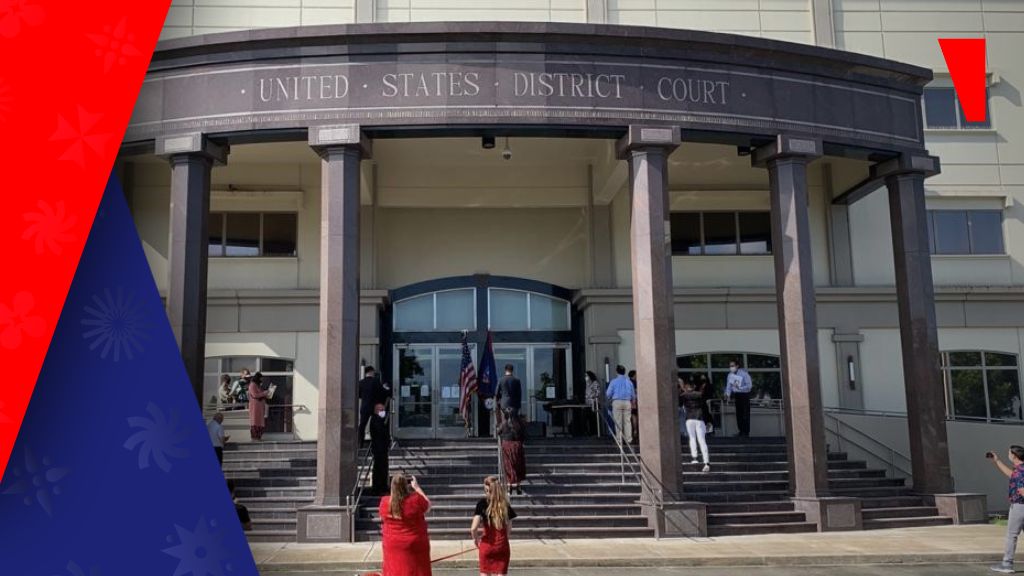
US federal authorities have listed Michael Lizaso Marasigan as wanted in connection with violations of court-ordered release conditions following his conviction in a Guam illegal bingo case. The development follows a May 2025 jury verdict against Marasigan over a bingo operation linked to the Guam Shrine Club that prosecutors said generated about $34 million in proceeds.
Court records show that Marasigan was convicted by a jury in the US District Court of Guam on 13 May 2025 on multiple counts, including conspiracy to operate an illegal gambling business, money laundering conspiracy and wire fraud conspiracy. The case, United States v. Michael L. Marasigan et al. (1:23-cr-00014), also involved co-defendants Christine Chan and Jose Arthur “Art” Chan Jr.
The recent coverage focuses on Marasigan’s status following his failure to comply with post-verdict release conditions. After the jury returned its verdict, the court granted Marasigan permission to travel to the Philippines. Court filings state that he did not return to the United States by the deadline set by the court, prompting enforcement action.
Bench warrant and wanted status
The US District Court of Guam issued a federal bench warrant on 25 June 2025 after Marasigan failed to report back as required. That warrant remains active. Recent reports cite US law enforcement identifying Marasigan as wanted in relation to the release violation, tying the designation directly to the outstanding warrant issued by the court. The enforcement step relates solely to compliance with court orders following the conviction.
The case against the defendants was based on bingo games organized using the Guam Shrine Club between 2015 and 2021. The bingo games were advertised as charitable events. The players were told that the funds raised would be used to finance travel and medical care for children under the umbrella of Shriners Hospitals, including travel to facilities in Hawaii.
Federal prosecutors alleged that the bingo operation did not comply with the requirements for lawful charitable gaming under Guam law and that the representations made to players about the use of funds were misleading. Financial records and witness testimony presented during the trial formed the basis of the government’s case.
According to court documents, the bingo operation yielded about $34 million in gross proceeds over the six-year period. The jury also determined that a large portion of the proceeds was used for personal purposes and channeled into different accounts, thus justifying the charges of money laundering and wire fraud conspiracy.
Additional details relating to the federal warrant and Marasigan’s wanted status are published on the FBI’s official website.

Legal framework
The illegal gambling charges were brought under Section 1955(a) of Title 18 of the United States Code, a federal statute that criminalises the operation of an illegal gambling business involving five or more persons that operates for more than 30 days or generates more than $2,000 in gross revenue in a single day. Prosecutors also relied on Section 371 of Title 18 of the United States Code in pursuing conspiracy charges.
At the territorial level, the bingo operations were evaluated in relation to the Guam statutory framework that regulates gambling and charitable gaming. Provisions under Section 64.10(a) and Section 64.70 of the Guam Code Annotated set out the conditions under which bingo may be conducted lawfully and require permits and regulatory compliance for charitable gaming operations.
Following the verdict, the defendants filed post-trial motions seeking acquittal or a new trial. The court denied those motions later in 2025, leaving the jury’s findings in place.
Forfeiture and sentencing phase
The case has not yet reached final sentencing. At a hearing on 3 November 2025, federal prosecutors sought forfeiture totalling about $7 million from Marasigan and his co-defendants. Court filings indicate that the figure was calculated from proceeds traced to the bingo operation after accounting for amounts represented as charitable distributions.
The forfeiture request forms part of the sentencing phase of the proceedings. The issuance of the bench warrant following Marasigan’s failure to return to the United States has delayed the completion of that phase.
Subscribe HERE to SiGMA’s Top 10 News countdown and SiGMA’s weekly newsletter to stay up to date with all the latest iGaming News from the biggest iGaming community in the world and benefit from subscriber-only offers.


