


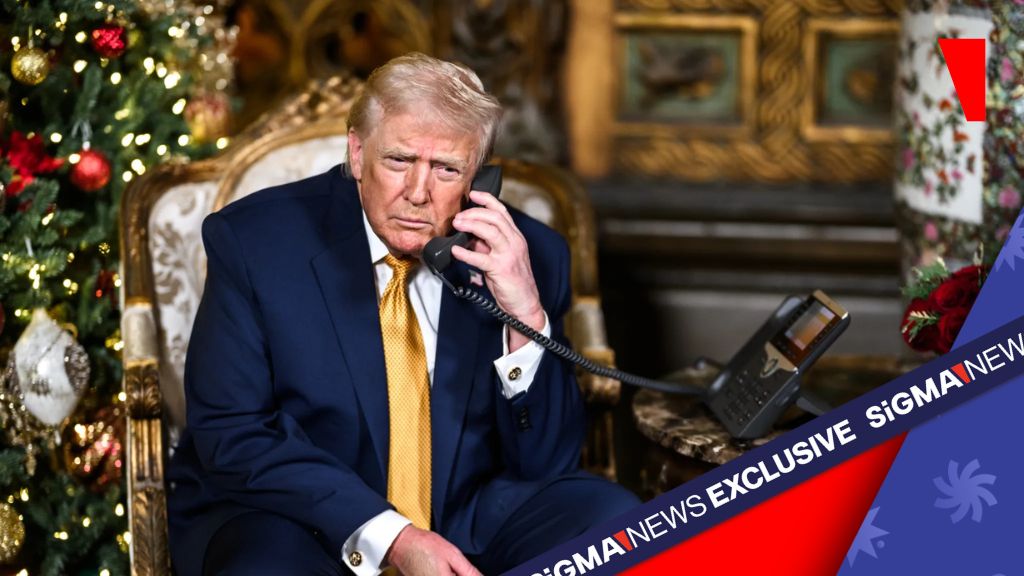
Prediction market activity has surged following the United States’ operation in Venezuela, with traders rapidly shifting focus to where US President Donald Trump’s foreign policy agenda could turn next.
Platforms such as Kalshi and Polymarket have seen a spike in contracts tied to potential US geopolitical escalation, including scenarios involving Greenland, the Panama Canal, and even military action elsewhere in Latin America.
Speaking to SiGMA News, longtime Nevada sportsbook director Robert Walker said the rapid shifts reflect speculative momentum rather than genuine forecasting. “Whether it’s [President Nicolás] Maduro in Venezuela, the Panama Canal, or Greenland, these markets aren’t ‘forecasting’ anything in the traditional sense; they are just reflecting speculative momentum driven by headlines, and often, those headlines are being beaten to the punch by insiders.”
Greenland and Panama contracts gain momentum
On Kalshi, traders have driven up the odds on several high-profile geopolitical outcomes in recent days. Recent price data shows a sharp shift in trader sentiment over the past week. On Kalshi, the implied probability that Trump will “take back the Panama Canal” has risen from just under 30 percent last week to around 36.6 percent, signalling growing confidence among traders. However, analysts caution that rising prices often reflect headline-driven trading rather than informed assessment of policy realities.
Another Kalshi market asking, “Will the US take control of any part of Greenland?” has climbed even more steeply, with the odds that the US will take control of any part of Greenland jumping from roughly 33 percent to nearly 41.8 percent over the same period, underscoring heightened speculative interest in US geopolitical expansion scenarios.

Similar momentum is visible on Polymarket, a blockchain-based prediction platform that allows users to bet on yes-or-no outcomes of real-world events. Odds on “Will Trump acquire Greenland before 2027?” have increased to about 15 percent, up from around six percent last week. Polymarket is also running contracts such as “Will the US take the Panama Canal before 2027?”, reflecting growing speculative interest in territorial and strategic assets.
Venezuela markets attract millions in trading volume
The surge follows intense trading around Venezuela-related markets, after Polymarket opened contracts allowing users to speculate on US military engagement and the removal of President Nicolás Maduro.
As tensions escalated, traders poured millions of dollars into markets tied to Maduro’s exit from power and US intervention. Several contracts saw implied probabilities jump from single digits to above 99 percent within hours of the operation becoming public.
Walker said, “Look at the Maduro capture: an anonymous trader turned roughly $32,000 into over $400,000 by betting on an outcome that the rest of the market thought had less than a 10 percent probability.”

Markets tied to US-Venezuela military engagement traded at near certainty, with volumes ranging from approximately $926,000 to nearly $3 million, highlighting the depth of liquidity flowing into geopolitical prediction markets.
By contrast, more extreme scenarios, such as a formal US invasion or an official declaration of war, have continued to trade at relatively low probabilities, typically between two percent and nine percent. Auxiliary markets tied to maritime seizures, drug interdiction efforts, and Venezuelan-linked shipping activity have traded in the 50 to 66 percent probability range, suggesting expectations of continued but limited action.
Scrutiny over betting on conflict
Polymarket has previously drawn attention for listing markets tied to armed conflict. In November 2025, the platform opened contracts allowing users to bet on the likelihood of an India-Pakistan military clash following a deadly car bomb attack near Delhi’s Red Fort.
In a peer-to-peer environment, [prediction market] platforms care about handle and volume, not integrity.
– Longtime Nevada sportsbook director Robert Walker
Some researchers argue that such markets reflect speculative sentiment rather than meaningful forecasting. “When people start wagering on war, we lose sight of its human cost,” said Ananay Jain, policy and gaming-law expert at Grant Thornton Bharat LLP, previously speaking to SiGMA News.
Meanwhile, Walker warns that the problem extends well beyond geopolitics. “These platforms are looking to take bets on things like college athlete transfer portals, which are absolutely ripe with insider information.”
A $30,000 bet turns into a $400,000 windfall
Regulatory scrutiny intensified after disclosures that a newly created Polymarket account placed significant bets on Maduro’s removal shortly before the US operation. Walker believes this activity exposes deep information asymmetries rather than market wisdom. “The final wagers were placed at 9:58 p.m. ET on Friday, mere hours before the US operation became public knowledge. That isn’t a ‘forecast.’ It’s a leak.”
In late December 2025, the account wagered more than $30,000 on contracts predicting that Maduro would be out of office by 31 January 2026, when the implied probability was priced at around 5.5 percent. Following the seizure of Maduro and his wife from their residence, the trader earned $436,759.61, generating profits exceeding $400,000 in less than a week, a return of more than 1,200 percent.

Now, Polymarket is facing backlash from traders after refusing to settle millions of dollars in wagers tied to US’ invasion of Venezuela, arguing that the capture of Maduro does not meet the platform’s definition of an invasion. At the centre of the dispute is that despite US forces seizing Maduro during a surprise military operation, Polymarket ruled that the event did not qualify as an invasion under its contract terms.
Insider trading concerns
The Polymarket controversy has also reignited concerns over insider trading on prediction platforms. Analysts have pointed to unusual on-chain behaviour, including concentrated buying from newly created wallets focused exclusively on Venezuela-related markets. Walker said, “In these high-stakes geopolitical events, somebody always knows, and that info is being used to front-run the rest of the market.“
Entrepreneur and investor Joe Pompliano added fuel to the debate, writing on social media that “insider trading is not only allowed on prediction markets; it’s encouraged”, a remark that has been widely shared.
A newly created Polymarket account invested over $30,000 yesterday in Maduro's exit. The US then took Maduro into custody overnight, and the trader profited $400,000 in less than 24 hours. Insider trading is not only allowed on prediction markets; it's encouraged. https://t.co/EtZyW1IWTa pic.twitter.com/MzsU9kOU73
— Joe Pompliano (@JoePompliano) January 3, 2026
Walker also pointed out that “The NCAA has already called these contracts ‘absolutely unacceptable’ because they gamify the private decisions of students—decisions that coaches, teammates, and families know weeks before the public.”
US’ move toward regulation
Amid this, US Representative Ritchie Torres, a Democrat from New York, has announced plans to introduce the Public Integrity in Financial Prediction Markets Act of 2026. The proposed legislation would prohibit members of Congress, political appointees, and executive branch employees from trading prediction market contracts tied to political outcomes or government action if they have access to non-public information.
Walker believes the “lawmakers are finally waking up” due to the “Maduro trades.” He said, “The bill aims to ban federal employees and officials from using material nonpublic information to bet on political outcomes. If the platforms won’t police themselves, the government is going to have to do it for them.”
Meanwhile, Kalshi CEO Tarek Mansour is using the current insider trading controversy to draw a clear line between Kalshi’s regulated model and offshore prediction markets, while openly backing the new US bill that would restrict government insiders from trading on these platforms.
Prediction markets fall under the regulatory oversight of the Commodity Futures Trading Commission (CFTC) in the US. This is because many prediction markets operate similarly to futures or options contracts, which are considered derivatives. Walker concludes, “Maybe the CFTC will regulate. That was a joke.”
Stay in the loop and join the biggest iGaming Community in the world with SiGMA’s Top 10 news countdown. Subscribe HERE for weekly updates from the world’s iGaming authority and exclusive subscriber-only offers.


