


SiGMA Magazine: How does financial integrity shape the future of Malta’s gaming ecosystem?

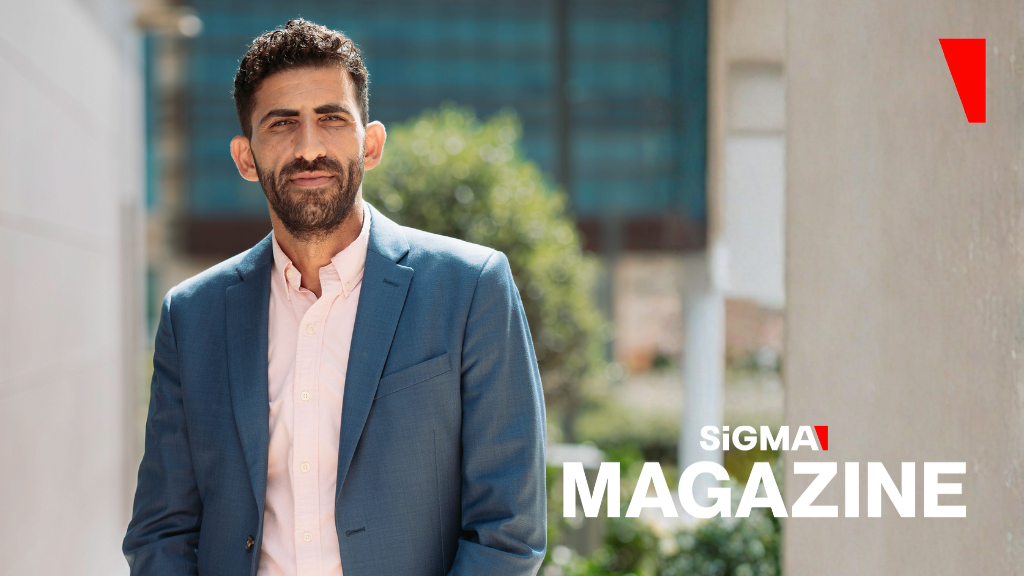
Peter Spiteri, Chief Regulatory Officer at the Malta Gaming Authority (MGA), is featured in SiGMA Magazine Issue 35, released in conjunction with SiGMA Central Europe this November. His feature offers a timely and in-depth look at how financial safeguards, ranging from segregated player accounts to capital requirements and external oversight, form the backbone of Malta’s trusted gaming ecosystem.
The full piece that follows breaks down the regulatory mechanisms that protect players, strengthen operators and sustain long-term confidence in one of the world’s most respected jurisdictions.
In gaming, as in life, trust is hard-earned and easily lost. Players will engage with a platform only if they are confident their funds are safe. For regulators, ensuring that confidence is the very foundation of a reputable ecosystem.
At the Malta Gaming Authority (MGA), we have long recognised that financial safeguards are the backbone of consumer protection and, by extension, of Malta’s reputation as a credible jurisdiction. This is why our framework is designed to protect individual players and ensure that the sector remains resilient, trustworthy, and sustainable over the long term.
Protecting players
Malta’s regulatory system places clear obligations on licensees to protect player funds. Operators are required to hold these funds in segregated accounts, shielded from day-to-day business operations, with 90% of those accounts maintained within the EU or EEA. This ensures that, no matter what financial pressures an operator may face, players’ money remains secure and accessible.
But protection does not end with segregation. Credit and financial institutions play a critical role by formally acknowledging player funds accounts, giving regulators an additional layer of assurance. On top of that, licensees are obliged to submit monthly player funds reports to the MGA.
Transparency is further strengthened through independent oversight. Auditors prepare Agreed-Upon Procedures reports on player funds, offering an external check on whether obligations are being met. Together, these measures form a web of safeguards that make it extremely difficult for funds to be misused or mismanaged.
Equally important is ensuring that operators themselves are built on solid financial ground. This is where capital requirements come into play. By requiring licensees to maintain adequate levels of capital, we strengthen protections for players and creditors.
Stable and sustainable financial support is in the operator’s interest too. Businesses with strong financial footing are better positioned to weather market fluctuations. In this way, capital requirements are enablers of sustainable success.
A reputable ecosystem
Reputation is built on financial transparency, on a culture of accountability, and on a commitment to responsible operations. These qualities attract investment that benefit the wider Maltese economy.
Financial safeguards therefore serve a dual purpose. They protect players in the immediate term, and they strengthen the ecosystem in the long term. Both dimensions are essential if Malta is to continue positioning itself as a leading hub.
Stability and growth
Some argue that strict financial requirements risk discouraging innovation or competitiveness. In practice, the opposite is true. A sector that prioritises financial integrity creates the very conditions in which innovation can flourish. Players are more likely to try new products, regulators are more likely to support new models and investors are more willing to back ambitious projects.
This balance, between stability and growth, is central to Malta’s vision for the future.
Trust as the ultimate currency
In an industry driven by digital speed and global reach, it can be tempting to see financial safeguards as background processes. Yet their impact is profound. Every time a player deposits money with confidence, every time an operator weathers a challenge without compromising obligations, every time a regulator can act on reliable data: trust is reinforced.
And trust, in the end, is the true currency of the gaming sector.
Financial stability will remain the bedrock of Malta’s regulatory model. Not as a static requirement, but as a living principle that evolves with the industry, adapts to new risks, and underpins every effort to build a safe, reputable, and sustainable ecosystem.
For more expert insights like this, stay tuned for Issue 36 of SiGMA Magazine, which will be released in conjunction with SiGMA South Asia in Sri Lanka from 30- 02 December 2025.


