


Mike Danshin on product development in the direction of Web3

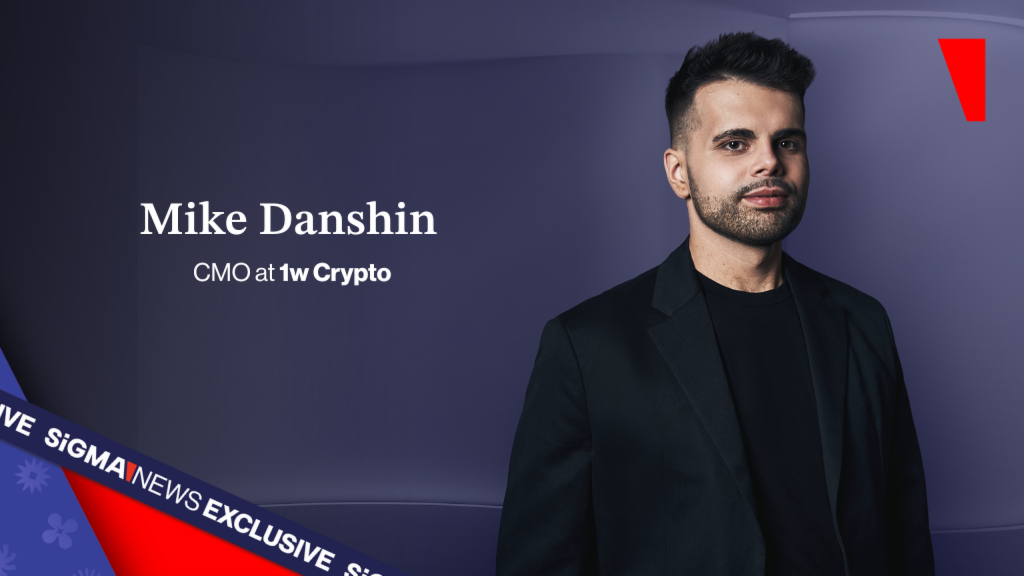
Web3 technologies continue to transform the iGaming industry, opening up new opportunities for operators and players. Blockchain casinos are becoming not just a trend, but a full-fledged business model with unique advantages and challenges.
In an exclusive interview with SiGMA News, Mike Danshin, CMO at 1w Crypto, shares practical insights on how Web3 casinos work, which regions are most promising for launch, and how to build marketing in an environment of uncertain regulation.
Differences between Web2 and Web3 platforms
From a technology and user experience perspective, how do Web3 casinos differ from traditional Web2 online casinos?
The boundaries between Web2 and Web3 products are unclear. Some crypto casinos have their own tokens, staking of these tokens, and a loyalty programme built around the token. In addition, many crypto operators offer NFT collections, lotteries, and gamification.
At the same time, the crypto audience is more risk-taking, younger, and more mobile. As a result, its retention and brand loyalty are weaker. Despite this, the average cheque for such players is higher. For crypto players, the openness of the product and the community around it are essential – chats on the product, on Discord and on other social platforms.
Which is more profitable: using existing cryptocurrencies or creating your own token?
It’s not an either/or choice. In any case, a Web 3 operator needs popular cryptocurrencies as a means of replenishing accounts, since its target audience keeps their assets in them. Creating a token is beneficial for operators who have significant resources for listing, market making, and building utility on the platform.
If you don’t have tens of thousands of users and a product with a built-in unit economy, your own token will be a burden. 1w Crypto is creating a token because it has scale, traffic, and a mature product.
What players prefer
Which regions are most promising for launching a crypto casino in terms of audience readiness?
Web2 players predominate in regions with an established gambling market, such as Western Europe. But even there, there are Web 3 players who are dissatisfied with the strict regulation of the traditional iGaming market.
Web 2 players also predominate in Africa, as the cryptocurrency boom has not yet reached the region.
The development of Web3 casinos is linked to the level of adoption and adaptation of cryptocurrencies in the region. Currently, demand for crypto adoption is growing in Turkey, Argentina, and Brazil. India deserves special attention.
How do the marketing strategies of Web2 and Web3 casinos differ?
As I mentioned earlier, crypto players value community. The main channel for attracting traffic to Web 3 is influencer marketing, not from Instagram or YouTube, but from X and Discord.
As for community development, it involves both native shilling in other communities and building from scratch own communities on Discord, Telegram, and other platforms. Many processes are driven by gut feelings because calculating conversions from those channels can be difficult.
Tell about campaigns with crypto influencers. How did you come up with this idea, and which case was the most impressive?
We work with crypto influencers on all platforms: X, Telegram, and YouTube. One of the most successful was an NFT giveaway with a total prize pool of $100,000 on Telegram. At the time, there was much hype around Pepe the Frog – tokens featuring him were rising in price, and a $5 deposit was enough to participate in the giveaway.
Our partners have many cases of successful traffic influxes. For example, one of the webmaeters brought a user to the Telegram Mini App platform who made a $70,000 deposit in one of his first deposits. The source was a crypto channel on Telegram.
Compliance and cybersecurity challenges
How can you build a Web3 marketing strategy that takes compliance requirements into account?
Even without being a compliance expert, I can see that the main challenge for the crypto and gambling industries is the regulatory grey area in most countries around the world. Many operators do not know how to comply with regulations where there are no specific rules, or where these rules contradict each other. One of many examples is the ban on iGaming products on Telegram, and the launch of a Telegram casino by the TON team a few months later.
Both marketing and legal departments need to be prepared for constant change.
How can you manage the risks of cryptocurrency volatility for the platform and users while maintaining cybersecurity?
For users it’s straightforward: all crypto platforms allow deposits in stablecoins. Non-custodial wallets provide security. Crypto exchange users must complete all KYC procedures. And don’t connect your Metamask to unfamiliar products.
Transformation or diversification?
Your forecast for Web3 gambling: which verticals will transform first?
The transformation of Web2 products into Web3 can take many months, and the target audience may not like the changes. The path of creating new products could be more relevant.
When it comes to gambling, prediction markets are best suited for adaptation. There is enormous competition in this niche, with dozens of high-quality products appearing over the past year, as well as an ecosystem emerging around them, and the on-chain model is beneficial for them. These products are viral: betting on election results or the price of Bitcoin can deliver emotions no less intense than betting on a football match.
In conclusion
Web3 gambling represents a paradigm shift: from centralised platforms to decentralised ecosystems, from traditional marketing to community-oriented strategies. As Mike Danshin points out, success in this field requires not only technical expertise but also a deep understanding of the audience, flexibility in the face of regulatory uncertainty, and a willingness to experiment. At the same time, diversification might be a better solution than transformation.
This article was first published in Russian on 17 November 2025.
Be part of the action at SiGMA South Asia, 30 Nov – 02 Dec 2025. Colombo becomes the heart of gaming as 5,000 delegates, 100+ speakers, and 1,000 operators gather under one roof. With high-value traffic, game-changing insights, and unforgettable networking, this is where new markets meet new horizons.


