


For years, many operators have treated responsible gambling as a compliance checkbox. Lots saw it as a necessary burden rather than a strategic advantage. But that’s changing. A new wave of operators, internal advocates, and lived-experience professionals is reshaping the conversation shaping a safer gambling culture.
At the centre of this movement is Better Change, a consultancy that promotes what it calls Positive Play. It’s a reimagining of what a safer gambling culture looks like when it is built into the business rather than bolted on as an afterthought.
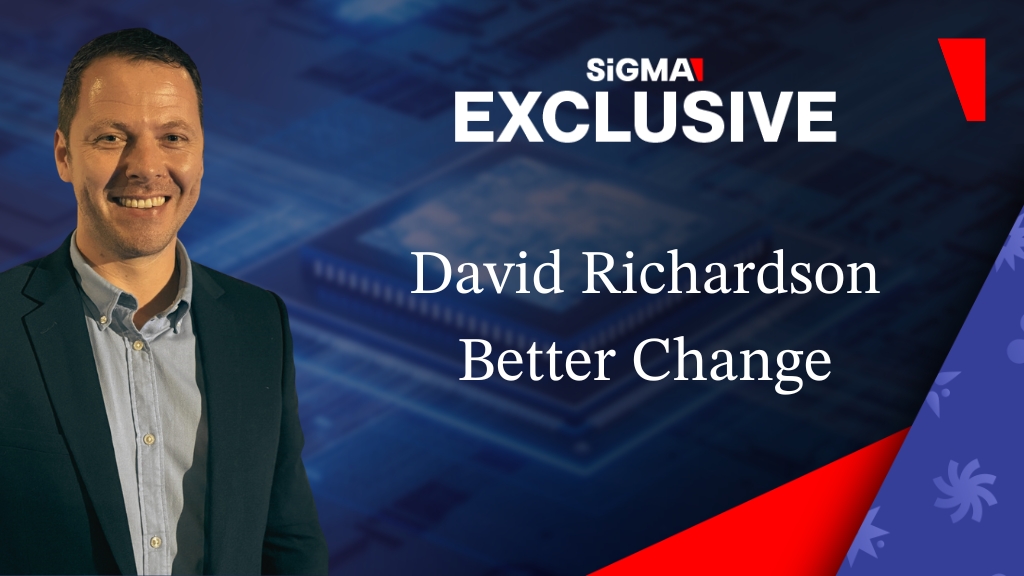
“We’ve moved away from the narrative that gambling is inherently harmful,” says David Richardson, Director of Strategic Partnerships at Better Change, in an exclusive interview with SiGMA News. “Operators are starting to see that looking after players isn’t just good ethics. It’s good business.”
What does a safer gambling culture shift look like now?
According to Richardson, the phrase “safer gambling” now means something very different. “I wouldn’t even call it that anymore,” he says. “We call it positive play. It’s about customer care, not what you can’t do, but what you can do for your players.”
This mindset, he explains, focuses less on problem management and more on proactive education, early intervention, and healthy engagement.
“Operators aren’t therapists. But they can help make players more aware, more literate, and more able to spot their own risk patterns,” he says.
“We’re seeing a real cultural shift, not just to meet regulation, but because retention matters. The smartest operators know that protecting players builds loyalty.”
Does it actually work?
Luxury Leisure Talarius, trading as Admiral, reported that after several of their customer-facing employees completed a Better Change workshop in November 2024, they observed a 15 percent increase in customer interactions in Q1 2025 compared to Q4 2024.
Whilst it may not necessarily be an operational goal to increase interactions with customers, it should be considered in the context that 22 percent of these interactions were initiated at the point of entry and were focused on reinforcing Positive Play as a proactive measure rather than a reactive approach where a potential indicator of harm was identified.
One of the main challenges had previously been empowering employees with the confidence to initiate conversations, especially where it may be necessary to raise what could be seen as negative behaviour. However, interaction training, which focused on Positive Play first, allowed trust to be built between the employee and the customer, enabling them to address risk indicators.
Over the same period, there was a 25 percent reduction in the number of interactions triggered by aggressive behaviour. In terms of retention, they reported that this approach has had no negative effects on business performance.
Who’s helping operators make culture stick?
Rather than offering off-the-shelf solutions, Better Change has focused on working directly with operators to embed safer gambling thinking inside their existing structures. Richardson says they aim to make player protection feel like part of the everyday business, not a separate compliance function.
“We don’t tell companies what to do. We work with them,” Richardson explains. “When we created our training modules, we didn’t just write them ourselves. We collaborated with 24 operators, including Flutter and Entain, to understand what actually works on the ground. Then we filmed those same operators delivering the training on camera.”
Several operators, from online brands to retail venues, have since adopted the training model as part of their internal player protection efforts. Richardson argues that one of the biggest challenges is perception. “We’re not a charity. And we’re not anti-gambling. That surprises a lot of people. Our team comes from the industry. Some of us have worked behind betting counters. We love this sector. We want to make it better.”
Frazer McNaughton of Grace Media is one of those partners. “The training comes in bitesize chapters which anyone can understand, whether they are new to the industry or an experienced colleague,” he says.
Consultant Christina Thakor-Rankin also praised the model’s purpose: “We should never put a price on keeping customers and employees safe.”
As wider debates continue about balancing regulation with sustainability, some operators have warned that overcorrection could push players towards unlicensed alternatives according to Entain.
Which teams get safer gambling culture?
In the past, operators used to silo safer gambling within compliance teams. Today, Richardson sees more cross-department ownership, and that’s where the change becomes real.
“The lightbulb moments happen when player protection stops being one person’s job,” he says. “It’s marketing, it’s customer support, it’s commercial strategy. And most importantly, it’s leadership. If the C-suite isn’t bought in, nothing sticks.”
He adds that operators who embed a safer gambling culture across departments see real business results: lower churn, higher trust, and more sustainable growth.
“This isn’t just about messaging. It’s operational. If your players feel looked after, they stay. That’s the real win.”
Flutter has recognised this as a market leader in player protection and spoke about it at an event in Malta last May. They discussed their immersion strategy to ensure that all colleagues consider player protection at every stage of the business, thereby aiding commercial growth and enhancing their reputation as a caring and customer-first company. And if Flutter recognises this, it’s easy to predict that those who don’t follow suit already will do so soon.
What’s still holding companies back?
While attitudes are shifting, Richardson believes that some public perceptions put the industry in a bad light, which puts pressure on the regulator to take a reactionary approach.
“There’s a default assumption that gambling is harmful,” he says. “That’s a terrible starting point for any regulated industry. It creates stigma, not just for players, but for operators too.”
He’s quick to acknowledge the damage done by bad actors but argues that most operators today want to do the right thing and need regulators to meet them halfway.
“The Gambling Commission has made huge steps to work more closely with the industry, but there are examples that suggest that gambling is inherently dangerous. We need a more balanced approach. One that allows room for growth and education.”
That call for balance came into sharper focus when the UKGC chose to disband its Safer Gambling Advisory Board, ending a six-year run of external guidance.
In terms of looking at gambling as a harm-first approach, Richardson points to the introduction of the requirement in 2024 that the ‘licensee must notify the Commission, as soon as reasonably practicable, if it knows or has reasonable cause to suspect that a person who has gambled with it has died by suicide, whether or not such suicide is known or suspected to be associated with gambling.’
He adds, “Whilst companies should absolutely have safeguarding procedures in place to deal with vulnerable customers, I am not aware of any other industry that has the same obligations to its regulator.”
Additionally, LCCP Conditions 3.4.1 and 3.4.3 require licensees to ‘interact with customers in a way which minimises the risk of customers experiencing harms associated with gambling.’ The wording prioritises harm prevention as a primary duty at the point of interaction, and the need for interaction is based on risk indicators.
Richardson contends that there is much more to be gained from an interaction further upstream on the customer journey, before harm is presented, with an emphasis on education and customer care.
How does background shape your view on gambling harm?
For Richardson, growing up in Doncaster shaped his views on gambling and culture, particularly around horse racing and working-class traditions.
“The Doncaster Racecourse isn’t just a venue. It’s a community hub. People get married there, celebrate there, grow up around it,” he says. “When I was a kid, I learned about odds and betting from my dad, with a 50p Lucky 15 on the weekend. That was gambling education.”
He says most safer gambling discussions overlook working-class gambling culture, and that’s a serious blind spot.
“Too often, middle-class policymakers are telling working-class people how to behave, without understanding the social or economic realities. Gambling isn’t just a risk. For some, it’s a connection.”
How do you get the message across?
Better Change doesn’t tailor its messaging to departments. They stick to straightforward, human conversations. Richardson says their sessions work best when they feel honest, not polished.
“We’re open about our own experiences with gambling, good and bad. We measure impact not just by KPIs, but by conversation,” says Richardson.
They also take a different approach to storytelling. “You won’t see us posting curated campaigns. We show the real work, what we’re doing, where we’ve been, and who we’re working with. If we can make a safer gambling culture feel like part of the entertainment industry, not a bolt-on, people buy in.”
What gives you hope right now?
“The fact we’re even here says something,” Richardson says. “Five years ago, there wouldn’t have been space for a company like ours. We’ve only been around for four years, and we’re working with major operators. If people didn’t want this message, we wouldn’t be here.”
He’s also encouraged by the rise of operators who want to lead not just their brands, but the entire industry.
“Tier 1 operators are starting to take responsibility for the sector’s image. They know that if gambling becomes more trusted, everyone benefits, even their competitors.”
For David Richardson, that’s the fundamental cultural shift: moving from fear and compliance to confidence and care.
“We’re not here to ban gambling. We’re here to make it better. That’s something worth fighting for.”
Don’t just read the news — stay ahead of it. Subscribe HERE to SiGMA’s Top 10 News countdown for stories shaping iGaming’s future, weekly insights from the world’s biggest iGaming community, and exclusive subscriber-only offers.


