


Maine targets sweepstakes ahead of tribal iGaming launch

Maine has become a key focus in the ongoing sweepstakes controversy as more states take efforts to control or prohibit gaming platforms. With LD 2007 passing an 8–2 committee vote and a tribal iGaming bill set to come into effect by July 2026, the state is making it clear that casino-style games made available to Maine residents must either comply with state regulations or not be permitted to operate at all.
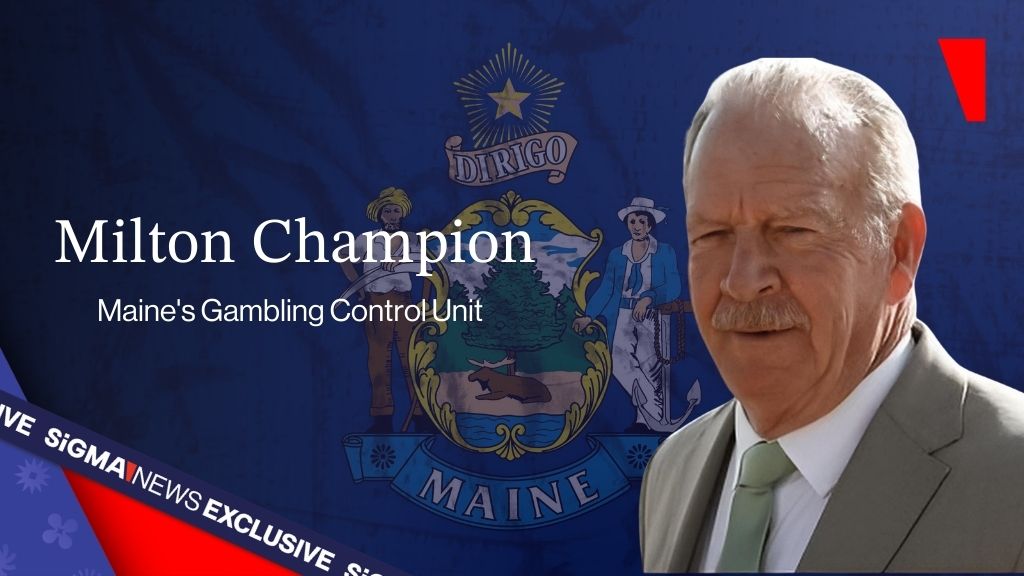
In an exclusive interview with SiGMA News, Milton Champion, the Executive Director of Maine’s Gambling Control Unit, brings nearly four decades of industry experience, divided evenly between the casino floor and the regulator’s office. Champion outlined exactly what enforcement will look like when LD 2007 is passed, why self-regulation from sweepstakes operators raises concerns, and what the state’s smooth sports wagering rollout signals for the future of iGaming under tribal exclusivity.
Enforcement strategy: Civil penalties and licence risks
Champion clarified that the process would begin as soon as the bill is approved and that there will be serious consequences for non-compliance, particularly for operators who currently hold regulated gambling licences.
Champion stated, “Enforcement will begin by notifying operators with a cease-and-desist letter. So, that’ll begin the civil process, which allows for civil penalties of not less than $10,000, but not more than $100,000 per violation. And then if you’re currently a casino operator or sports wagering operator and you choose to run these illegal sweepstakes, there’s a strong chance you could lose your sports wagering or your casino licence.”
Champion expects the bill to become law in mid-to-late July 2026, the same period he anticipates Maine’s tribal iGaming framework coming into effect. The timing is deliberate: if sweepstakes operators remain active when the tribes launch their exclusive online casino rights, the overlap becomes a direct competitive threat to a state-sanctioned, regulated industry.
Why Maine joined the national crackdown
In his January 2026 testimony to the Joint Veterans and Legal Affairs Committee, Champion framed sweepstakes gaming not as an innovation gap, but as an unsanctioned expansion of gambling, one that cut across Maine’s carefully structured licensing regime. Maine now joins a growing coalition that includes New York, New Jersey, Connecticut, Nevada, Montana, California, and a wave of states currently working through similar legislative processes.
Champion remarked, “I view it as an expansion of gambling, and we already have the big six — casinos, ADW, sports wagering, fantasy, even charitable gaming. And then of course we’ve got iGaming coming along. I’m confident that the governor will sign the bill.”
Self-regulation: A red flag for regulators
Virtual Gaming World (VGW) and the Social Gaming Leadership Alliance (SGLA) have argued that sweepstakes platforms promote innovation and do not threaten regulated gaming and that banning them risks pushing players towards offshore illegal sites. Champion’s response is direct: some of that migration may already be happening. But it is the industry’s claim of self-regulation that particularly caught his attention.
Champion noted, “When an industry says, ‘we’re self-regulating,’ that stands out to me as a regulator. Most of these industries genuinely want to be regulated, because it gives confidence to the public who want to play these games.”
Champion also pointed out that one committee member offered the sweepstakes industry a clear path forward: submit a bill that includes state revenue sharing, proper player protections, and responsible gaming provisions. The current model, as it stands, does not qualify.
Sports betting: A responsible rollout
Away from the sweepstakes controversy, Maine’s sports wagering rollout stands as a quiet success story. Despite operating with limited staff and no local precedent to draw from, Champion’s team benchmarked against 35 other states and built a framework that has so far generated around $6.6 million in state revenue annually with only two violations in two years.
However, self-exclusion numbers remain low: 44 players enrolled, split across one-year, three-year, and five-year terms with zero lifetime bans. Champions sees this as evidence of a disciplined player base and effective early regulation.
Tribal iGaming: Exclusive online casino rights
If LD 2007 and the tribal iGaming bill both take effect in July 2026 as expected, Maine’s online gaming market will look quite different from most of the country. Bill 1164 grants exclusive online casino rights specifically to Maine’s four federally recognised tribes. Even Maine’s two commercial casinos will not be eligible for internet gaming under the current framework.
Champion noted, “Sweepstakes that offer internet gaming — that’s simply not legal in Maine. It wasn’t approved. This is specific to the four tribes. A little different from what some other states may have done.”
Rulemaking is already underway. Maine is building a tribal-led online casino framework, and Champion is determined to apply the same careful approach to a much larger undertaking.
Stay in the loop and join the biggest iGaming Community in the world with SiGMA’s Top 10 news countdown. Subscribe HERE for weekly updates from the world’s iGaming authority and exclusive subscriber-only offers.


