


AIBC Eurasia 2026 kicks off in Dubai with Day 0 panels at Vista Lounge

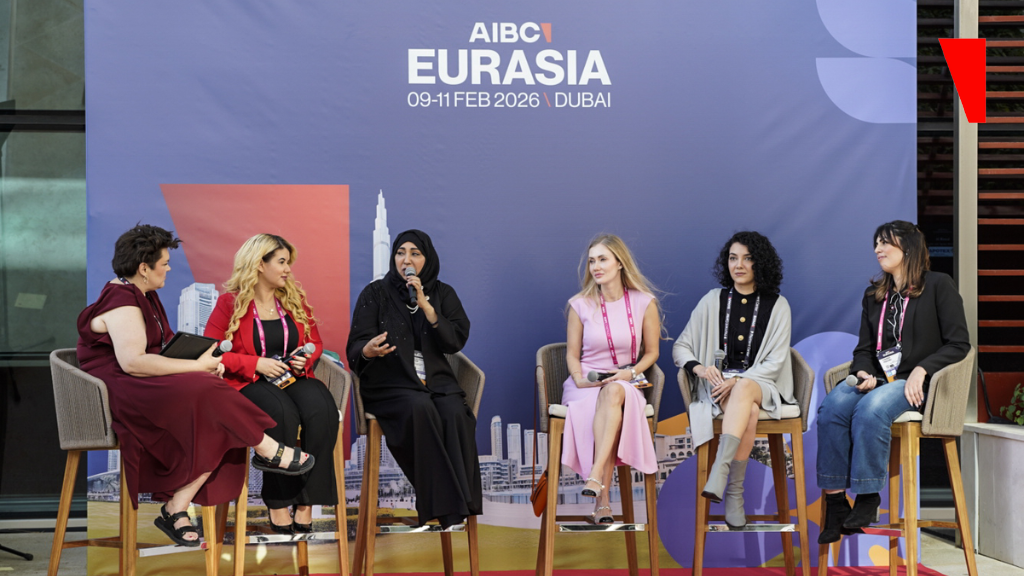
Day 0 of AIBC Eurasia 2026 in Dubai kicked off with anticipation and the energy of an industry preparing for a major week ahead. Held at the InterContinental Dubai Festival City, the pre-registration at the Vista Lounge quickly became a meeting point for early arrivals, bringing together operators, marketers, founders and tech leaders before the main expo doors opened.
The afternoon featured two exclusive pre-event panels, setting the tone for the conversations that will dominate AIBC Eurasia this year, focusing on the urgent need for greater trust in crypto marketing and the leadership strategies required to build teams. With strong attendance and lively discussion, the panels offered a timely reminder that while innovation continues to accelerate, long-term success still depends on credibility, people and execution.
Panel 1: Stop Selling Dreams: Why Most Crypto Marketing Is Broken
The first panel brought together David Lolaev, Founder, Sal’Ad Labs, Anna Tutova, Founder, AI Crypto Minds, Vilen Gulian, Head of Social Media, Luna PR and Benjamin Notini, Co-Founder, Xtrends, who explored how exaggerated promises and hype-driven narratives continue to damage credibility and what sustainable crypto marketing should look like moving into 2026.

Vilen Gulian, Head of Social Media at Luna PR, explained that the biggest difference between Web2 and Web3 marketing comes down to community engagement. “In Web2 it’s very one-sided,” he said, pointing out that while brands may chase lower CPCs, Web3 requires something far more hands-on. “It’s about nurturing communities… getting on Twitter Spaces, interacting with community members.” Anna Tutova, Founder of AI Crypto Minds, agreed, highlighting how ownership changes everything in Web3. “In Web2, a lot of projects… in Web3 you have ownership of the community,” she said, while also acknowledging the challenge that comes with it, “The difficulty is that the community may not engage.” Meanwhile, Benjamin Notini, Co-Founder of Xtrends, noted that the industry is still young and facing an educational barrier. “Most people don’t know how to use crypto,” he explained, adding that this extra layer of education means many traditional marketing methods fail because “they’re not really trust.”


Gulian argued that marketing needs a reset entirely, stating that “it’s fundamentally broken,” and comparing the future of crypto branding to the expectations consumers have from major companies. “If you look at Amazon, people only care about the experience and a smooth service,” he said. “Marketing needs to focus on the end result and a really cool experience.” Notini echoed the same point, saying that crypto marketing fails because brands are “overpromising and underdelivering,” and predicted that smaller market cap projects and creator-led economies will become a bigger focus. “People don’t hear about blockchain technology, they just want to know what they’re going to receive,” he said, adding that “these mini economies will be more in focus.”
Tutova also urged projects to stop waiting for the market to magically improve and instead focus on building real products now. “This is the time to build and show that your product can solve a real problem,” she said. The panel closed with practical advice. Gulian urged brands to “focus on quality,” Tutova encouraged founders to “launch a product and focus on a real problem,” while Notini stressed the importance of defining who you’re speaking to, “You need to get clear on who your target audience is.”
The panel reinforced the idea that the next phase of crypto growth will be driven by honesty, clarity and real value, especially in an environment where trust has become one of the industry’s most valuable currencies.
Panel 2: Lead, Empower, Scale: Building High-Performing Teams at Any Size
The second panel shifted focus from marketing narratives to internal execution. Featuring an impressive lineup including Ewa Gadomska, Owner, Behind Labels Marketing, Kelly Machado, Founder & CEO/CTO, webTek, Yousra Trachli, Regional Project Manager, Amazon, Asal Alizade, MENA Lead, Base, AMB. Laila Rahhal El Atfani, Founder & CEO, Woman Business Circle and Natalia Moskvina, Executive Director, Head of IP & Licensing, Virvance Holding, the panel examined how leaders build trust, alignment and accountability across both lean and fast-growing teams.
Asal Alizade, MENA Lead at Base, emphasised that leadership starts with structure and realistic planning. “Having short-term clear goals really matters,” she said, explaining that strong leaders break larger visions down into achievable steps while giving teams true ownership. AMB. Laila Rahhal El Atfani, Founder & CEO of Woman Business Circle, echoed this, highlighting that strategy must always be paired with execution. “It’s not about today’s strategy… it’s what’s the point, what do you want to achieve?” she said, adding that teams need “action and resolution.” Yousra Trachli, Regional Project Manager at Amazon, summed it up simply, “It’s about execution.”


From a technical and operational perspective, Kelly Machado, Founder & CEO/CTO of webTek, explained that performance management is about measurable delivery. “Measuring properly what everyone can do in how much time… you know what is needed to get the result,” she said. Natalia Moskvina, Executive Director and Head of IP & Licensing at Virvance Holding, reinforced the need for accountability from the top down, “Leaders need to propose strategy and follow up… making it clear with ownership what the results are.”
Rahhal El Atfani stressed that leadership should never be about authority alone. “We’re not here to just give orders,” she said. “It’s not about ‘I’, it’s ‘WE’.” Trachli added that building high-performing teams requires balance and leaders must “respect the individuals” while still maintaining standards and support. When the topic turned to underperformance, panelists repeatedly returned to clarity and development, with Rahhal El Atfani stressing the importance of investing in people. “Always invest in your employees… empower them and send them to training,” she said, adding a sharp reminder, “Bad leaders make bad teams, good leaders make excellent teams.”

The conversation also explored cultural diversity and generational gaps, with speakers noting that cultural differences often present the greater challenge, but also an opportunity for stronger unity. In closing, the panel highlighted how AI can support efficiency without replacing the human side of leadership. “Let AI do the micromanagement for you,” one speaker noted, while another reminded the audience that “we still need organic passion.” The final message highlighted that leadership is about empowering others because, as the panel concluded, a leader “isn’t a great leader without the team.”
The panel emphasised that whether teams are small or scaling rapidly, strong leadership depends on creating clarity, empowering talent and building systems that allow people to perform consistently, without sacrificing long-term sustainability.
Conversations shaping 2026
Both panels revealed that the industry is moving into a more mature phase. Whether it’s communicating honestly with audiences or building teams capable of executing at scale, AIBC Eurasia 2026 is already highlighting a shift toward sustainable growth over short-term hype.
After a successful Day 0 of AIBC Eurasia 2026 and a packed agenda ahead, stay tuned as we bring you coverage of expo panels, side events, awards nights and more.

