


Mark Pace on gaming standards, part one: When adoption still lags

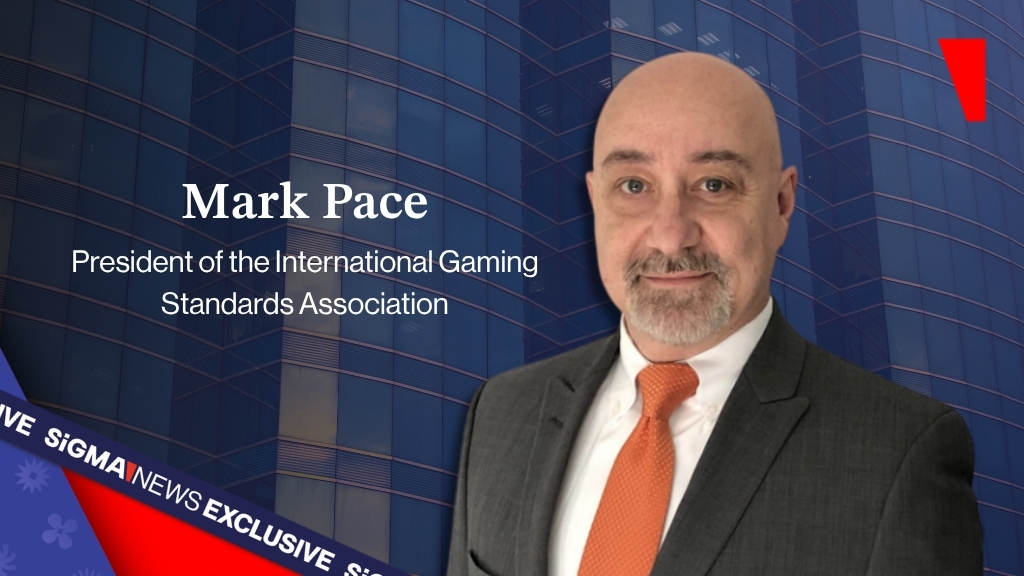
Standards have long sat in the background of the gaming industry, but as regulation tightens and technology stacks grow more complex, they are becoming central to how the sector operates and evolves. The challenge, however, is not just creating standards, but getting the industry to adopt them in a meaningful way.
The International Gaming Standards Association (IGSA), a non-profit trade body that develops standards and best practices for regulators, operators and suppliers, sits at the centre of many of those discussions. In the first part of this interview, IGSA President Mark Pace discusses the barriers that still slow implementation, the role regulators can play in creating demand, the standardisation gaps he continues to see in Europe, and the one foundational standard he believes could do most to support greater global harmonisation.
Q: When it comes to implementation, what do you see as the biggest obstacle today: cost, legacy systems, regulatory fragmentation, or competing commercial priorities?
M. Pace: We believe the biggest obstacle to adoption is demand. Just like in any economy, you may have a great product and available supply, but without demand, even the best product or service will fail. When it comes to Standards and Best Practices, demand must come from operators who drive change via their purchasing decisions or from regulators who can require that a particular Standard or set of Best Practices be implemented.
To illustrate the point, I’ll use a land-based example, where, unlike online gaming, which is software-driven, operators and suppliers must deal with hardware as well.
Today, land-based system suppliers are advancing the use of AI to drive better marketing and higher revenues. AI is a data-hungry beast, and the data it needs to consume must be accurate and complete. The more accurate and complete data AI applications have, the better their ability to provide value will be.
Herein lies the problem. Most electronic gaming machines (EGMs) in operation today are limited in the data they can communicate because many of them are still using a serial, point-to-point, unencrypted communication protocol developed in 1985! This communication protocol can no longer be extended—meaning it cannot support new meter data, play data, or any additional data that today’s sophisticated computer-driven EGMs can provide. So, why is the industry still using a 40-year-old communication protocol, when a far more modern, network-ready, high-speed, encrypted, IT-industry standard and extensible communication protocol exists? The answer is demand!
The individuals responsible for EGM purchasing decisions are not focused on communication protocols, IT security, or even marketing data. They’re focused on maximising revenue on the land-based venue floor. So, they focus on the game content, game mathematics, and game mechanics to determine which EGMs and content best meet their market’s needs. The suppliers also focus and innovate on those areas, relying on an outdated and obsolete, but tried and true communication protocol that no one seems to care about—that is, until either an operator or regulator requires functionality which older protocols cannot support.
Q: Can you give us an example of a case where a clear operational or regulatory need helped drive adoption of an IGSA standard?
M. Pace: In the case of the U.S. states of Illinois and Oregon, the regulators needed functionality that allowed them to control which game content was installed on each EGM.
Traditionally, this was done by sending a regulatory agent to the site, observing the software / game upgrade, verifying that what was being installed was an approved version, and validating that the correct version was installed.
When gaming expanded in those two states, with a small number of EGMs being installed in large numbers of bars, the regulatory authorities found that they did not have enough agents to support the volume of software conversions. Wait times and frustration from EGM distributors and bar operators—not to mention the regulatory agents themselves—increased.
The solution was to mandate IGSA’s Game to System (G2S) communication protocol, which, as one of its many features, supports the Remote Configuration and Download of software and firmware inside an EGM. Now, regulators could remotely, from their offices, approve requests to upgrade operating systems and game content, verify the versions of what was going to be downloaded to each EGM, and then validate that what was supposed to be downloaded was installed. In this case, demand came in the form of a regulatory mandate, and IGSA had the solution.
So, demand, or the lack thereof, is the real driver of IGSA Standard adoption. Cost, legacy technology, and every other potential obstacle can be overcome.
Q: Where do you still see the biggest standardisation gaps in Europe, particularly in iGaming? And what progress is realistically achievable in 2026?
M. Pace: When we established GSA Europe, the European Commission Expert Group on Gambling, which was in place at that time, had been researching whether having an online gambling data reporting standard would be beneficial to operators, regulators, and suppliers.
IGSA had already identified this as a gap and had been working on a Standard we call the Regulatory Reporting Interface (RRI). When CEN (the European Committee for Standardisation) took on the challenge, GSA Europe donated RRI to CEN.
GSA Europe’s Managing Director then became co-leader of the CEN Technical Committee’s workgroup, which was created to develop this standard. The workgroup’s output resulted in the Online Gambling Reporting (OGR) Standard, which I believe is the first and only gambling Standard that is approved across all of Europe.
Having standardised data element names, formats, sizes, etc., greatly simplifies the regulatory data reporting task operators/suppliers must perform and makes it easier for regulatory systems to consume that data.
Q: If IGSA could persuade the industry and regulators to rally around just one foundational standard as the basis for global harmonisation, which would it be, and why that one above all others?
M. Pace: This is a difficult question to answer, as each IGSA Standard is designed to solve a specific industry-identified issue, and each one adds significant value. However, the integrity of the games we as an industry offer players, and those players’ trust, is of paramount importance. Therefore, if I were to pick a Standard for worldwide adoption, it would have to be the Game Authentication Terminal (GAT) and its twin, the Networked GAT Interface (NGI).
GAT is a software bit-level cryptographic hash, validation, and authentication Standard for EGMs. GAT host software can be installed on a laptop, which is then connected to an EGM via a cable, and a GAT request is sent from the GAT software to the EGM’s operating system.
NGI is a networked version of GAT, and because it is networked, it is applicable to both online and land-based gaming.
NGI allows regulators to authenticate the software and firmware running on EGMs from their offices, instead of having to go to each individual EGM. The results are sent by the EGMs over the network to the regulatory authority, where they can be checked against the values listed on the regulatory lab or independent test lab certificate.
NGI also allows regulators to authenticate and validate the critical components of online games, online gaming platforms, sports betting platforms and other online gaming systems that are running on servers within data centres, often located in different geographical locations than the regulatory authority. By critical components, I mean the random number generator and mathematics of game content, and the system / platform components that regulators deem to be the most important, for example, accounting and reporting functions.
As many can appreciate, online content is running over the internet, and is designed to be displayed on off-the-shelf consumer electronics using consumer-grade operating systems and browsers. This means that many non-critical components may need to be changed frequently to maintain compatibility and interoperability. Using NGI, regulators can know for certain that the critical components of products being made available to players are identical copies of those that were submitted, tested, certified, and approved for use in a particular gaming jurisdiction.
Part one of the conversation with Mark Pace makes clear that standardisation is not only a technical side issue, but a strategic question for the wider industry. The real test lies in converting frameworks into action, and in ensuring that regulators, operators and suppliers move with enough alignment to make those frameworks meaningful. In the second part, Pace looks ahead to the industry’s newer fault lines, from Responsible Gaming and cyber resiliency to AI oversight and the next wave of collective priorities.
Read part two of our interview with IGSA President Mark Pace, where he looks at responsible gaming, cyber resilience, AI oversight and the next priorities for gaming standards.
Subscribe HERE to SiGMA’s Top 10 News countdown and SiGMA’s weekly newsletter to stay up to date with all the latest iGaming News from the biggest iGaming community in the world and benefit from subscriber-only offers.


