


European Commission fines Google €2.95 billion for antitrust violations

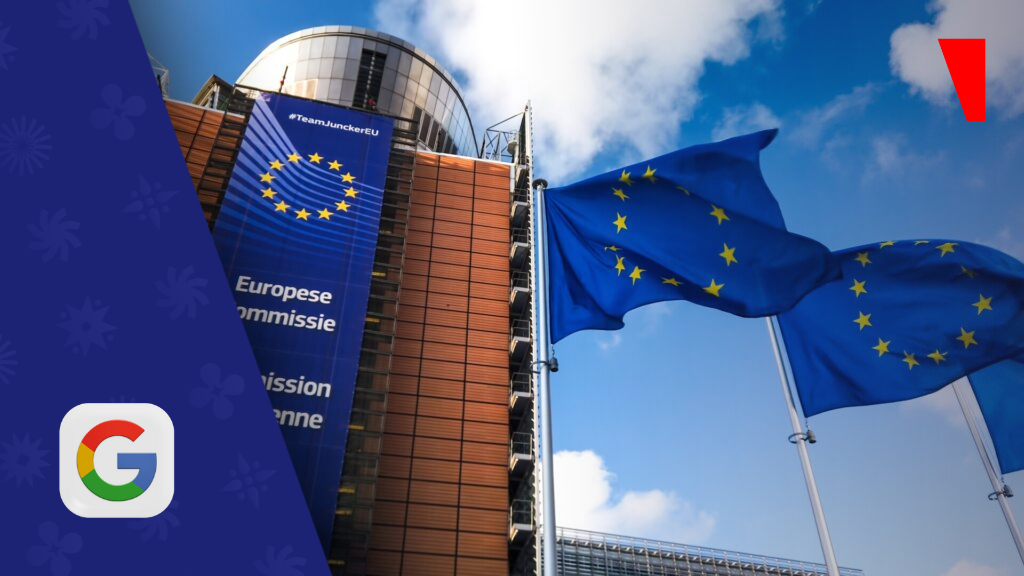
The European Commission has fined Google €2.95 billion for abusing its dominant position in online advertising. The company has been accused of promoting its own advertising services and harming competitors, advertisers, and publishers.
The regulator has ordered Google to stop self-promotion and eliminate internal conflicts of interest in the advertising chain. The company has 60 days to submit an action plan. The Commission will continue to monitor compliance with antitrust rules and fair competition in the adtech market.
Abuse of dominant position
According to the European Commission’s report, Google holds a leading position in two key markets: DFP advertising servers for publishers and tools for buying advertising on the internet, Google Ads and DV360. Both segments cover the entire European Economic Area.
Since 2014, Google has violated EU antitrust rules by giving advantages to its AdX advertising exchange. DFP provided AdX with advanced information about competitors’ bids, allowing it to win auctions. In addition, Google Ads and DV360 placed bids primarily on AdX, ignoring other exchanges.
The Commission concluded that Google deliberately strengthened the position of its own exchange by restricting access to competitors and increasing the cost of its services. These actions violate Article 102 of the Treaty on the Functioning of the EU and reinforce Google’s monopoly influence in the field of advertising technology.
The investigation has been ongoing since 2021
The European Commission launched an investigation against Google in June 2021, suspecting the company of anti-competitive practices in the online advertising market. In June 2023, the regulator sent the company a formal notice of its concerns, to which it responded in December of the same year.
This investigation is based on Article 102 of the Treaty on the Functioning of the EU and Article 54 of the Agreement on the European Economic Area, which prohibit the abuse of a dominant position. Dominance in itself does not violate the law; however, companies with a strong market position are required not to interfere with competition, both in the primary market and in related markets.
If the Commission confirms the infringement, it may require Google to cease its illegal activities and impose behavioural or structural measures. Structural measures are permissible if behavioural measures prove less effective or more burdensome. Once the Commission resolves confidentiality issues, it will publish the details of the case in the public register on the Commission’s competition website.
Potential claims for damages
In addition to the fine, the company faces an avalanche of lawsuits from aggrieved competitors. Any company or individual affected by Google’s anti-competitive behaviour has the right to go to court in EU countries and claim damages. The European Commission’s decision serves as irrefutable proof of the illegality of such actions in national courts, in accordance with the practice of the EU Court of Justice and Regulation 1/2003.
Even if the Commission has already imposed a fine, this does not prevent the courts from awarding full compensation. The EU Damages Directive simplifies the process for victims of anti-competitive practices, allowing them to obtain compensation more quickly and effectively.
Commenting on the situation, Teresa Ribera, Executive Vice President for a Clean, Fair and Competitive Transition, draws attention to freedom of choice:
“Google must now propose serious measures to address the conflict of interest, and if it fails to do so, we will not hesitate to take strict measures. Digital markets exist to serve people and must be based on trust and fairness…True freedom means a level playing field where everyone competes on equal terms and citizens have a genuine choice.”
Google intends to appeal the decision
Google has announced its intention to appeal the European Commission’s decision. According to its statement, the market remains competitive, and its advertising technologies are only one of the available alternatives.
According to Palai Media, the announcement of the fine was postponed from 1 September due to negotiations between the EU and the US on a new trade agreement. That is the second-largest antitrust fine in the history of the European Union after the record $5 billion imposed on Google in 2018.
The decision has been criticised not only by Google but also by the US. President Donald Trump called the fines against American technology companies unfair and threatened to invoke Section 301 of the US Trade Act to overturn them.
This article was first published in Russian on 11 September 2025.
From the Colosseum’s ancient roar to the stillness of Vatican halls, Rome stirs once more. SiGMA Central Europe arrives 03–06 November 2025, gathering 30,000 industry leaders to shape a future written not in sand but in stone. At this year’s mother of all conferences, stand where Caesars stood and shape the iGaming empire.


