


In regulated iGaming markets, it is becoming more expensive and difficult for operators to grow. Advertising rules are getting stricter, player protection checks are increasing, and data usage is more tightly controlled. Across Europe, many countries are limiting gambling ads, introducing affordability checks, and enforcing stronger data protection laws, making it harder for operators to attract and retain players in the same way as before.
At the same time, the old model of relying heavily on bonuses and promotions is becoming less effective. With tighter regulations and higher costs, operators are shifting their focus towards improving the overall player experience. This means building products that keep players engaged over time, using better personalisation and long-term engagement strategies instead of short-term offers.
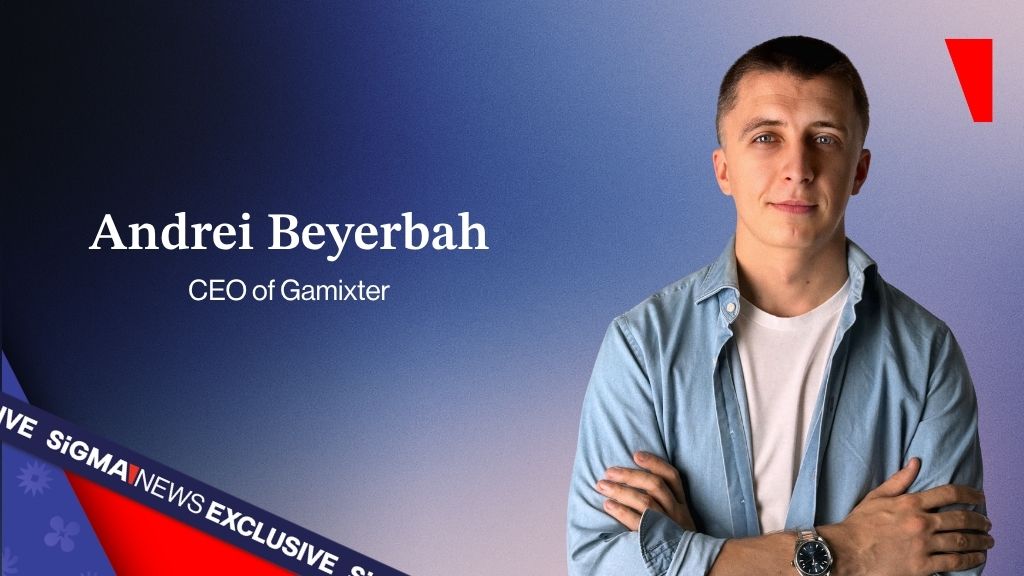
In an exclusive conversation with SiGMA News, Andrei Beyerbah, CEO and Founder of Gamixter, outlines how these structural changes have triggered what he describes as a “forced reset” for the industry. In this first part of a two-part series, Beyerbah examines the decline of bonus-led retention, the growing importance of lifecycle-based engagement, and why operators must rethink lifetime value (LTV) in an increasingly cost-intensive environment. He also explains that as regulations tighten, operators are focusing more on product-driven strategies, while responsible gambling is gaining importance as a sustainable business approach.
SiGMA News: How would you describe the current state of player retention and acquisition in regulated iGaming markets, and what fundamental changes have operators had to make in the past 18 to 24 months?
Andrei Beyerbah, CEO & Founder, Gamixter: The past 18 to 24 months have felt like a forced reset for the industry. Regulators across the UK, Netherlands, Sweden, and Germany have systematically shut down the tools operators relied on most, including wagering-heavy bonus offers, aggressive retargeting, and unrestricted affiliate access. Operators who built their business on the “acquire cheap, retain with bonuses” model suddenly found both legs cut out from under them.
The fundamental shift is clear: the industry is moving from transactional thinking to relationship thinking. Companies used to focus on campaigns; now the focus has to be on the full player lifecycle. Engagement needs to be structured, with different mechanics serving different stages of the player journey. For example, daily rewards help build early habits, while missions create medium-term goals that extend across multiple sessions. Social features, such as group-based competitions, add another layer by giving players a reason to return beyond promotional incentives.
Most large operators understand this at a conceptual level. In practice, however, many are still optimising for cost per acquisition (CPA) and short-term gross gaming revenue (GGR). The gap between what is discussed at industry events and how budgets are actually allocated remains significant.
SiGMA News: Why are traditional bonus-led retention strategies delivering weaker returns today, and what does this reveal about changing player behaviour?
CEO Beyerbah: A bonus works as a tool when it creates a genuine moment of choice, to play here rather than somewhere else. When a player has three or four active offers running at the same time, the bonus stops being a loyalty driver and becomes a price-sensitivity driver. The operator with the best offer gets the session, but not the player. This is not a crisis of the instrument itself; it is a crisis of oversaturation. Bonuses have been devalued simply because there are too many of them.
What does this reveal about player behaviour? Players in today’s market are more informed, more selective, and less brand-attached than they were five years ago. Loyalty is built through experience, through how well a platform understands them and how engaging it is compared to alternatives.
This is visible in operator data. Players who engage with at least one gamification mechanic, such as a mission, tournament, or streak, consistently show higher retention rates than those who only receive bonuses. The gap varies by operator and market, but the overall trend is consistent.
A bonus can accelerate a decision, but on its own, it does not create a reason to return.
SiGMA News: With acquisition costs continuing to rise, how should operators reassess their approach to lifetime value and long-term profitability?
CEO Beyerbah: CPA in regulated markets has increased two to threefold over the past three years in some verticals. Yet most operators are still calculating LTV in the same way they did in 2018, and that is a broken formula for today’s environment.
LTV needs to be measured through cohort quality, not averages. One loyal player with low churn and high session frequency is worth more than five bonus hunters who deposit once and disappear. In practical terms, the payback period per player needs to be shortened through faster activation and deeper engagement in the first 14 days. If a player does not pass through three or four meaningful engagement moments in that window, the probability of long-term retention drops sharply. That is where gamification delivers the highest return on investment.
Operators who activate daily rewards and mission-based mechanics in the first week of onboarding see a significantly different retention curve at 30 and 60 days. This is no longer a hypothesis; it is supported by data from live operators.
SiGMA News: How are tighter regulations around advertising, affordability checks and data protection reshaping engagement strategies?
CEO Beyerbah: Advertising restrictions have narrowed the top of the funnel. Affordability checks create friction in the middle, and GDPR, along with its national variations, constrains personalisation at the bottom. As a result, operators can no longer freely acquire, monetise, or use player data.
The market’s response is product-led engagement. Instead of pulling players in through media spend, operators need to build products strong enough that players return on their own. For those accustomed to solving growth challenges with larger media budgets, this is an uncomfortable shift. Product-led growth takes time, requires different expertise, and is genuinely harder to execute.
For us at Gamixter, this is a structural tailwind. The less an operator can spend on external traffic, the more valuable each player they have already acquired becomes. The focus, therefore, shifts towards retaining existing players and strengthening engagement without relying on continuous promotional spend.
Affordability checks, when implemented well, can also become a trust-building moment. Operators that do this effectively can gain a competitive advantage that is difficult to replicate through media spend alone.
SiGMA News: Has responsible gambling become a strategic business priority rather than a compliance requirement, and how should retention models reflect that shift?
CEO Beyerbah: Honestly, for most operators it is still compliance. The difference is visible immediately. If the responsible gambling team sits within legal rather than product, that is compliance. If responsible gambling mechanics are designed alongside the retention team, that is the beginning of a strategy.
The business logic is straightforward. A player with controlled behaviour plays for longer, with fewer sharp churn events, fewer complaints, and fewer chargebacks. A long-term, loyal player in the moderate segment is often more valuable than a high-deposit problem player with a three-month horizon before being flagged.
The mechanics developed at Gamixter, including missions, streaks, and clan tournaments, are designed from the start to encourage regularity and engagement rather than maximise deposit size in a single session. A daily reward supports a consistent habit loop, encouraging shorter and more frequent sessions. This represents a fundamentally different optimisation approach compared to extracting maximum value from a single session. In the long run, the first approach is more sustainable both financially and from a regulatory perspective.
Stay tuned for Part Two, where he will explore the technologies shaping player engagement, the impact of consolidation on competition, and the common mistakes operators make in retention strategy. He will also share his outlook on how gamification, personalisation, and evolving player expectations will define the future of iGaming.
All roads lead to the mother of all conferences in Rome from 02 to 05 November 2026. SiGMA World takes over Fiera Roma, bringing together 30,000 delegates, 1,000+ exhibitors, and 550+ expert speakers. This is where the right room can change your roadmap.


