


Libuša Baranová on Slovakia gambling regulator shifts to consumer protection and Gen Z focus

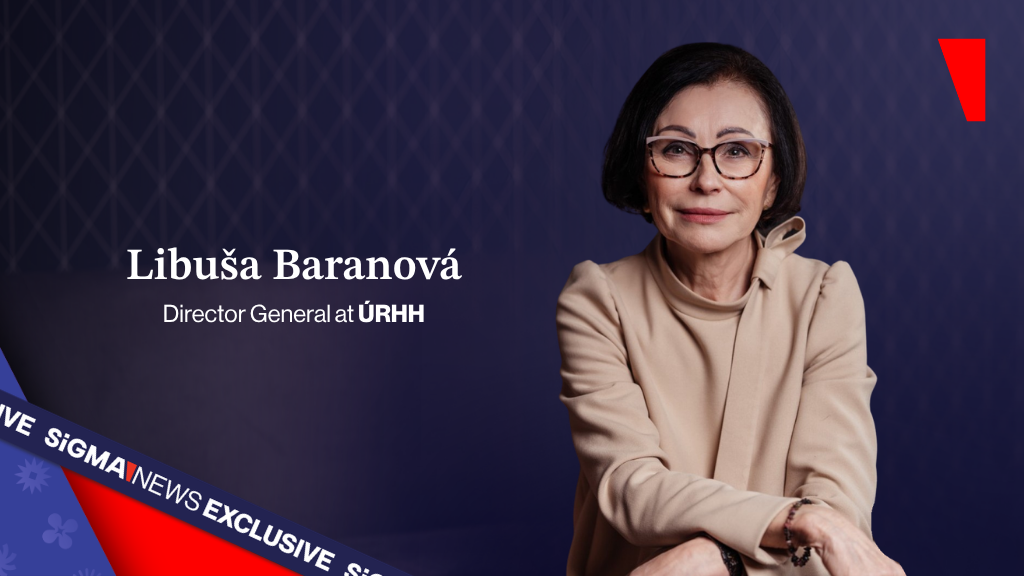
Slovakia’s gambling regulator is expanding its mandate. The Gambling Regulatory Authority (ÚRHH) now oversees consumer protection alongside technical compliance. Director General Libuša Baranová outlines the agency’s new priorities: monitoring unfair commercial practices, enforcing ethical advertising standards, and preparing for a predominantly digital market by 2030.
In this exclusive interview with SiGMA News, Baranová explains how Slovakia balances market openness with strict harm-reduction measures. She addresses the challenge of illegal operators targeting Gen Z, the limits of AI deployment in addiction prevention, and the regulator’s shift from passive oversight to active ecosystem management. The conversation also covers cross-border cooperation, the award-winning educational initiative “Gambling Without Myths and Illusions,” and the regulatory tools needed to keep pace with esports betting, crash games, and AI-driven personalisation.
New area of responsibility
Q: As you assume the role of director general during this challenging period, which specific consumer protection measures provided for in the new regulations do you intend to prioritise first and foremost, and why?
Baranová: As of 1 January, our Office has become the primary supervisory Authority for consumer protection in the gambling sector. This is a completely new area of responsibility, and, to this end, a major organisational change took effect at ÚRHH on 1 February 2026, including the establishment of a new department for consumer protection supervision.
The consumer protection supervision agenda will have three key pillars: a methodological component, within which we aim to establish clear rules for communication between players and operators; a monitoring component, under which ÚRHH will directly verify and monitor practices both on-site and online; and finally, an enforcement component, which means imposing fines and other sanctions for violations of the Consumer Protection Act. We will gradually focus on monitoring unfair commercial practices in the gambling sector, unacceptable contractual terms hidden in the fine print of terms and conditions, and conduct contrary to public morality, particularly in advertising and marketing.
By expanding the Consumer Protection Office’s mandate, the state is sending a clear signal that it intends to oversee not only the technical integrity of games, but also the ethical dimension of business in this sector.
Q: Are you planning to integrate AI and advanced analytics into ÚRHH’s toolkit for the supervision and prevention of gambling addiction?
Baranová: ÚRHH is fully aware of and monitoring the European Commission’s recently adopted regulation on artificial intelligence (the AI Act). From the regulator’s perspective, however, it is currently premature to discuss the specific use of AI mechanisms directly by ÚRHH for the purpose of detecting problem gambling.
A key factor in deploying AI solutions is access to data, i.e., having data on player behaviour available. This responsibility falls primarily under the jurisdiction of gambling operators. It is they who possess detailed, real-time data on their clients’ gambling behaviour. ÚRHH does not have access to this specific data on individual players, and it is therefore the operators who have the technical capability to identify and respond in a timely manner to negative indicators of problem gambling.
In any case, in the coming years, our Office will focus primarily on control and supervisory activities in the ethical use of technologies. Our goal will be to ensure that artificial intelligence mechanisms are not misused to infringe on consumer rights or to create and use algorithms that support aggressive business practices, and do not exacerbate the risks associated with gambling.
Slovakia’s position within the European Union’s regulatory landscape
Q: What is Slovakia’s current position among EU regulators on issues such as tax hikes, licensing models, cross-border cooperation, anti-money laundering measures, and consumer protection? Which regulatory approaches from other Member States do you consider most relevant for implementation or adaptation in Slovakia?
Baranová: Slovakia’s position within the European Union’s regulatory landscape has undergone a significant transformation in recent years, primarily due to the establishment of ÚRHH. Today, the Slovak regulatory framework ranks among the modern, albeit strict, systems that seek a delicate balance between market freedom and the protection of society. It is important to emphasise that the gambling sector is not subject to harmonisation under EU law. This means that member states have broad discretionary power to set their own rules, provided they respect the fundamental freedoms of the internal market.
Slovakia imposes a relatively high tax burden on gambling compared to the EU average. The state views gambling as a significant source of revenue for the state budget, with a trend toward higher taxation of the online segment, which saw massive growth during the pandemic.
In recent years, the Slovak Republic has transitioned from a state monopoly (in online casinos and betting) to an open licensing model for private operators. This step has brought us closer to more liberal markets, such as the Danish or Swedish models, while maintaining strict entry barriers. In its regulation, Slovakia does not seek outright prohibition, but rather a balanced and measured approach. This approach combines two opposing yet complementary elements: namely, the Harm Reduction approach (risk reduction), which focuses on preventing addiction, educating players, and promoting responsible gaming tools (self-imposed limits), and a repressive approach, under which Slovakia is moving toward extremely strict penalties for activities that support or promote illegal gambling.
Q: What is the current ratio of legal to illegal gambling in Slovakia, and which indicators or data sources are used to inform this assessment?
Baranová: Currently, the government does not have official data on the exact share of the illegal gambling market in the Slovak Republic. Determining the exact volume of funds flowing through unlicensed entities is technically challenging, as these activities take place outside the oversight of financial and regulatory authorities. Despite the absence of exact statistics, it is estimated that this percentage may be relatively high. Furthermore, the current market is dynamic, with players often balancing on the edge between safe and unsafe environments.
ÚRHH has identified a trend in player behaviour in which brick-and-mortar establishments are giving way to virtual ones, thereby naturally increasing players’ exposure to global unlicensed operators. Aggressive marketing is also highly prevalent on social media. Illegal sites exploit the lack of strict oversight on platforms like Facebook, Instagram, and TikTok, where they target vulnerable groups, including minors, without adhering to responsible gaming standards. Unregulated sites are not required to use an exclusion register (RVO) and offer bonuses that are prohibited or strictly limited in the legal environment.
Generally, however, as in other countries, the state is at a disadvantage in the fight against illegal gambling. The technological advantage of illegal operators and their ability to quickly switch domains (so-called ‘mirroring’) makes the work of regulatory authorities more difficult. Unless EU countries are able to take effective action against the lenient approach of social media companies (Big Tech), it will not be possible to speak of the successful elimination of illegal online gambling.
Balanced engagement with the industry, government, and consumers
Q: What strategy underpins ÚRHH’s participation in industry summits and conferences, and how is engagement with operators balanced with the need to maintain independence and avoid regulatory pressure?
Baranová: Our goal is to share the experience we have gained with other regulators and, conversely, to learn from the activities of regulatory authorities in other countries, particularly EU member states.
As I mentioned above, our Office strives for a balanced regulatory approach, including very intensive communication with gambling operators. We want the rules we formulate to be enforceable and understandable in practice. If gambling operators are aware of the regulator’s views and expectations, they have no major problem complying with them.
A typical example of good and useful communication between the regulator and operators as market representatives was the creation of the Code of Responsible Advertising in the Field of Gambling in the Slovak Republic, which also established control mechanisms and sanctions for rule violations. Although it is a self-regulatory document, its creation and operation have proven to be very beneficial. Several rules set forth in the Code of Responsible Advertising can be considered generally accepted and well-established, and the Office even plans to incorporate them into its consumer protection oversight methodology in the future, making them binding on operators.
Q: In 2024, ÚRHH launched an award-winning educational initiative, Gambling Without Myths and Illusions. Which lessons from this initiative will be applied to your future projects?
Baranová: We launched this educational project in November 2024. A year later, it received prestigious international recognition at the Global Regulatory Awards (GRAs) 2025 in the “Regulatory Initiative of the Year” category. Since Generation Z represents a key target group for gambling operators in the near future, the project is designed to provide high school students with comprehensive and unbiased information on how gambling works.
We focus on open communication regarding the risks of playing, exposing marketing practices targeted at young people, and increasing awareness of responsible gambling. The lectures are structured to ensure students gain the knowledge necessary to make responsible, informed decisions about their future involvement in gambling. To date, hundreds of students have already completed the program.
Believing that investing in the education of future teachers is the most effective path toward a safer future for children of the digital age, we signed our first Memorandum of Cooperation with the Faculty of Education at Trnava University in late February 2026. Our ambition is to integrate expert knowledge and experience directly into the academic preparation of future educators, enabling them to effectively communicate the current pitfalls of gambling and online gaming to the new generation. Experience from this project confirms that prevention and education are key pillars of modern regulation. We are currently working on a follow-up project that will build upon our activities to date, and I believe we will successfully implement it by the end of this year.
Q: Which specific amendments to Slovakia’s Gambling Act would you prioritise to improve consumer protection, market integrity, and the effectiveness of law enforcement?
Baranová: At the beginning of our conversation, I mentioned that, as of 1 January 2026, our Office has become the key Authority responsible for supervising consumer protection in the gambling sector. So it will be the practical application over the next two to three years that will show us to what extent this legislative change has been beneficial in terms of creating conditions for ensuring public order in the field of gambling operations, and whether this expansion of the Office’s powers has met the general expectations of the state, the regulator, and also on the part of the operators themselves.
‘The role of our authority is evolving’
Q: In a three-to-five-year outlook, what are your projections for the development of the Slovak gambling market in terms of digitalisation, product range, regulatory burden, and social responsibility?
Baranová: Slovakia’s gambling market generated a gross gaming revenue of €1.55 billion in the last year, up 7.2% from 2024. This growth confirms that regulation must be dynamic to keep pace with market trends.
The role of our Authority is evolving from a “passive regulator” to an “active creator of a safe ecosystem.”
By 2030, we expect the gambling market to become predominantly digital. The use of augmented reality (AR) in live casinos is expected, as is the use of AI for hyper-personalised offers and for detecting risky behaviour. Unfortunately, the line between traditional gambling and video games will continue to blur. Betting on esports will become a standard part of the offerings for the younger generation. So-called “crash games” and instant lotteries may gain widespread popularity, requiring immediate regulation due to their addictive nature.
ÚRHH’s vision for the future of regulation should primarily reflect these requirements and trends. The Authority must have tools for real-time data analysis. All technical devices must be connected to a central monitoring system (the Authority’s server) for immediate control of financial flows and the fairness of games. The use of artificial intelligence algorithms must be directed toward proactively identifying illegal online domains and immediately blocking them. A legal obligation will likely arise for gambling operators to implement mandatory algorithms that identify at-risk players before they suffer financial collapse.
Finally, I see the Office’s role as a mediator between the state, local governments, and citizens. The Office must balance the state’s economic interests (revenue from levies) with the interests of municipalities (public order). Its support for local governments should also include providing expert data so that municipal and city decisions on the prohibition and restriction of gambling are based on facts, not just emotions or political preferences.
Looking ahead
Libuša Baranová‘s message is clear: regulation must evolve as fast as the market. Slovakia is building a framework that combines strict enforcement with education and industry dialogue. The regulator’s expanded consumer protection mandate, focus on Gen Z, and preparation for AI-driven gambling signal a proactive approach. Success will depend on cross-border cooperation and holding Big Tech accountable for illegal advertising on their platforms.
Join the world’s biggest iGaming community with SiGMA’s Top 10 News countdown. Subscribe HERE for weekly updates, insider insights, and exclusive subscriber-only offers.


