


Affiliate marketing in iGaming faces AI hype and influencer chaos

In the rush to modernise acquisition, affiliate marketing in iGaming is battling on four fronts: trust, tactics, technology, and terrain. From AI content flooding search engines to influencer models losing steam, the affiliate ecosystem in 2025 is both crowded and conflicted.
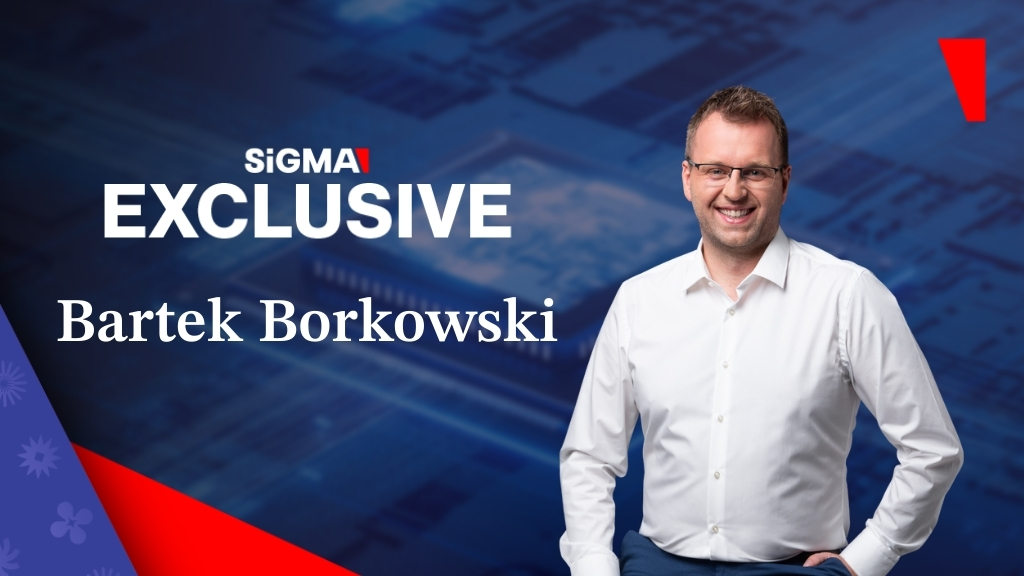
In this exclusive interview for SiGMA News, Bartek Borkowski, Managing Partner at createIT and host of the CEOpen Mic podcast, shares raw insights into what’s working, what’s failing, and why a deeper understanding of regional nuances and human behaviour may be the key to survival.
Operators and affiliates: Partners or friction points?
At the heart of affiliate marketing in iGaming lies a relationship that, according to Bartek, has often been marred by hidden costs, poor reporting, fake registrations, fraud, and two-way communication problems.
“One of the main friction points affiliates are experiencing with operators is the lack of transparency in financial settlements. Affiliates often encounter unexpected administrative fees or various charges that appear without prior notice or clear explanation.”
Hybrid deals often shift mid-contract, with affiliates paid both an upfront fee and a share of player revenue. A typical model might pay $25 per new depositing player plus 15 percent of net revenue over the first three months. If reporting changes or “algorithms” obscure calculations, affiliates can lose clarity on earnings almost overnight.
The problem goes deeper than money. Bartek says operators routinely brush off support queries or answer them with vague, unhelpful replies. On the other hand, communication with affiliates is often strained and imprecise, and the results they declare when finalising contracts often do not match what is delivered during the execution of the agreement.
“These costs are difficult to verify or calculate, and when affiliates seek clarification, they’re frequently met with vague responses such as ‘these are extremely complicated algorithms,’ as was stated during a panel discussion on one of the industry summits.
“Operators report hostile practices such as targeting their brand name in search results, redirecting artificial or “bought” traffic, and sending suspicious traffic that generates an initial FTD but never engages or plays again.”
It should be remembered that the problem of dishonest practices occurs on both sides; both affiliates and operators report that they have been scammed.
“Affiliates talk about blocked accounts and no payouts. Operators talk about fake registrations, inflated statistics, and classic ghosting after paying the setup fee.”
Payment disputes remain one of the most damaging issues in affiliate relationships, as explored in a SiGMA News analysis of late payments in affiliate marketing.
Why the affiliate relationship is changing in 2025
So, is this tension new? Not entirely, he says.
“There have always been many honest individuals and a small number who were less trustworthy. What has changed is the speed and ease with which information is exchanged among affiliates.”
This transformation is driving change.
“There are now more industry events and conferences dedicated to them, more collaborations, as well as podcasts and WhatsApp groups where they share knowledge and experiences.”
When asked what a fair deal looks like today, Bartek didn’t name numbers, but he stressed the end of pure revenue sharing.
“In the European market, saturation means affiliates face significantly higher costs compared to emerging markets such as Africa.”
“Hybrid models that combine an acquisition fee with rev-share, or even a flat monthly fee plus rev-share, are becoming more popular. The era of pure rev-share is coming to an end.”
In practice, this could mean a $25 cost-per-acquisition (CPA) payment per new depositing player, combined with a 15 percent revenue share over an agreed period. This gives affiliates an immediate return while keeping them invested in player retention.
And this isn’t just about money.
“To stand out and attract quality affiliates, operators need to offer more than just rev-share. They need to invest in building a mutually beneficial partnership.”
Micro-influencers and the model that broke itself
Influencer marketing was once the golden goose of affiliate traffic. For Bartek, it was a short-lived promise and an expensive lesson.
“We tested the micro-influencer model for several years. Unfortunately, in the long run, it simply didn’t deliver the expected results.”
The problems weren’t about reach; they were about trust, cost, and consistency.
“These campaigns turned out to be very expensive, both in terms of finance and time, with weak and difficult-to-measure conversions.”
The turning point came in Africa.
“We discovered that the energy needed to educate and maintain the relationships with micro influencers is just not sustainable; it didn’t generate meaningful results.”
Asked whether anything ever worked briefly, Bartek was clear.
“There were some minor successes in the early stages of campaigns, but they were never sustainable. As soon as the campaign ended, the traffic stopped.”
Bartek finds it surprising that companies still pitch the model at conferences.
“I believe many companies still talk about micro influencer marketing because they simply don’t want to admit failure. It’s much easier to speak about ‘successful campaigns’ than to admit they weren’t effective.”
Medical voices are now joining the call to rein in gambling-linked influencer content, tightening the regulatory screws on an already strained model.
Bartek’s advice for 2025?
“Focus on organic, long-term content, SEO, and building genuine community relationships. Influencer campaigns are risky and hard to scale unless you have deep pockets and a very clear strategy.”
Africa is not Europe, and affiliates need to catch up
Bartek’s blunt assessment of African expansion: most affiliates are doing it wrong.
“You can’t apply European strategies to African markets. It just doesn’t work.”
His experience in Kenya highlighted one critical lesson.
“User behaviour is different. Mobile-first doesn’t just mean responsive design. It means rethinking navigation, content, and load speeds.”
He also warns that cultural assumptions often lead to missed conversions.
“European affiliates assume what works in Poland or the UK will work in Nigeria or Kenya. But you need to understand local preferences, language tone, and what users actually want.”
Payment options are another overlooked gap.
“Operators or affiliates who don’t integrate local payment methods such as mobile money platforms will lose users immediately.”
The scale of the opportunity is unmistakable. Africa’s gambling industry is on course to hit $17.6 billion by 2025, with online play surging toward the $2 billion mark. In Kenya alone, players staked KES 88.5 billion (~$660 million) in online bets in the year to June 2023, with the online gambling market projected to reach $130.90 million by 2029. Central Bank of Kenya data shows that M-PESA handles over 99 percent of Kenya’s mobile money transactions and serves as the everyday payment default for millions.
Yet the stigma Bartek mentions remains strong: in some East African markets, over half of surveyed youths engage in gambling, with many reporting related harms such as debt and family tension. Affiliates ignoring this cultural backdrop risk alienating the very audiences they seek to attract. Similar concerns about youth gambling and regulatory challenges are emerging globally, including recent findings about minors at risk in illegal betting markets.
And finally, trust.
“In many African markets, gambling still carries a stigma. Affiliates need to consider how their messaging either builds trust or drives people away.”
AI content floods the feed, but what’s the fallout?
Few topics are hotter than AI in affiliate marketing in iGaming, and Bartek is one of the voices sounding the alarm.
“Right now, a lot of affiliates are using AI-generated content to spam SEO results. But this tactic won’t last.”
He explains why Google’s crackdown is inevitable.
“As Google will get flooded with generated, low-quality content more and more, affiliates relying solely on AI will see their rankings drop. It’s not a sustainable strategy.”
At createIT, he uses AI carefully.
The difference between “spam” and “support” is distinct. Spam content might be a 1,000-word AI-generated slot review that repeats keywords without insight. In contrast, supported content could utilise AI to compile basic statistics before a human editor adds original analysis, player psychology, and market context.
“We do use AI tools, but only to support, not replace, our creative and strategic work. Garbage in, garbage out is a real risk.”
A top-ranking page that speaks to no one is silent. Bartek knows the algorithm may decide visibility, but only relevance earns trust.
“AI can’t truly understand player psychology. It lacks the ability to analyse subtle cues or emotional triggers that drive engagement and conversion.”
And the rise of AI detection tools?
“They’re forcing affiliates to rethink their SEO strategies entirely. You can’t just churn out text anymore. You need depth, originality, and intent.”
The view from CEOpen Mic
Bartek’s podcast, CEOpen Mic, has become a listening post for the affiliate world. So, what’s he hearing most?
“The recurring theme is that affiliates want more transparency and predictability. Many feel they’re operating in the dark.”
Accountability, Bartek says, is the glue. Lose that, and the whole thing buckles, no matter how slick your dashboard looks.
“There’s a growing demand for operators to be held to the same performance standards as affiliates. If conversion drops, everyone should be asking why, not just blaming the affiliate.”
Any standout guests?
“Several guests have shared strategies that focus on building brand equity, not just chasing quick wins. That’s the mindset shift I think we need more of.”
Affiliate marketing in iGaming isn’t broken, but it’s bruised. AI, influencer fatigue, and global gaps are forcing a serious rethink.
Bartek Borkowski’s message is clear: if affiliate marketing in iGaming is to survive 2025, it needs to return to what made it powerful in the first place: value to players, trust and genuine relationships.
*Bartek Borkowski – Founder and managing partner at createIT. He is also the host of CEOpen Mic, a podcast where he speaks with C-level executives from the iGaming industry about their journeys, motivations, successes, and failures.


