


Beyond retention: What will shape iGaming’s next phase

The iGaming industry is moving past short-term fixes for retention and turning its attention on what keeps players engaged over time. As competition increases and expectations grow, iGaming operators are now focusing on building long-term engagement, with personalisation, data, and player experience becoming central as competition intensifies. Research shows that gamification can significantly improve engagement and retention, with some studies indicating a measurable uplift in both player activity and loyalty when these mechanics are applied effectively.
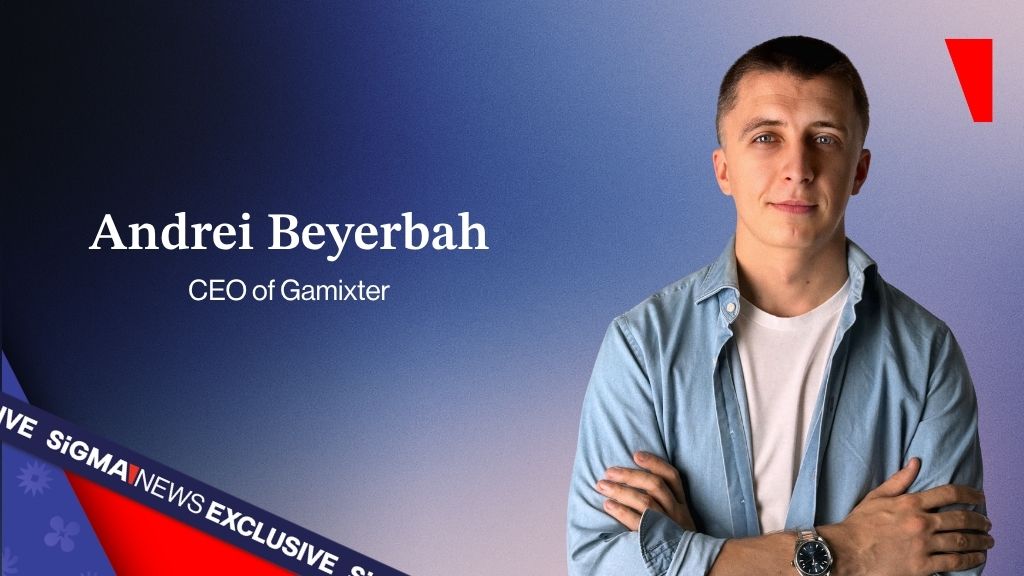
In an exclusive conversation with SiGMA News, Andrei Beyerbah, CEO and Founder of Gamixter, looks beyond the industry reset to examine what comes next. In Part One, he outlined how bonus-led retention models are losing effectiveness in regulated markets.
In this second part of the interview, Beyerbah explores the technologies shaping player engagement, the impact of consolidation on competition, and the common mistakes operators continue to make in retention strategy. He also shares his outlook on how gamification, personalisation, and changing player expectations will define the next phase of iGaming growth.
SiGMA News: Which technologies are genuinely transforming player engagement at scale, and which are being overstated by the market?
Andrei Beyerbah, CEO & Founder, Gamixter: What genuinely works is real-time behavioural personalisation, where the system understands a specific player’s pattern and adapts the offer or mechanic accordingly. Gamification also works when the mechanic architecture is properly designed. This is evident in live operator environments.
Clan-based tournaments highlight the impact of social mechanics. When players are part of a group, they return not only for themselves but also because they feel a sense of obligation to their team. Social commitment can be a stronger retention driver than bonuses. Across operators using such formats, tournament participants show higher session frequency than the general active base, and this gap tends to widen over time as group dynamics strengthen.
What is overstated is that much of what is described as ‘artificial intelligence-driven personalisation’ is often a marketing narrative built on basic segmentation. Many companies aim to integrate AI because it appears advanced, but in practice it is often a rules-based system with limited variables, or tools that are not yet fully applicable to the industry.
Non-fungible token (NFT) mechanics in iGaming saw a short period of hype and then declined. Virtual reality (VR) casinos remain largely theoretical, with no real user base. Blockchain, as an infrastructure for transparency and outcome verification, is promising, but operationally complex for the current state of the market.
SiGMA News: How is ongoing consolidation among operators and suppliers influencing competition and retention economics?
CEO Beyerbah: Large groups are consolidating for two reasons: regulatory pressure is expensive to absorb at a small scale, and technology infrastructure is costly to build independently. This is the logic of scale.
From a retention economics perspective, this allows large operators to invest in proprietary personalisation systems that smaller operators are unlikely to build. However, the speed of innovation in large organisations is often lower, bureaucracy is higher, and time to market is longer. A mid-sized independent operator with the right external technology stack can often move faster than a group many times its size.
From a business-to-business perspective, this dynamic creates a clear market segment. Operators in the mid-market are large enough to face meaningful retention challenges, yet agile enough to integrate and iterate quickly. Larger groups tend to build internal systems more slowly and at higher cost, while very small operators may not yet face the same level of complexity. Consolidation is pushing more operators towards this middle segment.
New competitive formats, such as player-versus-player models in which two users compete in the same game simultaneously, reflect a broader shift towards social and competitive mechanics. These formats indicate how engagement models are evolving alongside changes in market structure.
SiGMA News: What are the most common mistakes operators make today in allocating budget towards retention and acquisition?
CEO Beyerbah: The first and most costly problem is a strong bias towards acquisition, with limited investment in retention. An operator may spend 80 per cent of the marketing budget on acquisition and only 20 per cent on retention. The result is a system where players arrive and leave, lifetime value (LTV) stagnates, and customer acquisition cost (CAC) fails to pay back.
The second problem is the distribution of bonus budgets without cohort analysis. Funds are spread across the entire active base, including bonus hunters who are unlikely to become loyal players. Most operators recognise this issue, yet very few have addressed it systematically.
The third problem is underinvestment in onboarding. The first 7 to 14 days determine 60 to 70 per cent of a player’s long-term retention probability. However, many operators treat onboarding as little more than a welcome email and a bonus. This is not sufficient to create structured and sustained engagement through daily activities at the stage where it matters most.
SiGMA News: Gamification is often presented as a solution to engagement fatigue. Where does it create real strategic value, and where does it risk becoming cosmetic?
CEO Beyerbah: Gamification works when the mechanic is tied to real behaviour and creates an internal motivation to return. A mission that guides a player towards a specific goal over several days supports engagement. A daily streak that resets if a day is missed supports retention through variable reward.
Gamification becomes cosmetic when it is limited to badges and progress bars layered on top of activities that do not offer meaningful value. In such cases, players engage once and then stop paying attention.
A key question in designing any mechanic is what the player is trying to achieve, and how the mechanic helps create a sense of progress towards that goal. If there is no clear answer, the feature is likely to remain cosmetic.
This pattern is visible in operator data. When gamification is introduced as a standalone feature for visibility, it often results in low conversion and shallow engagement. When it is integrated into the core product, with missions linked to actual gameplay and tournaments connected to existing player activity, it leads to measurable improvements in session frequency and retention across 30 and 60 day cohorts.
SiGMA News: Over the next three to five years, what structural changes do you expect will define how operators attract, retain and protect players?
CEO Beyerbah: First, personalisation will become a baseline expectation rather than a differentiator. Players will expect a platform to understand them. Operators that are not building data infrastructure now will be at a structural disadvantage within the next three years.
Second, regulatory pressure will continue to intensify. Affordability checks will expand and bonus restrictions will tighten. Operators that build retention around non-bonus mechanics, including gamification, content and social layers, will be in a stronger position than those that rely heavily on promotional budgets.
Third, social and competitive mechanics will become mainstream. Clan tournaments, player-versus-player (PvP) formats, and public leaderboards are still niche today but are likely to become standard features in competitive casino products within five years. These formats reflect a broader shift towards social and competitive engagement.
Fourth, the line between sports betting and casino will continue to blur. Operators with combined products that can retain players across both verticals within a single engagement cycle will perform more strongly on lifetime value (LTV) metrics.
Finally, audience composition is shifting in several regulated markets. Younger players are entering iGaming more slowly, partly due to tighter advertising restrictions and affordability checks. Operators that do not focus on building genuine engagement, rather than relying only on promotional activation, may face structural challenges over the next decade.
Step inside the world’s biggest iGaming community. Join HERE for weekly updates from the world’s iGaming authority and unlock subscriber-only offers.


