


Watch: Can artificial intelligence truly transform iGaming operations?

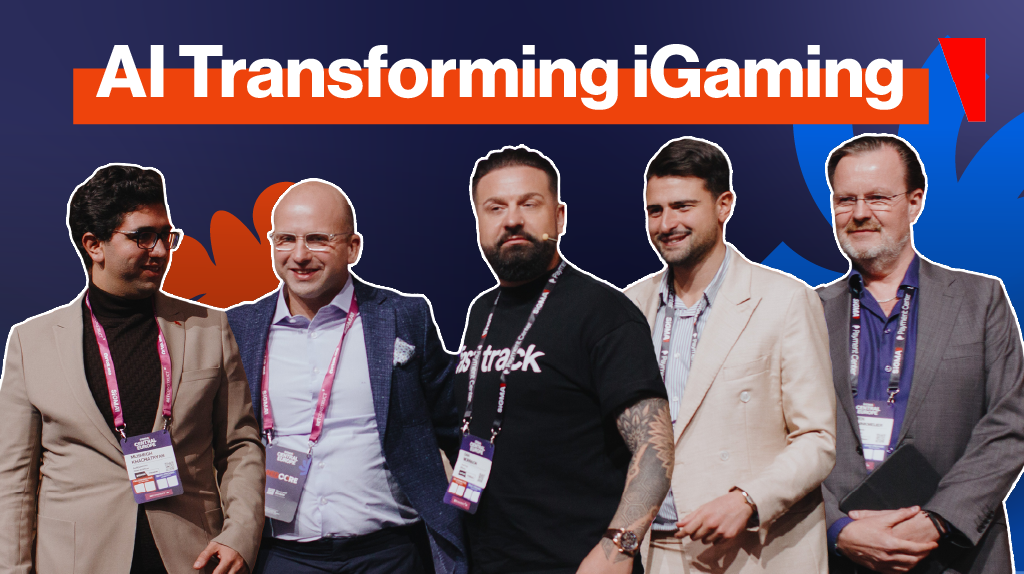
At SiGMA Central Europe 2025 in Rome, the panel titled AI That Delivers: Integrating Technology Into iGaming Workflows & Strategy brought together senior voices from across technology, operations and strategy to tackle that challenge head-on.
Moderated by Dan Morrison, Director of New Business at Fast Track, panelists included Mushegh Khachatryan, Chief AI Officer at SoftConstruct, Roberto Regianini, Executive Vice President at UX Group, Harmen Brenninkmeijer, Executive Chairman at NYCE International, and Luigi Caputo, CEO of Behaveme. Powered by SOFTSWISS, the discussion aimed to move past hype and focus on practical application. “There’s a lot of words going around the gaming industry right now. AI being one of them. Today is about cutting through that and understanding real metrics and real responsibility,” Morrison noted.
Digital empathy
Mushegh Khachatryan framed AI agents as tools that “observe, decide, act, and learn,” stressing they should currently be treated “like junior specialists.” High-volume, low-risk tasks are where AI delivers immediate value, however always under human supervision.
From the operator side, Roberto Regianini, highlighted how AI is reshaping customer engagement in Brazil’s newly regulated market. Rather than cost-cutting alone, UX Group is focused on what Regianini called “digital empathy.” AI-driven customer support, when implemented carefully, allows operators to understand behaviour while maintaining trust. “The most important thing is not just efficiency, but creating empathy when you bring customers into the technology,” he explained.
Regulation and global gaps
Harmen Brenninkmeijer, broadened the lens to regulation and global competitiveness. While AI is already embedded in KYC, AML and retention tools, he warned that Europe’s strict guardrails could allow other regions to leap ahead. “If we are not careful, their technology will allow gaming companies in the grey area to do things regulated operators cannot,” he said.
This tension between innovation and compliance ran throughout the conversation. Panelists agreed regulators must better understand AI to regulate it effectively, rather than reactively slowing progress.
Hyper- personalisation
Hyper-personalisation was another focal point. Drawing comparisons with Netflix-style algorithms, panelists acknowledged the potential and the risk. Khachatryan cautioned that unchecked engagement could burn out players, especially in gambling contexts. “We must use AI not only for today,” he said, “but for why people are going to love you tomorrow.”
Luigi Caputo, CEO of Behaveme, echoed this balanced approach. In recruitment, his company uses AI to speed up processes but deliberately avoids fully automated decision-making. “The human control on recruiting is more important than automation and speed,” Caputo said, highlighting that AI as an agent, not just an automation tool, is still a future step for many organisations.
What the future holds
The panel agreed that in the future, AI will become unavoidable. Brenninkmeijer predicted dramatic operational shifts, “What used to be 3,000 people can now be run by 300.” Others stressed the need for new skills, domain-specific AI solutions, and internal AI literacy across teams. The consensus was that AI is no longer optional, but success depends on strategy, ethics and execution.
Want to explore how AI is reshaping iGaming strategy, regulation and player experience in real time? Join industry leaders at the next SiGMA World in Rome, 02-05 November 2026, where the future of gaming technology takes centre stage.


