


Does iGaming have a passion problem?

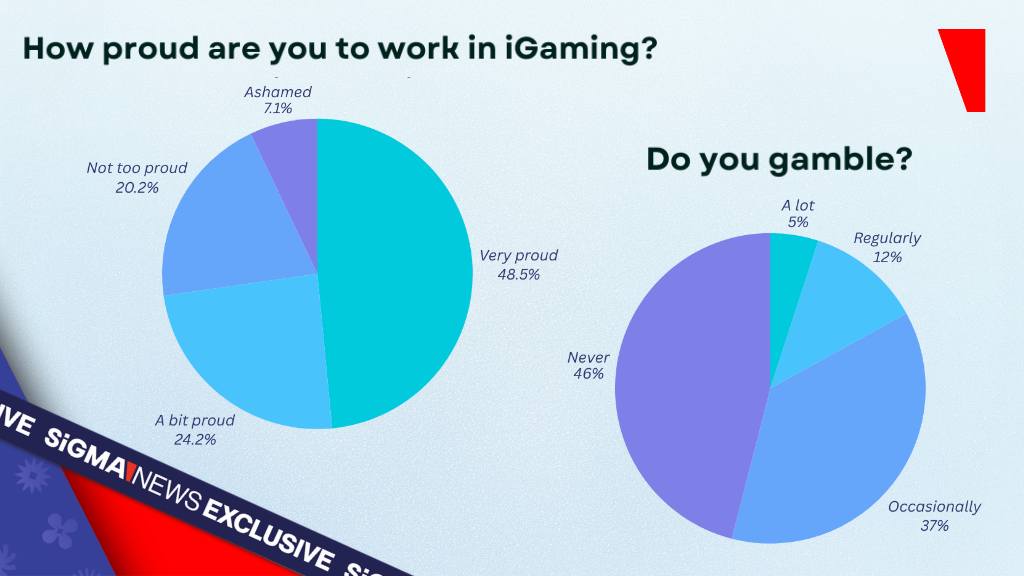
Nearly half of people working in the iGaming industry do not gamble themselves, yet almost three quarters say they are proud to work in the sector.
Through personal experience, I had noticed that many people working in iGaming do not actually use the product itself, and I was curious about what this means for the industry. To get a general idea of where sentiment lies, I roped in Glenn Debattista, COO at BetStarters and one of the most engaged LinkedIn voices in Malta’s iGaming community, to run a series of LinkedIn polls on his page.
At first glance, the numbers appear contradictory. In reality, they point to something more structural. iGaming is no longer driven primarily by enthusiasts; it is well into its professional phase.
For a growing number of employees, working in the iGaming industry feels less like joining a band and more like joining a tech company. The cultural edge that once defined the sector has gradually given way to scale, compliance, and structured career pathways.


Taken together, the results point to a workforce that is generally proud of its industry yet largely detached from consuming its core product.
In most entertainment industries, that separation would be considered an issue. Game developers usually play video games. Employees of streaming companies tend to watch TV shows. Sports marketers are often fans long before they are professionals.
In iGaming, pride and participation seem to operate independently. You can build the machine without wanting to sit inside it because the satisfaction comes from doing the job well, not necessarily from using the product personally.

Whether this matters depends on the role, says Debattista.
“Someone working in HR or administration doesn’t really need to gamble in order to understand the user. On the other hand, those working on the product or in roles that would require them to understand the consumer’s mentality would benefit from putting themselves in their shoes. It’s not a requirement, but it would be beneficial.”
Reflecting on his time in sportsbook trading, he adds:
“When I worked in the trading department of sportsbooks, betting on sports helped me understand certain patterns or anticipate specific bets being placed. And the better traders in those companies were the ones who actually placed bets.”
Educated out of being customers?
The reasons people give for not gambling are just as interesting as the behaviour itself. According to the poll, 33 percent said they avoid it because they know the math too well. Another 31 percent said they view it purely as work. Only a small minority pointed to personal or ethical concerns.

At face value, it seems that once you understand how the numbers work, the appeal fades. When you see the margins, the odds, and how the system is structured, it stops feeling mysterious. It becomes a business model.
But LinkedIn is still LinkedIn.
Saying you “know the math too well” is the safer answer. It sounds rational and avoids sounding judgmental or disinterested. Admitting that gambling just doesn’t appeal to you, or that you feel uneasy about it, is a different kind of statement when your career sits inside the industry.
That does not mean the mathematics explanation is untrue. For many people, understanding the structure genuinely changes how they see it. But it’s probably not the whole story either.
Whatever the mix of reasons, the outcome is clear: a large portion of the workforce chooses not to engage with the product it builds, something that hints at where the industry is now.
Career, not calling
The tenure data reinforces that shift. More than 85 percent of respondents have worked in iGaming for over three years, and more than a third have been in the sector for more than a decade.

This is not a transient workforce experimenting with a novelty sector. It is a career ecosystem.
Nearly 34 per cent said they entered the industry because of a genuine interest in the sector itself. Career progression and salary were stronger motivations, while relocation played a comparatively small role.

But 34 percent is not insignificant. In an industry where nearly half of professionals do not use the product, the fact that one in three were drawn in by interest suggests that curiosity still matters.
Interest, however, does not necessarily translate to a love of gambling. It may reflect an interest in trading mechanics, regulatory complexity, product strategy, or the scale of the ecosystem itself.
When asked whether he believes the industry has become more professional and less passion-driven, Debattista says it has evolved.
“Back in the day, when I joined this industry, salaries were much lower and joining the iGaming sector was something exciting. There was an element of curiosity compared to more traditional roles, especially for those who followed sports or played casino games. Nowadays, even people who don’t follow sports or play these games want to join this industry, mainly because the salaries are high and you have the opportunity to build a good career.”
Salary over mission
Salary is the strongest factor influencing whether people would stay, followed by flexibility, with purpose further down the list.

That does not mean people are cynical about their work. It reflects the reality that the industry now offers stable, well-paid roles with clear progression. As iGaming has grown, regulated, and consolidated, it has become less of a frontier and more of an established part of the digital economy. In that environment, people tend to think about long-term careers rather than belonging to a movement.
Debattista says he sees that shift clearly with younger entrants.
“Most young people I work with have never even placed a bet or tried to understand how gambling works,” he states.
For many, gambling is not a personal passion. It is simply the industry they happen to work in.
iGaming as an economic ecosystem
iGaming, especially in Malta, has become a kind of economic ecosystem. People don’t enter it because they love gambling. They enter it because it offers stable, well-paid, English-speaking jobs in tech, marketing, product, compliance, and content. And that creates three distinct psychological groups inside the industry:
1. The Believers
These are the minority. They genuinely enjoy gambling, probability, risk, and the product itself. They tend to be founders, traders, product designers, or early pioneers. Their motivation comes from intrinsic interest.
2. The Craftsmen
This is the largest group. They don’t care about gambling itself, but they care deeply about their craft. Writers who love writing. Designers who love design. Engineers who love solving technical problems. The product is incidental. Their satisfaction comes from doing their job well.
3. The Pragmatists
This is the quiet group people rarely talk about openly. They’re there because it pays well, offers stability, and fits their life. They don’t love the product. They tolerate it. Their motivation is security, autonomy, and lifestyle.
From culture to infrastructure
The tension at the heart of these polls only feels like a contradiction if we assume that iGaming should still resemble the subculture it once was.
What began as a curiosity-driven frontier has grown into a regulated, global business that employs thousands of professionals who may never place a bet themselves. That shift changes the profile of the people it attracts. The early years were defined by experimentation and enthusiasm; today the sector offers stable careers, defined roles, and long-term progression.
Nearly half of the workforce may not gamble, yet most are proud to work in the space, and many have built substantial careers within it. That is less a contradiction than a sign of how far the industry has come.
Nowadays, the question is not whether employees love gambling, but whether they are capable of building and managing an industry that has become bigger than the hobby that once defined it.
A city shaped by history, a market driven by ambition. From 03–05 March 2026, SiGMA Africa brings 3,000 delegates, 780 operators, and over 150 speakers to Cape Town to engage with one of the industry’s fastest-moving frontiers.


