


How James McCarthy is redefining affiliate marketing in iGaming

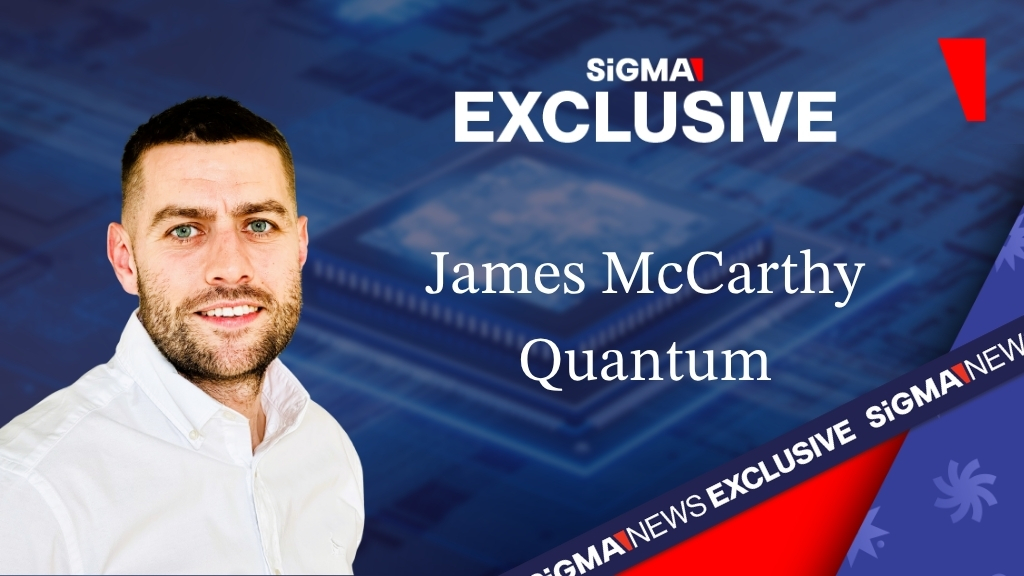
When former LiveScore Managing Director James McCarthy joined Quantum as Chief Marketing Officer, it wasn’t a sideways move but a complete switch of tables. After years of operating inside the sportsbook engine room, McCarthy stepped into the complex ecosystem of affiliate marketing in iGaming, where data, partnerships, and compliance drive performance. Three months into the job, he is learning just how different the rules of play really are.
Operator mindset, affiliate reality
“I expected it to be a relatively straightforward shift from operator to the affiliate side,” McCarthy admitted. “I’ve probably discovered that there’s actually a lot of differences and nuances between how affiliates tend to operate and how operators tend to operate.”
To illustrate the contrast, he reached for a cue-sports metaphor:
“The one that I’ve used in my head to explain it, and it makes sense, is pool versus snooker. The skill transfers from one to the other, but in terms of the tactics, there are a lot of differences.”
Those differences, he said, start with data.
“The availability of data and the real-time availability of data stand out immediately. On the operator side, you kind of own that. You own the infrastructure and dictate the pace. On the affiliate side, you’re incredibly reliant on the infrastructure of your partners, of which you tend to have 50 plus.”
That reliance means collaboration isn’t optional.
“Partnerships are such a key aspect of affiliates,” he said. “You’re reliant on them first to ensure they’re happy doing that internally, and then receiving the data after. So whilst it tends to be quite a smooth process, typically it does come with challenges.”
Redefining player value
Asked how player value changes when you send the traffic rather than take the bets, McCarthy didn’t hesitate.
“It’s no secret that affiliates have their own expectations on value,” he said. “It’s our responsibility to drive the best value to our merchant partners. However, there’s obviously a business that we have to run as well.
“If we don’t drive adequate value to our merchant partners, then there really isn’t a partnership. And if that happens enough, there isn’t a business.”
Striking that balance, he explained, means obsessing over traffic quality, conversion, and mutual profit.
“We need to make sure that we deliver the right traffic for our partners coming from the right traffic sources,” he said. “The way that we differ from operating partners is that we have multiple opportunities to convert users.
“We need to ensure that we do that at the same time delivering value for ourselves as much as we’re delivering value for the partners.”
That focus on transparency and performance sits at the core of affiliate marketing in iGaming – a business where traffic quality, conversion, and trust determine long-term success.
Three non-negotiables for a CMO
When he arrived at Quantum, McCarthy set three clear non-negotiables.
“Firstly, to really understand the business model and the industry. You have to show a certain amount of humility there. Despite having had visibility and access to the affiliate world previously, I’m a relative newcomer, so it’s impossible to know everything off the bat.”
“Secondly, identify the success metrics. By identifying the success metrics, you start to uncover the drivers that help you deliver on those metrics. Once you understand those drivers, you really understand who you need to speak with internally or who you need to influence to help you implement processes or work experiments that enable growth.”
“Thirdly, define expectations and strategy. Educate others that not everything we’re going to try is going to work, but we need a framework that enables us to identify quite quickly whether something is likely to be successful or wasted effort and pivot as a result.”
These principles are particularly crucial in affiliate marketing in iGaming, where competition, compliance, and performance data move faster than traditional marketing cycles. That mix of humility, measurement, and agility now underpins McCarthy’s marketing culture.
Keeping visible and responsible
With search volatility, ad-tech restrictions, and regulatory tightening defining today’s market, McCarthy sees sustainable growth as the anchor for Quantum.
“We operate in regulated markets. A lot of our partners are almost household names and tier one partners, and those relationships are really important to us. Everything we do, we apply efforts in areas that deliver sustainable revenue.”
He noted how over-reliance on SEO has left some affiliates exposed.
“If you’re a business that’s not diversifying and is primarily reliant on SEO, we’ve seen evidence over the past 12–18 months that that is a particularly volatile area. It can be incredibly rewarding if you get it right, but search engines can update their algorithms at any point. We saw how some businesses were perhaps over-capitalised or over-reliant on revenue streams that felt slightly too good to be true.”
“If you apply best practices, regardless of the traffic source, you strengthen the possibility of success.”
Performance first, not media empire
Some affiliates have evolved into quasi-media houses, but McCarthy is staying close to Quantum’s roots.
“The growth that the business has experienced has been on the back of doing performance marketing really well. We consider ourselves the best in the business when it comes to performance marketing, and I think you have to play to your strengths. There’s more for us to get after.”
He sees more upside in perfecting what Quantum already does than in chasing every new media model.
“I think we’re going to see more success in expanding on our performance marketing efforts than perhaps we would see in pivoting to being, or trying to be, more of a media house.”
Partnerships, not divisions
Despite constant talk of an affiliate-operator divide, McCarthy doesn’t buy it.
“I don’t necessarily think there was a divide. There’s a responsibility on both sides in a good relationship between affiliates and operators: ensuring you can over-communicate and that partners receive the service they need.
“Sometimes even the term ‘affiliate’ – you need to look beyond that and consider it a partnership.”
He emphasised customer-centricity as the foundation.
“We very much see our operating partners as the customer, and we need to be customer-centric and ensure that we are delivering for the customer. On the operator side, accessibility of data has organically improved, and the responsibility is to help us understand as early as possible where something isn’t working so we can adjust.”
For him, modern affiliate marketing in iGaming isn’t about separation; it’s about synchronisation.
Having moved from Managing Director to Chief Marketing Officer, McCarthy has had to consider how leadership looks within a different kind of organisation.
Balancing creativity with data discipline
So how does a numbers-driven affiliate stay creative?
“It is a tough one,” he laughed. “But affiliates have to always be at the forefront and understand what the upcoming opportunities are. The best affiliates will be ahead of the curve – they’ll know what’s next.
“Creativity can surface in various guises. On one hand, it’s customer-facing; on the other, it’s internal. Whether it’s trying to improve fixed costs by being creative through AI, or understanding what channels are potentially on the horizon. We’re always looking for channels that offer incremental reach.”
That mindset, he added, keeps him agile:
“Affiliate marketing in iGaming is understanding where the audience is, where the excess audience is, and can we put something in front of them that is appealing and adds value. We have to be there, we have to understand how to get there quickly, and how to do so by delivering best practices relative to that opportunity.”
Following the smart money
Where’s the next wave of affiliate growth coming from?
“Without disclosing too much, I think there are still opportunities for growth in the UK. A lot of opportunity exists in geo-expansion. I don’t think many operators feel they can grow a significantly sized business by just relying on the UK.
“Growth comes through expanding into international markets. That comes with challenges, educating, and adapting, but we’re looking over the next 12 months to expand on that concept and deliver growth for Quantum and for merchant partners in new geos.”
The next-generation affiliate
Looking ahead, McCarthy sees AI as the great leveller.
“Affiliates are getting started now who have the luxury of a suite of AI tools that will enable them to do things at greater margins than some more established partners can currently. Whether that’s on paid or organic, the possibility of doing things with fewer people or quicker – that’s what the next generation is going to look like.
“It’s not impossible that you’ll start to see almost one-person bands able to spin up sites and processes that previously took ten times the number of people. Whether there’s a lower ceiling taking that approach, I don’t know, but there’s no question that people will be able to do things with more streamlined efforts than before.”
A playbook built on partnership
James McCarthy may be only three months in, but his philosophy already reflects a mature view of affiliate marketing in iGaming, one grounded in partnership, compliance, and continual learning.
“It’s impossible to know everything off the bat,” he said earlier, “so you have to show humility, define your metrics, and keep learning fast.”
That combination of realism and ambition might be what truly rewrites the affiliate playbook.
Don’t just read the news — stay ahead of it. Subscribe HERE to SiGMA’s Top 10 News countdown for stories shaping iGaming’s future, weekly insights from the world’s biggest iGaming community, and exclusive subscriber-only offers.


